
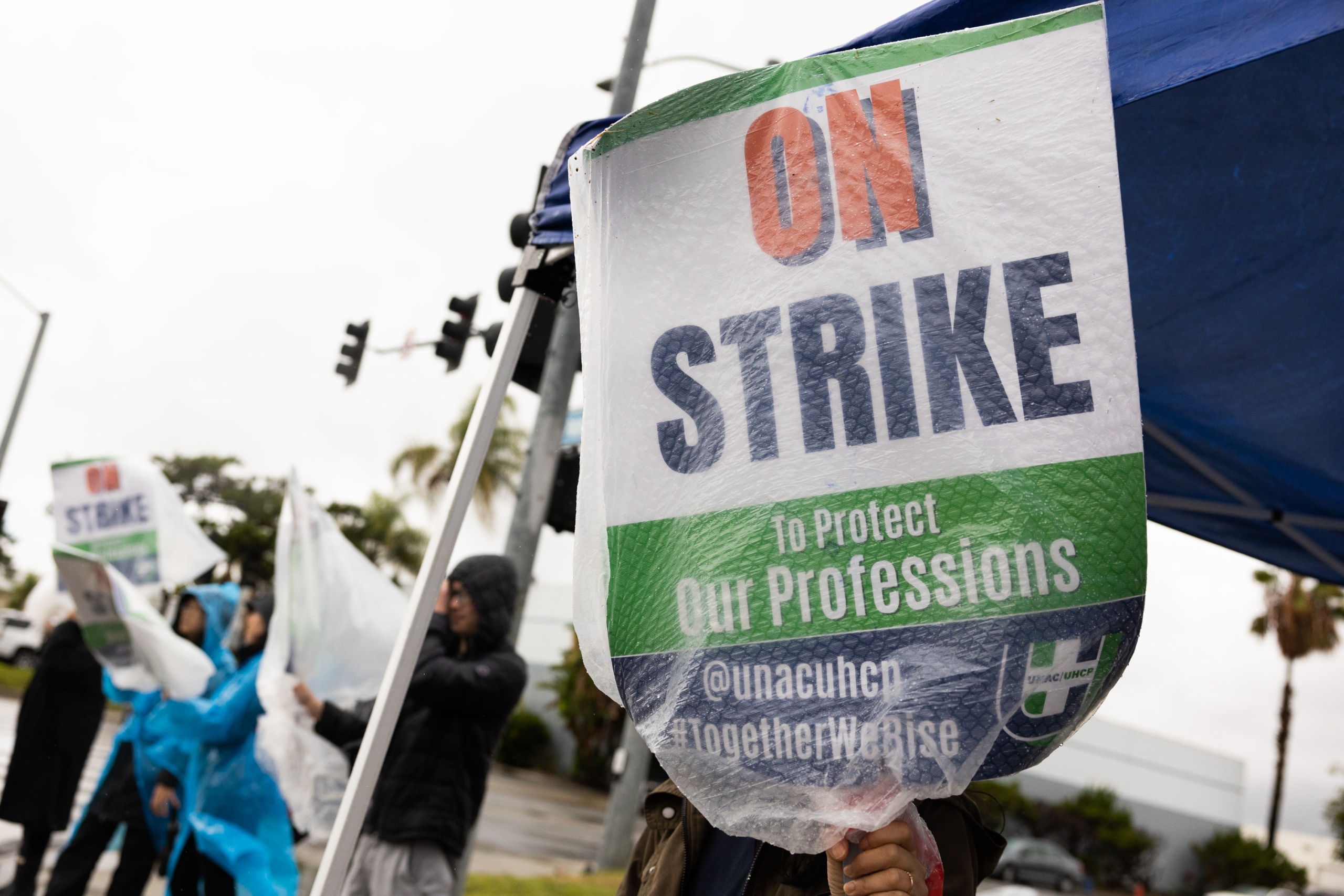
Thousands of nurses and other healthcare workers participating in a historic strike at Kaiser Permanente hospitals and clinics across California returned to work this morning as negotiators inch closer to a new contract.
The healthcare workers, consisting of the United Nurses Associations of California and the Union of Health Care Professionals (UNAC/UHCP) went on strike on Jan. 26 to demand increased pay and staffing levels.
[Read: Orange County Healthcare Workers Again Strike For Higher Pay, More Staffing]
After four weeks of picketing, healthcare workers like registered nurses, pharmacists, midwives, physician assistants, rehab therapists, speech language pathologists and other specialty health care professionals went back to work Tuesday morning.
“We have been informed by UNAC/UHCP leadership that they have accepted our offer of across-the-board wage increases of 21.5%,” reads a statement sent to Voice of OC from Carol Soudah, spokesperson for Kaiser Permanente Southern California. “This is good progress and moves us closer to a contract agreement.”
“We are working with our teams to schedule returning employees over the coming days, in an orderly way that protects patient safety and minimizes any disruption,” the statement continues. “We will be providing employees guidance on how and when they can return to their normal schedule.”
[Read: Kaiser Strikes Swell As Walk-Outs Enter Third Week]
Union leaders said they sent Kaiser a notice that employees will return to work after seeing “significant movement at the bargaining table.”
“According to the union, returning members to their patients and their livelihoods is the clearest path to securing a final agreement and building on the progress achieved during the strike,” reads a statement from UNAC/UHCP leadership.
This strike was the second time UNAC/UHCP healthcare professionals walked off the job since bargaining began in March 2025. In October, workers represented by the same unions went on strike for about a week.
[Read: Kaiser Health Care Employees Strike for Better Pay, Staffing]
Kaiser leadership maintains the strike was unnecessary, adding that this strike and others since October have combined to cost more than $1 billion, Soudah wrote.
Despite this, Kaiser leadership remains hopeful that negotiators at the bargaining table will reach a final agreement soon.
“Our bargaining with UNAC/UHCP and each of the Alliance of Health Care Unions continues at local tables,” Soudah wrote. “We are continuing to make progress and remain optimistic about reaching contract agreements soon.”
Angelina Hicks is the Voice of OC Collegiate News Service Editor. Contact her at ahicks@voiceofoc.org or on Twitter @angelinahicks13.
