
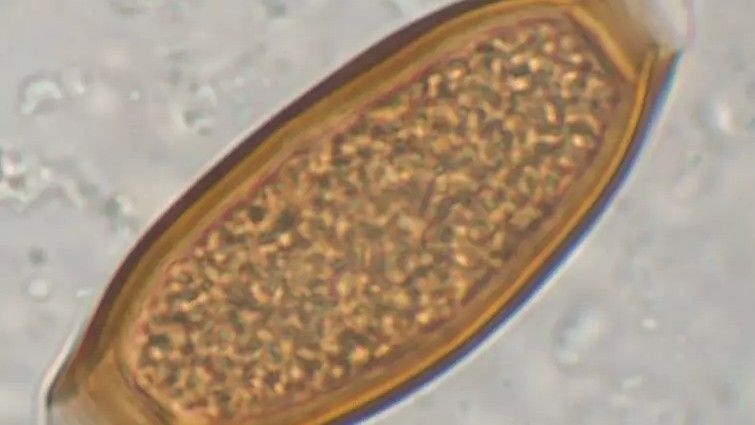
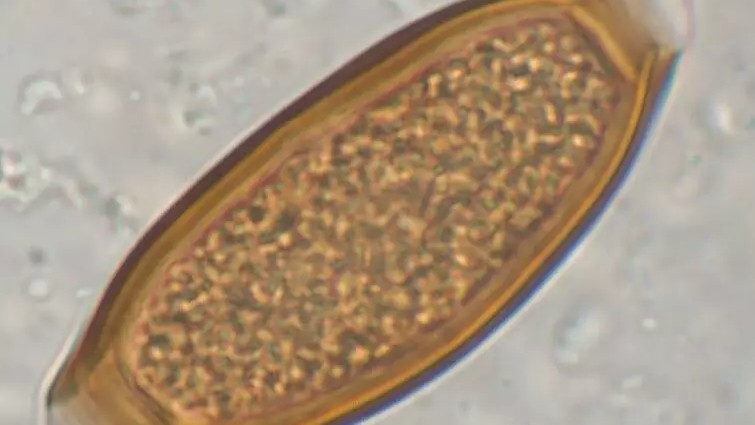
Scientists have discovered a new species of human parasite that appears to be resistant to common antiparasitic treatments, such as ivermectin.
The parasite, named Trichuris incognita, is a type of intestinal roundworm that is closely related to the whipworm Trichuris trichiura, which is currently thought to infect between 429 million and 508 million people globally, according to the U.S. Centers for Disease Control and Prevention (CDC). So far, the newly identified species has been found only in West Africa — spceifically Côte d’Ivoire.
“The infection tends not to be deadly, but heavy infections can cause serious disease particularly in young children,” John Gilleard, a professor of parasitology and associate dean of research at the University of Calgary’s Faculty of Veterinary Medicine, told Live Science in an email.
The newly identified species was discovered during a wider study into parasitic drug resistance in West Africa. Specifically, researchers were investigating the efficacy of using ivermectin and albendazole in combination. These two antiparasitics recommended by the World Health Organization (WHO) to treat many different intestinal parasites.
“There was a suspicion of something odd, because the drug combination was substantially less effective in a clinical trial in one country relative to others,” Abhinaya Venkatesan, who conducted the research as part of her doctoral thesis, said in a statement released by the University of Calgary.
“Our genetic analysis revealed the parasitic worms from Côte d’Ivoire, West Africa, were a different species to those at the other study sites,” Venkatesan said. “In fact, it is a completely new species and more similar to a parasite that infects pigs than those normally found in humans.”
These results were published Dec. 18 in the January 2025 issue of the journal Emerging Infectious Diseases.
What is Trichuris incognita?
Researchers’ understanding of this newly discovered parasite is still in its early stages.
“At present major biological or clinical differences between T. incognita and the human Trichuris species T. trichiura (other than sensitivity to drugs) are unknown,” Gilleard said. “As far as we know the symptoms will be similar to the common whipworm in humans Trichuris trichiura.“
According to the CDC, infections with T. trichiura — a condition known as trichuriasis — are often asymptomatic. However, they can sometimes result in gastrointestinal problems, including abdominal pain, diarrhea and rectal prolapse,as well as stunted growth in children.
The parasite’s eggs are passed in infected people’s feces; the eggs can end up contaminating soil if a person defecates outside or uses an inadequate sanitization facility. Additional people may then get infected if they consume food or water contaminated by the soil.
The eggs then hatch in the person’s small intestine, releasing larvae that mature and establish themselves as adults in the patient’s colon. The adult worms, which grow to approximately 1.5 inches (4 centimeters) in length, live for about a year, with female worms shedding up to 20,000 eggs per day.
Related: Flesh-eating human parasite sweeping across Central America is raising concerns in US — what to know
Why wasn’t Trichuris incognita recognized sooner?
Although trichuriasis is fairly widespread and defined as a major neglected tropical disease by WHO, it may be that different species of the parasite have been overlooked, Gilleard said. “The challenge is that most diagnosis and surveillance is based on microscopic examination of feces and the identification of classical Trichuris type eggs in human feces and not molecular tests that could discern the species,” he explained.
As a result, we do not yet know how widespread T. incognita is globally, but Gilleard said “it is likely present in other places in west Africa.”
We also don’t yet know why the new species is resistant to common antiparasitics.
“Different parasite species show different sensitivities to drugs for all sorts of complex biological reasons,” Gilleard said. It may be that this drug-resistant species has been overlooked, or that T. incognita is actually an emerging species whose evolution is being driven by drug exposure. Perhaps being drug-resistant is giving T. incognita a survival advantage over T. trichiura, Gilleard speculated.
However, he added that more research is needed to determine this.
Will Trichuris incognita be a problem in the U.S.?
“I don’t anticipate this parasite being present in the U.S.,” Gilleard said. “It is really a disease of poverty and prevalent in areas with poor public health and sanitation.” T. trichiura is present in some southern U.S. states, but compared to other countries, the U.S. has very low rates of the disease.
Although this is unlikely to be an issue in America, Gilleard added that the discovery highlights the ever-changing nature of infectious diseases and the need for continued surveillance efforts.
