
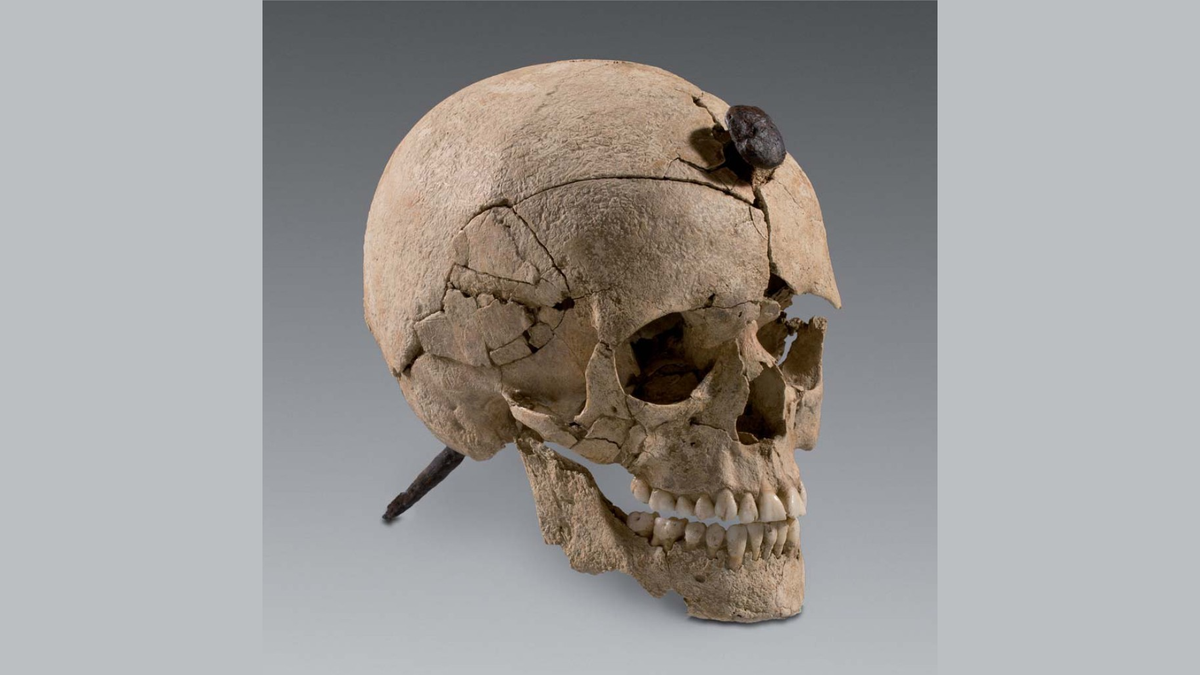
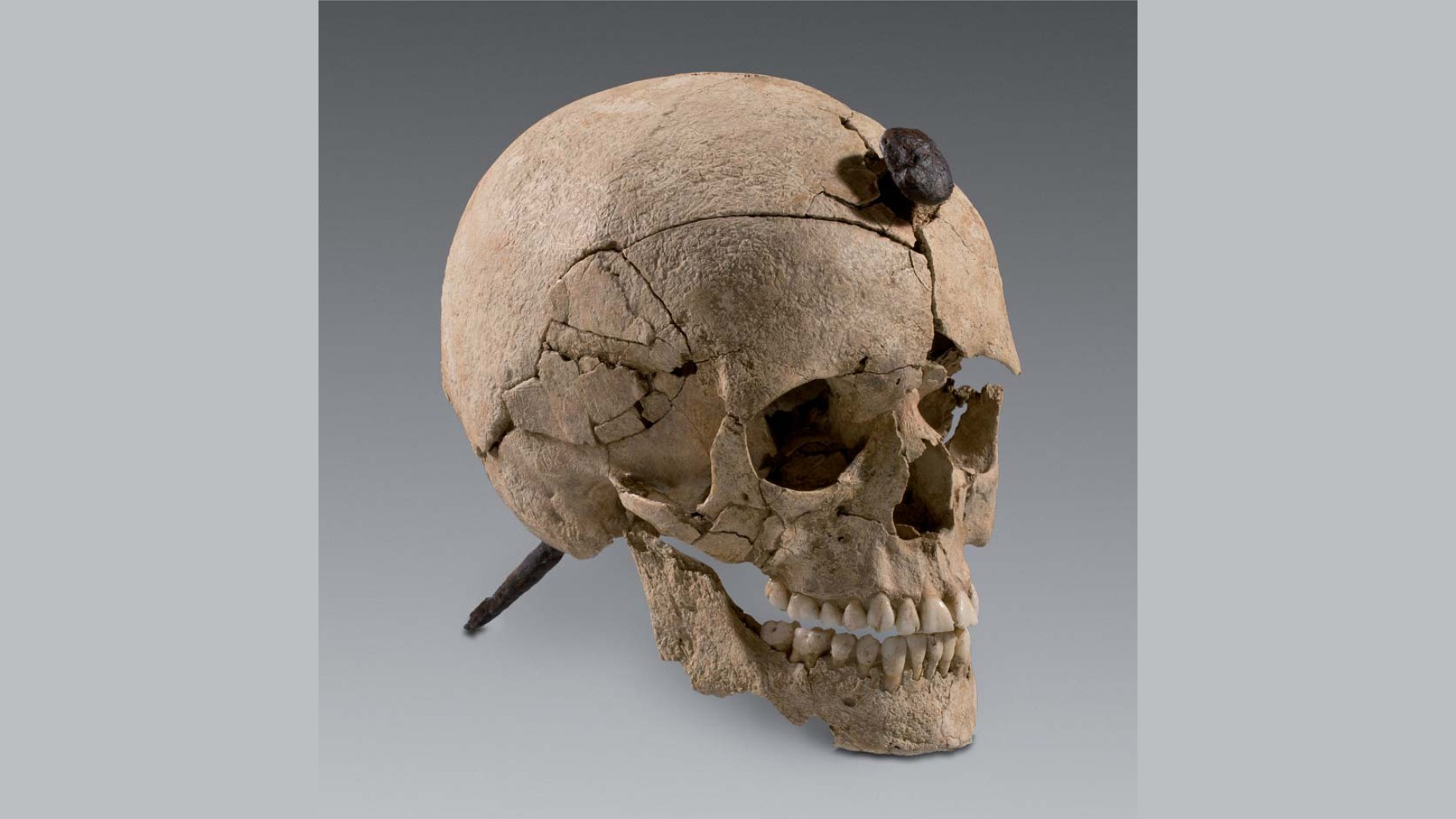
Prehistoric people in Spain severed the heads of dead people and drove giant nails through their skulls for very different reasons: to celebrate the community’s ancestors and to intimidate their enemies, a new analysis of Iron Age skulls suggests.
In a new study, researchers examined seven severed skulls from two archaeological sites on the southeast coast of the Iberian Peninsula, with the goal of identifying where the decapitated people came from.
“Our premise in approaching the study was that if they were war trophies they would not come from the sites analysed, while if they were venerated individuals, these would most likely be local,” Rubén de la Fuente-Seoane, an archaeologist at the Autonomous University of Barcelona and first author of the study, said in a statement Friday (Feb. 21).
In the study, published online Feb. 13 in the Journal of Archaeological Science: Reports, de la Fuente-Seoane and colleagues used a method called strontium isotope analysis to identify which of the seven people were local and which individuals came from elsewhere. This technique helps to reveal where individuals were from because the element strontium gets into bones and teeth during growth and development and reflects the geography of a person’s diet.
From this analysis, the researchers learned that three out of four severed heads at the site of Puig Castellar came from nonlocal people, while at the site of Ullastret, only one of the three skulls came from a nonlocal person. Both archaeological sites, which are about 60 miles (100 kilometers) apart, once hosted ancient cities that were abandoned soon after the Second Punic War and the arrival of the Romans around the end of the third century B.C.
Related: People have been dumping corpses into the Thames since at least the Bronze Age, study finds
“This result suggests that the practice of severed heads was applied in a different way at each site,” de la Fuente-Seoane said, and that “the selection of individuals for the severed heads ritual was more complex than initially thought.”
The researchers also examined the places where the severed heads were found. At Puig Castellar, all of the nonlocal skulls were found on or near exterior walls, which suggests the skulls were nailed up for people to see. This may mean their purpose was to demonstrate power over a group outside that community.
At Ullastret, on the other hand, the local skulls were found in dwellings, which hints that they were displayed either inside or outside houses to honor important community members, the researchers said.
These findings line up with historical accounts from the Greeks and Romans, the researchers noted in their study. Ancient authors wrote that the Gauls of southern France would sever the heads of enemies and keep them in boxes and that Iberian mercenaries would carry impaled enemy heads on their spears.
But the researchers cautioned that this is not the final word on the nailed-head ritual. Although the ritual appears to have been practiced in different ways across Iron Age Iberian sites, more research is needed to be certain, de la Fuente-Seoane said.
