Close Menu
  • Home
  • UNSUBSCRIBE
  • News
  • Lifestyle
  • Tech
  • Entertainment
  • Sports
  • Travel
Facebook X (Twitter) WhatsApp
Trending
  • Save on tablets from Apple, Samsung, and Amazon ahead of Amazon’s Big Spring Sale
  • Ricky Hatton: Not clear that former boxing world champion intended to take his own life, rules coroner | Boxing News
  • Best Celebrity-Loved Swimsuits from Amazon
  • A Kremlin loyalist suddenly turned against Putin. A day later, he was in a psychiatric hospital.
  • Human-driven climate change is slowing Earth’s rotation at a rate not seen in 3.6 million years
  • John Lithgow reportedly weighed quitting HBO ‘Harry Potter’ series over Rowling
  • PopSockets Pokémon Day and Night collection 2026: Where to buy
  • Jonathan Wheatley: Audi team principal leaves German manufacturer amid Aston Martin interest ahead of Japanese GP | F1 News
Facebook X (Twitter) WhatsApp
Baynard Media
  • Home
  • UNSUBSCRIBE
  • News
  • Lifestyle
  • Tech
  • Entertainment
  • Sports
  • Travel
Baynard Media
Home»Lifestyle»Human-driven climate change is slowing Earth’s rotation at a rate not seen in 3.6 million years
Lifestyle

Human-driven climate change is slowing Earth’s rotation at a rate not seen in 3.6 million years

EditorBy EditorMarch 20, 2026No Comments4 Mins Read
Share Facebook Twitter Pinterest LinkedIn Tumblr Reddit Telegram Email
Share
Facebook Twitter LinkedIn Pinterest Email

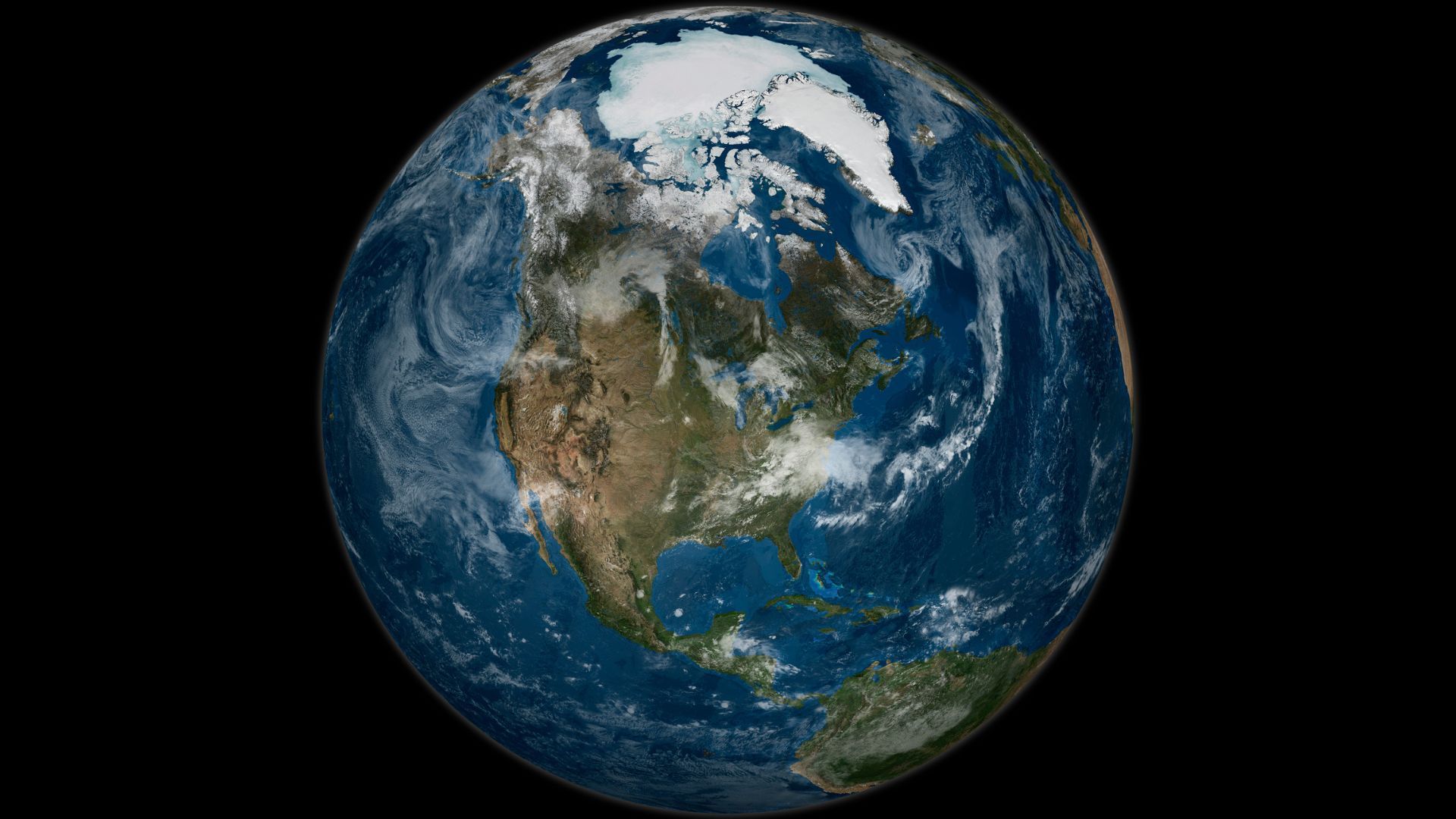
Human-driven climate change is slowing Earth’s rotation at a rate not seen in 3.6 million years, with sea level rise increasing the length of days by 1.33 milliseconds per century, according to a new study.

Earth spins faster when its mass is more concentrated, just as twirling figure skaters pull in their arms to speed up and spread out their arms to slow down. Rising sea levels have long been known to redistribute that mass and change the planet’s spin, but the newly identified rate is unprecedented, scientists say.

Many factors influence Earth’s spin speed. The moon’s pull on the planet is the most significant over the long term. Its gravitational pull creates a bulge in the planet that slows Earth’s rotation rate, Michael Mann, a climatologist at the University of Pennsylvania who was not involved with the new study, told Live Science. The moon’s influence increases Earth’s day length by about 2.4 milliseconds per century.

Article continues below


You may like

However, this 2.4 millisecond rate is offset by an effect called glacial isostatic adjustment, which is the slow rise of the planet’s crust that continues to occur after the retreat of the ice sheets. Glacial isostatic adjustment shortens the day length by about 0.8 millisecond per century, leading to a background lengthening over time of 1.71 milliseconds per century (with about 0.1 millisecond of uncertainty in the observations).

Other, shorter-term phenomena also affect day length, including strengthened winds during El Niño events, which slow the planet’s rotation by about a millisecond per century, Mann said.

However, in recent years, the climate seems to be playing an increasing role in altering Earth’s rotation, said study co-author Mostafa Kiani Shahvandi, a geoscientist at ETH Zurich. “I wanted to know if this was unusual or something like this happened in the past,” Shahvandi told Live Science. “As it turned out, it is quite anomalous. The effect is therefore anthropogenic [caused by humans].”

Shahvandi and study co-author Benedikt Soja, a professor of space geodesy at ETH Zurich, turned to the fossils of shelled single-cell organisms called foraminifera to peer back millions of years into Earth’s day length. Changes in the oxygen content of these fossils could reveal sea levels when the organisms were alive, from which the researchers could extrapolate day lengths.

Get the world’s most fascinating discoveries delivered straight to your inbox.

They found that today’s 1.33-millisecond-per-century increase in day length was among the fastest changes seen in the past 3.6 billion years. “This is expected to get even larger and even bigger than the effect of the moon,” Shahvandi said.

One episode around 2 million years ago saw a similar increase in day length of 2.1 milliseconds per century , the researchers found. That was in the Early Pleistocene, during a period when carbon dioxide in the atmosphere and temperatures rose. There is some uncertainty in the historical estimate, meaning that this period may have seen a similar increase in day length as today, or that today might be faster.

Under a future warming scenario where greenhouse gases increase, the day could lengthen by 2.62 milliseconds per century by 2080, Shahvandi and Soja reported in their study, which was published March 10 in the journal JGR Solid Earth.

Although the impact would likely not be perceptible to humans, the findings have other real-world implications. For example, Mann said, instruments that require precise knowledge of Earth’s rotation rate, such as those on spacecraft, may need to be recalibrated. Other precise timekeeping applications, such as in computing, could be affected, Shahvandi said.

The findings also underscore the rapidity of modern warming. “It tells us about the rapid climate change,” Shahvandi said, “[the] melting of snow and ice in polar ice sheets and mountains glaciers, and increase in the sea levels.”

Kiani Shahvandi, M., & Soja, B. (2026). Climate‐Induced Length of Day Variations Since the Late Pliocene. Journal of Geophysical Research: Solid Earth, 131(3). https://doi.org/10.1029/2025jb032161

Source link

Share. Facebook Twitter Pinterest LinkedIn Tumblr Email
Previous ArticleJohn Lithgow reportedly weighed quitting HBO ‘Harry Potter’ series over Rowling
Next Article A Kremlin loyalist suddenly turned against Putin. A day later, he was in a psychiatric hospital.
Editor
  • Website

Related Posts

Lifestyle

Live Science Today: Monte Verde controversy and heatwave lashes the West

March 20, 2026
Lifestyle

Scientists witness birth of one of the universe’s strongest magnets for the first time, thanks to a general relativity ‘magic trick’

March 20, 2026
Lifestyle

‘Dark oxygen’ discovery on the seafloor is ‘fundamentally at odds with thermodynamics’ and should be retracted, experts say

March 20, 2026
Add A Comment

Comments are closed.

Categories
  • Entertainment
  • Lifestyle
  • News
  • Sports
  • Tech
  • Travel
Recent Posts
  • Save on tablets from Apple, Samsung, and Amazon ahead of Amazon’s Big Spring Sale
  • Ricky Hatton: Not clear that former boxing world champion intended to take his own life, rules coroner | Boxing News
  • Best Celebrity-Loved Swimsuits from Amazon
  • A Kremlin loyalist suddenly turned against Putin. A day later, he was in a psychiatric hospital.
  • Human-driven climate change is slowing Earth’s rotation at a rate not seen in 3.6 million years
calendar
March 2026
M T W T F S S
 1
2345678
9101112131415
16171819202122
23242526272829
3031  
« Feb    
Recent Posts
  • Save on tablets from Apple, Samsung, and Amazon ahead of Amazon’s Big Spring Sale
  • Ricky Hatton: Not clear that former boxing world champion intended to take his own life, rules coroner | Boxing News
  • Best Celebrity-Loved Swimsuits from Amazon
About

Welcome to Baynard Media, your trusted source for a diverse range of news and insights. We are committed to delivering timely, reliable, and thought-provoking content that keeps you informed
and inspired

Categories
  • Entertainment
  • Lifestyle
  • News
  • Sports
  • Tech
  • Travel
Facebook X (Twitter) Pinterest WhatsApp
  • Contact Us
  • About Us
  • Privacy Policy
  • Disclaimer
  • UNSUBSCRIBE
© 2026 copyrights reserved

Type above and press Enter to search. Press Esc to cancel.