
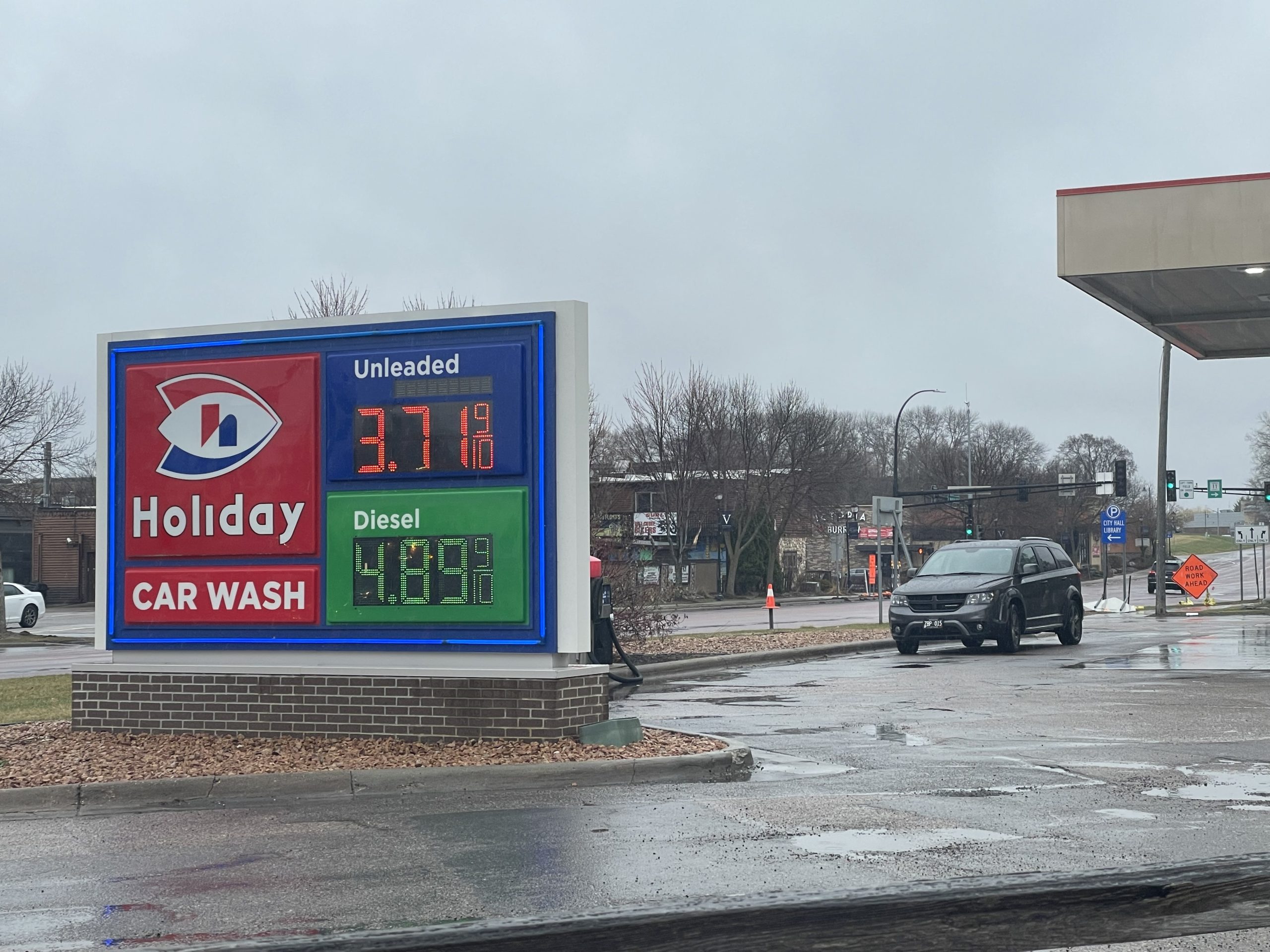
WASHINGTON – Nationally, the price of a gallon of gasoline averaged more than $4 this week, brought on by the disruption to global oil supplies caused by the war in Iran. But motorists in Minnesota are feeling less pain at the pump.
According to the American Automobile Association (AAA), which closely monitors the cost of gasoline, prices were only a little more than $3.50 a gallon in Minnesota this week, a considerable discount from the national average.
Two main factors contribute to Minnesota’s prices being among the lowest in the nation. One is that most of the oil that’s converted to gasoline, diesel, jet fuel and other petroleum-based products in the state is imported from Canada, with a lesser amount coming from North Dakota.
Those nearby, dependable sources of oil are delivered to two refineries in the state through a series of pipelines that feed what’s called the “Minnesota pipeline.” It begins in Clearbrook in the northwestern part of the state and transports crude oil south to two refineries near the Twin Cities.
“Pipelines are the most effective way to transport oil,” said Jake Reint, spokesman for the Flint Hill Resources refinery in Rosemount, which refines about 385,000 barrels of oil each year.
The other refinery in the state is the Marathon facility in St. Paul Park that refines about 100,000 barrels of oil a year.
Reint said it was more “competitive” economically to use pipelines, rather than tanker trucks or rail, to transport oil.
He said “the proximity to fuel supply and a robust pipeline and refining structure” in the state has kept Minnesota from facing the worst of the oil price shocks that began as soon as the conflict in Iran shook global markets a month ago.
“We are able to meet demands when there are significant disruptions,” Reint said.
Minnesota also maximizes the use of ethanol in gasoline produced at 18 biofuel refineries in the state, which may moderate a price spike.
The state’s gas tax, about 28 cents a gallon, is comparatively moderate when compared to many other states. California’s state gasoline tax, for instance, is nearly 60 cents a gallon, Pennsylvania’s is nearly 58 cents a gallon and Maryland and Illinois have 47-cent-a gallon gasoline taxes.
Still, Minnesota raised about $880 million in fuel taxes from the sale of 2.5 billion gallons of gasoline and diesel in the state last year. The state also raised additional revenue from taxes on jet fuel.
Oil shock may last a while
Iran’s dominance over the Strait of Hormuz, the only maritime route into the Persian Gulf, has become a major weapon for that nation.
One-fifth of the world’s supply of both oil and liquified natural gas usually flows through the strait on its way to markets around the world, particularly to Asia.
Since the United States attacked the nation a month ago, those energy supplies – as well as cargoes of fertilizer, food and other products – have been unable to get through the Strait of Hormuz to their destinations as Iran has threatened those vessels with drones and attack boats.
Iran, which struck a Qatari tanker in a missile attack on Wednesday, is also seeking more leverage by attacking its petroleum-rich neighbors’ oil and gas infrastructure. That could take a while to rebuild.
The conflict has left oil markets reeling and resulted in a dollar-a-gallon climb in the average price of a gallon of gasoline.
Oil prices retreated a bit this week in the wake of President Donald Trump’s declaration that a peace deal is at hand. But they rose sharply again after the president told the nation Wednesday evening that the United States is ready to hit Iran “extremely hard” in the coming weeks.
Some analysts have predicted that the full brunt of the market shock has yet to be felt in the United States.
That means gasoline prices could continue to climb, even in states that are able to blunt the impact, like Minnesota.
And, although AAA said the average price of gasoline per gallon in Minnesota was about $3.50 this week, that price varied from county to county.
According to AAA, the most expensive gasoline was found in Waseca, Blue Earth, Steele and other southern Minnesota counties, where it cost $3.60 or more to fill up.
Gasoline was also more expensive than the state average in the Twin Cities counties of Hennepin and Ramsey and those that surround them.
Meanwhile, AAA said the cheapest gas could be found in the Iron Range counties of Polk, St. Louis, Marshall and other areas in the northern part of the state, where gasoline could be purchased for little more than $3.30 a gallon.
There could be many reasons for the discrepancies.
Reint said there are always price variations at the retail and wholesale levels, meaning some gas stations may charge more than others. He also said “street level competition” among stations could bring the price of fuel down in some areas.
Reint also said proximity to terminals where gasoline is refined and the cost of getting 18-wheelers to deliver fuel to retail gas stations could be another factor. Another variable is the proximity of Minnesota gas stations to markets in other states that have higher or lower prices for fuel.
That may mean that stations in northern Minnesota that are close to oil-producing Canada and North Dakota may be influenced by the lower prices of fuel across the border.
Data reporter Shadi Bushra contributed to this story.
