Close Menu
  • Home
  • UNSUBSCRIBE
  • News
  • Lifestyle
  • Tech
  • Entertainment
  • Sports
  • Travel
Facebook X (Twitter) WhatsApp
Trending
  • George Kittle’s wife shares live reaction to Achilles injury
  • ‘The scientific cost would be severe’: A Trump Greenland takeover would put climate research at risk
  • Headlines Across OC as Angel Stadium Sale Debate Intensifies
  • Anti-Islam activists clash with pro-Muslim counter-protesters in Dearborn, Michigan
  • Best monitor deal: Get the 45-inch LG Ultragear gaming monitor for its lowest price yet
  • Slovakia U21 0 – 4 England U21
  • 13 Top Sleep Products That Transform Your Bedtime Routine for Better Rest
  • Firefighters rescue puppies from burning house
Facebook X (Twitter) WhatsApp
Baynard Media
  • Home
  • UNSUBSCRIBE
  • News
  • Lifestyle
  • Tech
  • Entertainment
  • Sports
  • Travel
Baynard Media
Home»Lifestyle»Extreme bloom of toxic algae swirls in Nevada’s ‘Pyramid Lake’ — Earth from space
Lifestyle

Extreme bloom of toxic algae swirls in Nevada’s ‘Pyramid Lake’ — Earth from space

EditorBy EditorNovember 18, 2025No Comments3 Mins Read
Share Facebook Twitter Pinterest LinkedIn Tumblr Reddit Telegram Email
Share
Facebook Twitter LinkedIn Pinterest Email

QUICK FACTS

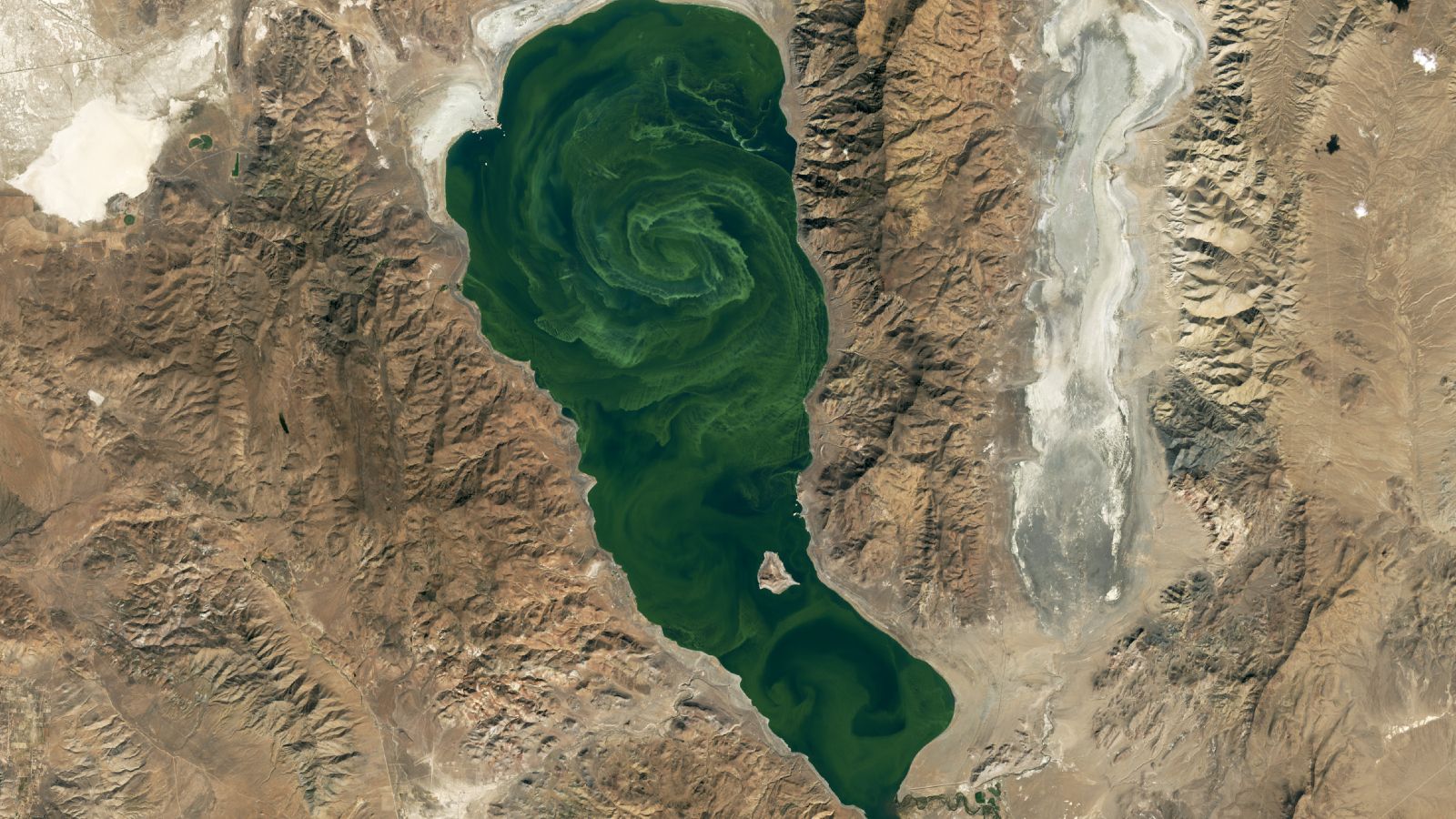
Where is it? Pyramid Lake, Nevada [40.063141310, -119.561560320]

What’s in the photo? A massive bloom of toxic cyanobacteria swirling in the lake

Which satellite took the photo? Landsat 9

When was it taken? Oct. 8, 2024

This striking satellite photo shows an exceptionally dense and toxic algal bloom swirling in the waters of Nevada’s Pyramid Lake. Some experts believe that the algae has existed in the lake for at least 9,000 years.

Pyramid Lake is a roughly 175-square-mile (453 square kilometers) lake, located northeast of Reno. It is around 27 miles (43 kilometers) across at its widest point and is named after a large pyramid-like rock formation located on a small island in the lake’s southern half.

The lake is fed by a single river, but it is endorheic, meaning it has no outflow. As a result, it has a much higher salinity than most lakes, because excess water evaporates away, leaving its dissolved salts behind. The lake is also slightly alkaline and has a pH of around 9, which is roughly equivalent to baking soda.


You may like

Pyramid Lake experiences annual algal blooms between September and October, due to warmer temperatures and increased nutrient availability. The predominant algal species is Nodularia spumigena, which is a blue-green, nitrogen-fixing cyanobacteria that thrives in high-salinity waters, according to NASA’s Earth Observatory.

But 2024’s bloom, captured in this satellite image, was one of the most extreme in recent memory. It peaked on Oct. 15, around a week after this photo was taken. It is currently unclear why this bloom was so intense.

Related: See all the best images of Earth from space

A photo of Pyramid Lake taken from the shoreline showing a large pyramid-like tufa on a nearby island

Pyramid Lake is known for its rocky features, or tufas, including a large pyramid-shaped structure that gives the lake its name. (Image credit: Rhalden/Wikimedia)

N. spumigena has the potential to produce toxins, such as nodularin, which can affect the liver and cause other adverse health effects in humans and other animals. During the 2024 bloom, local authorities warned people to not let their pets anywhere near the water.

Get the world’s most fascinating discoveries delivered straight to your inbox.

Pyramid Lake was once part of a much larger, prehistoric body of water, known as Lake Lahontan, which covered an area of around 8,000 square miles (21,000 square km) — around 45 times larger than Pyramid Lake.

This ancient lake was hit by climate change at the end of the last ice age, or Pleistocene epoch, which ended around 12,000 years ago. Around 3,000 years later, Lahontan had essentially disappeared, leaving Pyramid Lake as its largest remaining remnant.

Today, Pyramid Lake is known for a series of striking pillar-like calcium carbonate features, known as tufas, which grew from Lake Lahontan’s receding waters between 26,000 and 13,000 years ago, according to the U.S. Geological Survey. (This includes the pyramid-like structure the lake is named after.)

A 1990 study analyzed trends across 15 consecutive N. spumigena blooms in Pyramid Lake between 1972 and 1986. The researchers theorized that the cyanobacteria once bloomed in Lake Lahontan and may have persisted in its remaining waters ever since.

Pyramid Lake is also home to the cui-ui (Chasmistes cujus) — an endangered species of suckerfish that isn’t found anywhere else on Earth. These fish feed mainly on algae, such as N. spumigena, and also likely used to dwell within Lake Lahontan.

Source link

Share. Facebook Twitter Pinterest LinkedIn Tumblr Email
Previous ArticleTrump administration challenges California law banning ICE agent masks
Next Article At least eight injured after California house explosion
Editor
  • Website

Related Posts

Lifestyle

‘The scientific cost would be severe’: A Trump Greenland takeover would put climate research at risk

January 17, 2026
Lifestyle

New ‘Transformer’ humanoid robot can launch a shapeshifting drone off its back — watch it in action

November 19, 2025
Lifestyle

Medieval spear pulled from Polish lake may have belonged to prince or nobleman

November 19, 2025
Add A Comment

Comments are closed.

Categories
  • Entertainment
  • Lifestyle
  • News
  • Sports
  • Tech
  • Travel
Recent Posts
  • George Kittle’s wife shares live reaction to Achilles injury
  • ‘The scientific cost would be severe’: A Trump Greenland takeover would put climate research at risk
  • Headlines Across OC as Angel Stadium Sale Debate Intensifies
  • Anti-Islam activists clash with pro-Muslim counter-protesters in Dearborn, Michigan
  • Best monitor deal: Get the 45-inch LG Ultragear gaming monitor for its lowest price yet
calendar
February 2026
M T W T F S S
 1
2345678
9101112131415
16171819202122
232425262728  
« Jan    
Recent Posts
  • George Kittle’s wife shares live reaction to Achilles injury
  • ‘The scientific cost would be severe’: A Trump Greenland takeover would put climate research at risk
  • Headlines Across OC as Angel Stadium Sale Debate Intensifies
About

Welcome to Baynard Media, your trusted source for a diverse range of news and insights. We are committed to delivering timely, reliable, and thought-provoking content that keeps you informed
and inspired

Categories
  • Entertainment
  • Lifestyle
  • News
  • Sports
  • Tech
  • Travel
Facebook X (Twitter) Pinterest WhatsApp
  • Contact Us
  • About Us
  • Privacy Policy
  • Disclaimer
  • UNSUBSCRIBE
© 2026 copyrights reserved

Type above and press Enter to search. Press Esc to cancel.