Close Menu
  • Home
  • UNSUBSCRIBE
  • News
  • Lifestyle
  • Tech
  • Entertainment
  • Sports
  • Travel
Facebook X (Twitter) WhatsApp
Trending
  • Love Story’s Sarah Pidgeon Visited Carolyn Bessette’s Favorite Places
  • Washington Post faces backlash over describing Khamenei as having ‘easy smile’
  • Everything Lenovo announced at MWC 2026, including 6 new concepts
  • Mason Mount: Manchester United star attracting Premier League interest – Paper Talk and transfer gossip | Football News
  • Leonardo DiCaprio Filming What Happens at Night
  • CalOptima Audit Finds No Proof of Do’s Bribery
  • ‘Equinox effect’ could supercharge auroras this March
  • Honor’s Robot Phone hands-on: It’s wild, and it’s weird
Facebook X (Twitter) WhatsApp
Baynard Media
  • Home
  • UNSUBSCRIBE
  • News
  • Lifestyle
  • Tech
  • Entertainment
  • Sports
  • Travel
Baynard Media
Home»Lifestyle»‘Equinox effect’ could supercharge auroras this March
Lifestyle

‘Equinox effect’ could supercharge auroras this March

EditorBy EditorMarch 1, 2026No Comments3 Mins Read
Share Facebook Twitter Pinterest LinkedIn Tumblr Reddit Telegram Email
Share
Facebook Twitter LinkedIn Pinterest Email

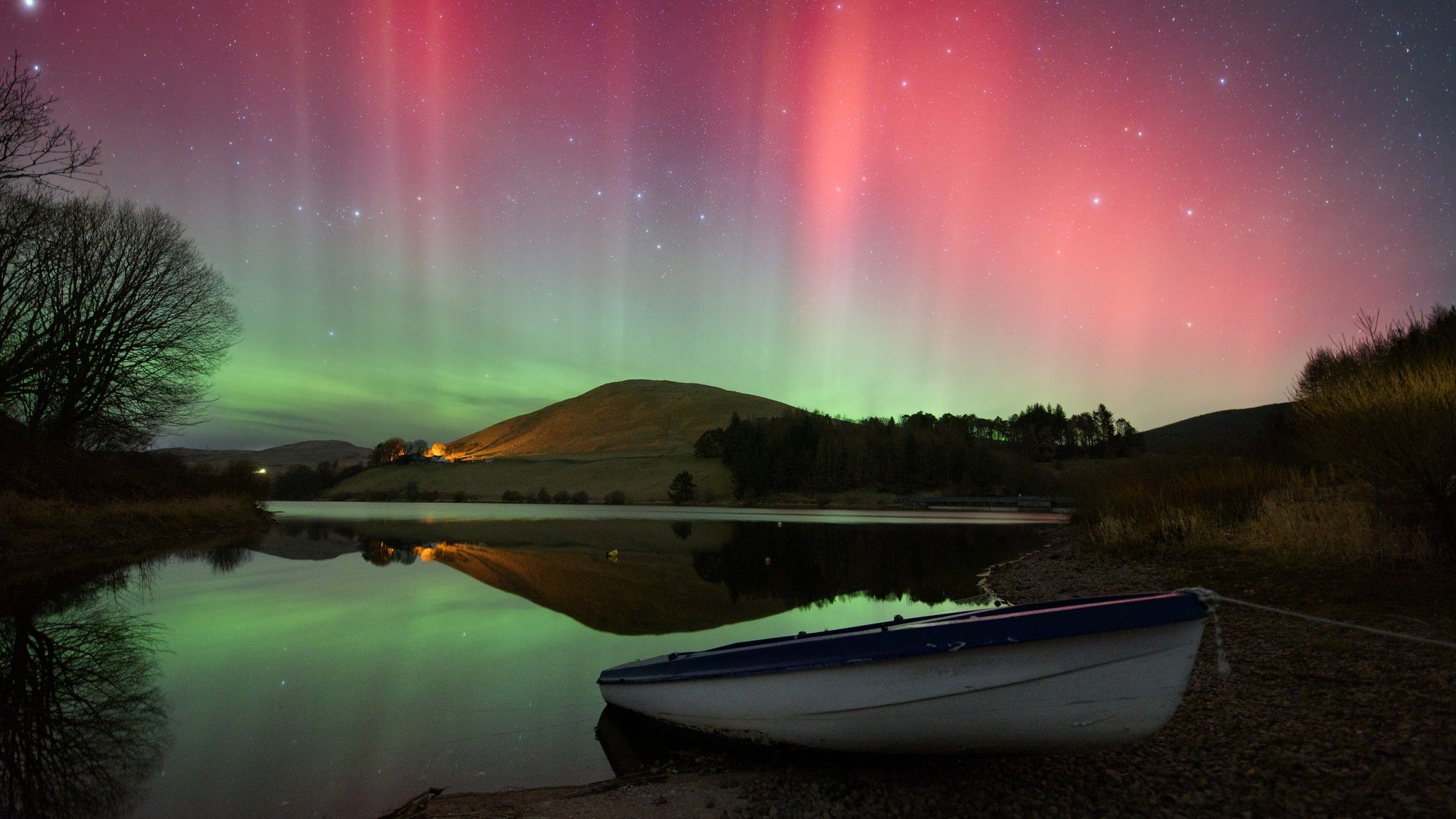
This month could be the best time to spot the northern lights for nearly a decade, as the combination of the “equinox effect” and supercharged solar activity will make auroras more likely. However, precisely where and when they will appear is still up in the air.

At 10:46 a.m. EDT (14:46 UTC) on Friday, March 20, the sun will cross the celestial equator, marking the spring equinox in the Northern Hemisphere and the fall equinox in the Southern Hemisphere.

As that happens, Earth’s axis will be side-on to the sun. It will mean shorter nights in the Northern Hemisphere until the summer solstice in June, but for a few weeks before and after the equinox, it also means the northern lights will be more likely.


You may like

The equinox effect

This “equinox effect,” which doubles the chance of auroral activity around the spring and fall equinoxes, was first explained by scientists Christopher Russell and Robert McPherron in a 1973 paper in the Journal of Geophysical Research.

They argued that auroras were more likely in March and September because the south-pointing magnetic fields in the solar wind cancel out Earth’s north-pointing magnetic field, making it easier for the solar wind to stream along magnetic-field lines. Effectively, the door swings open, which allows in more of the charged particles that collide with oxygen and nitrogen atoms in the upper atmosphere to cause auroras.

An illustration of Earth and the sun. Blue magnetic field lines surround Earth while orange plasma blasts off of the sun.

During the equinox, Earth’s magnetic field and the solar wind meet in such a way that auroras become more common. However, strong solar outbursts are still key. (Image credit: NASA / MSFC)

March’s equinox comes as solar maximum — the peak of the sun’s 11-year solar activity cycle — is drawing to a close. During solar maximum, the sun’s magnetism is at full power. NASA, the National Oceanic and Atmospheric Administration (NOAA), and the International Solar Cycle Prediction Panel reported that the sun had likely reached solar maximum in October 2024, but they added that it would not be possible to confirm that for months or years.

The sun’s magnetic intensity is calculated by counting sunspots — cooler regions on the sun caused by a concentration of magnetic-field lines — on its surface. The number of sunspots is now trending downward, with the U.K. Met Office stating in January that activity appears to be declining. That means fewer solar flares and, crucially, fewer coronal mass ejections — clouds of charged particles that can travel toward Earth to produce auroras.

Get the world’s most fascinating discoveries delivered straight to your inbox.

According to NOAA‘s Space Weather Prediction Center, Solar Cycle 26 is expected to begin sometime between January 2029 and December 2032, with solar activity likely to remain low during that time.

Will there be a noticeable equinox effect this March? The conditions could produce the best auroras until the mid-2030s, but that doesn’t mean we should expect to see them at more southerly latitudes in the Northern Hemisphere.

In the end, everything depends on solar activity, and that’s hard to predict in advance. While early February produced the single most active sunspot of the current solar cycle — resulting in auroras at much lower latitudes than usual — that monster spot has since vanished. Unfortunately, there’s no way to know whether a new one will emerge to take its place in time for the equinox.

Source link

Share. Facebook Twitter Pinterest LinkedIn Tumblr Email
Previous ArticleHonor’s Robot Phone hands-on: It’s wild, and it’s weird
Next Article CalOptima Audit Finds No Proof of Do’s Bribery
Editor
  • Website

Related Posts

Lifestyle

Ancient Greek mystery cult priestesses may have chemically tweaked fungus to induce psychedelic hallucinations

March 1, 2026
Lifestyle

Pain lasts longer in women, and immune cells may the culprit

March 1, 2026
Lifestyle

The ‘sweet spot’ of overconfidence — project a bit to be perceived as competent, but don’t be ‘too seduced,’ a cognitive neuroscientist explains in a Q&A

March 1, 2026
Add A Comment

Comments are closed.

Categories
  • Entertainment
  • Lifestyle
  • News
  • Sports
  • Tech
  • Travel
Recent Posts
  • Love Story’s Sarah Pidgeon Visited Carolyn Bessette’s Favorite Places
  • Washington Post faces backlash over describing Khamenei as having ‘easy smile’
  • Everything Lenovo announced at MWC 2026, including 6 new concepts
  • Mason Mount: Manchester United star attracting Premier League interest – Paper Talk and transfer gossip | Football News
  • Leonardo DiCaprio Filming What Happens at Night
calendar
March 2026
M T W T F S S
 1
2345678
9101112131415
16171819202122
23242526272829
3031  
« Feb    
Recent Posts
  • Love Story’s Sarah Pidgeon Visited Carolyn Bessette’s Favorite Places
  • Washington Post faces backlash over describing Khamenei as having ‘easy smile’
  • Everything Lenovo announced at MWC 2026, including 6 new concepts
About

Welcome to Baynard Media, your trusted source for a diverse range of news and insights. We are committed to delivering timely, reliable, and thought-provoking content that keeps you informed
and inspired

Categories
  • Entertainment
  • Lifestyle
  • News
  • Sports
  • Tech
  • Travel
Facebook X (Twitter) Pinterest WhatsApp
  • Contact Us
  • About Us
  • Privacy Policy
  • Disclaimer
  • UNSUBSCRIBE
© 2026 copyrights reserved

Type above and press Enter to search. Press Esc to cancel.