
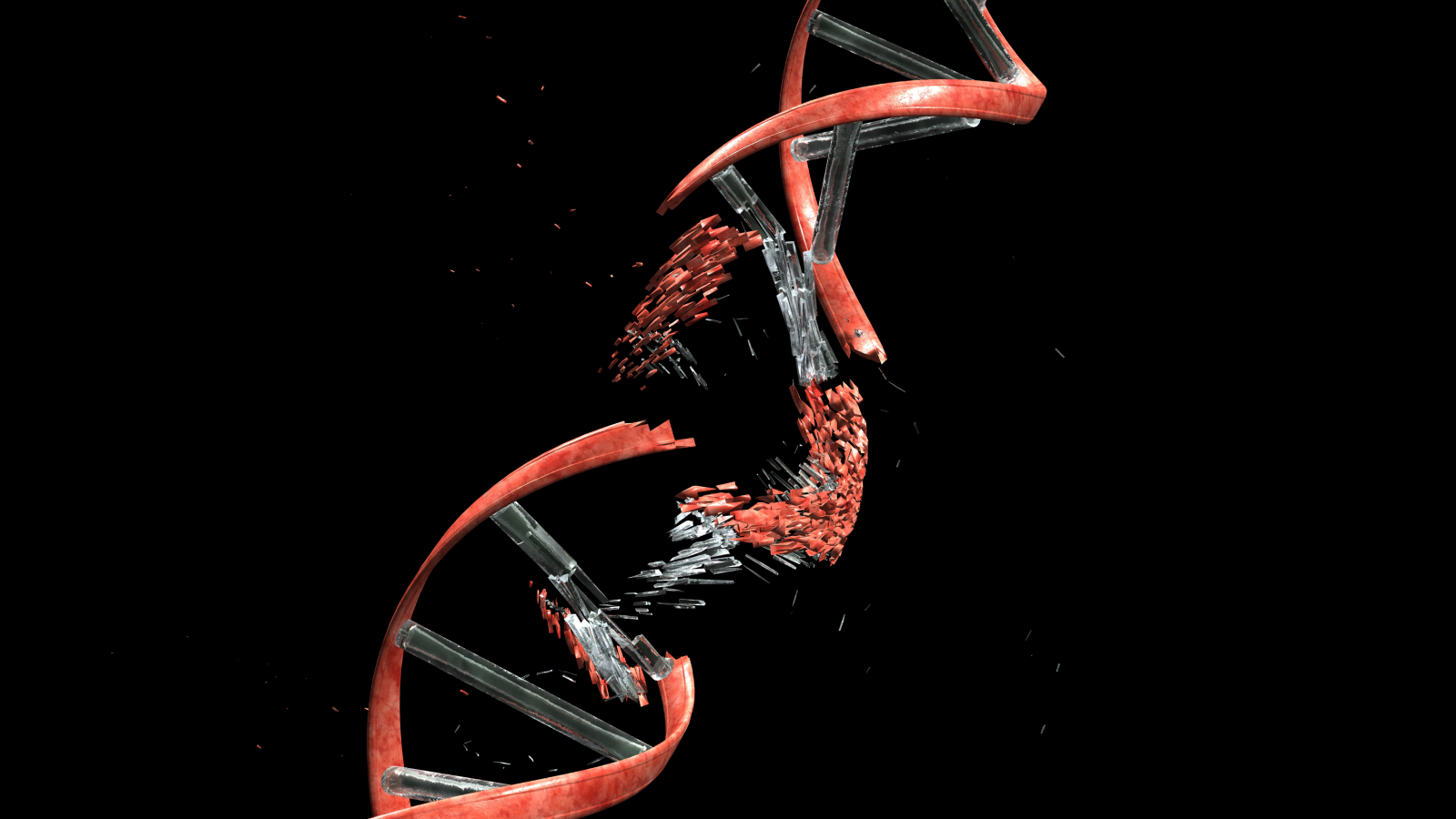
The brain disease chronic traumatic encephalopathy (CTE) has been linked to physical trauma to the head — and it turns out that those head impacts may trigger inflammation and DNA damage that accumulates in brain cells over time, a new study finds.
That DNA damage, which can eventually lead to cell dysfunction and death, resembles the damage seen in the brains of people with Alzheimer’s disease, the research suggests.
The scientists behind the new study decided to dig into the link between DNA damage and CTE after they showed that they found that mature neurons, which don’t divide, nonetheless accumulate mutations throughout life. In a 2015 study, the team found that these mutations build up even faster in the context of brain diseases, such as Alzheimer’s.
“We used to think neurons had the most stable genomes in the body,” said Dr. Christopher Walsh, a geneticist at Boston’s Children’s Hospital who was a co-author on both that prior study and the new one. “But it turns out, they pick up mutations year after year, and those mutations accelerate in neurodegenerative disease,” he told Live Science.
That discovery raised a question: If DNA damage builds up in other brain disorders, could it also be driving the neuron loss seen in CTE?
In the new study, published Oct. 30 in the journal Science, researchers analyzed the genomes of individual neurons sampled from 15 people who had been diagnosed with CTE after death, as well as those from four people with a history of repetitive head impacts but no CTE. The team compared these neurons with cells from healthy brains and with cells from people with Alzheimer’s disease. They did this using single-cell whole-genome sequencing, which analyzes all of the DNA in each cell sampled.
The results showed that neurons from CTE brains carried more DNA mutations than those from healthy brains. On average, they carried about 114 additional single-letter changes in the DNA code per neuron. But neurons from people who had repeated head impacts but no CTE showed no increase in mutations, compared with healthy brains.
The pattern of mutations seen in CTE seems to be very similar to what happens in Alzheimer’s disease, the researchers observed. Both have an increased number of mutations and similar types of DNA alterations.
In the team’s prior study, they “discovered that neurons, which don’t replicate, actually accumulate mutations at a steady rate throughout life,” Walsh said. “Even in healthy brains, that clock ticks forward about 17 new mutations per year from birth to old age. But in disease, that clock speeds up.”
The researchers also identified another kind of genetic damage: short insertions and deletions, known as indels, in which letters are added or subtracted from DNA’s code. These tiny DNA breaks were more abundant in neurons from both CTE and Alzheimer’s brains than in healthy ones. In some of the CTE cases, neurons contained more than a thousand indels — equivalent to what might be seen in more than a century of normal aging.
“These indels have increased,” Walsh said. “They’re probably numerous enough to cause serious dysfunction or death in the affected cells.”
Although the study did not directly test for inflammation in the neurons, earlier work by study co-authors Dr. Ann McKee, a neuropathologist at Boston University (BU) CTE Center, and John Cherry, a neuroscientist at BU, has shown that inflammation is widespread activation of microglia — the brain’s immune cells — in CTE brains.
“We think CTE might be a combination of repeated head trauma and inflammation,” Walsh said. “That combination may bombard the genome with the same kinds of damaging processes that ultraviolet light causes in skin or tobacco smoke in the lungs,” as both UV and tobacco exposure trigger DNA damage.
In summary, repeated head impacts may trigger inflammation in the brain, which can promote the accumulation of DNA mutations in neurons and contribute to cell dysfunction and death. These findings suggest that while head trauma remains a key trigger of CTE, the long-term harm is likely driven by inflammation-driven DNA damage.
The team is now investigating whether similar processes happen in other neurodegenerative diseases, such as amyotrophic lateral sclerosis (ALS) and Huntington’s disease.
“This could be a common final pathway across diseases,” Walsh said. “We’d like to trace the biochemical steps from inflammation to neuron death and figure out where we can intervene.”
