
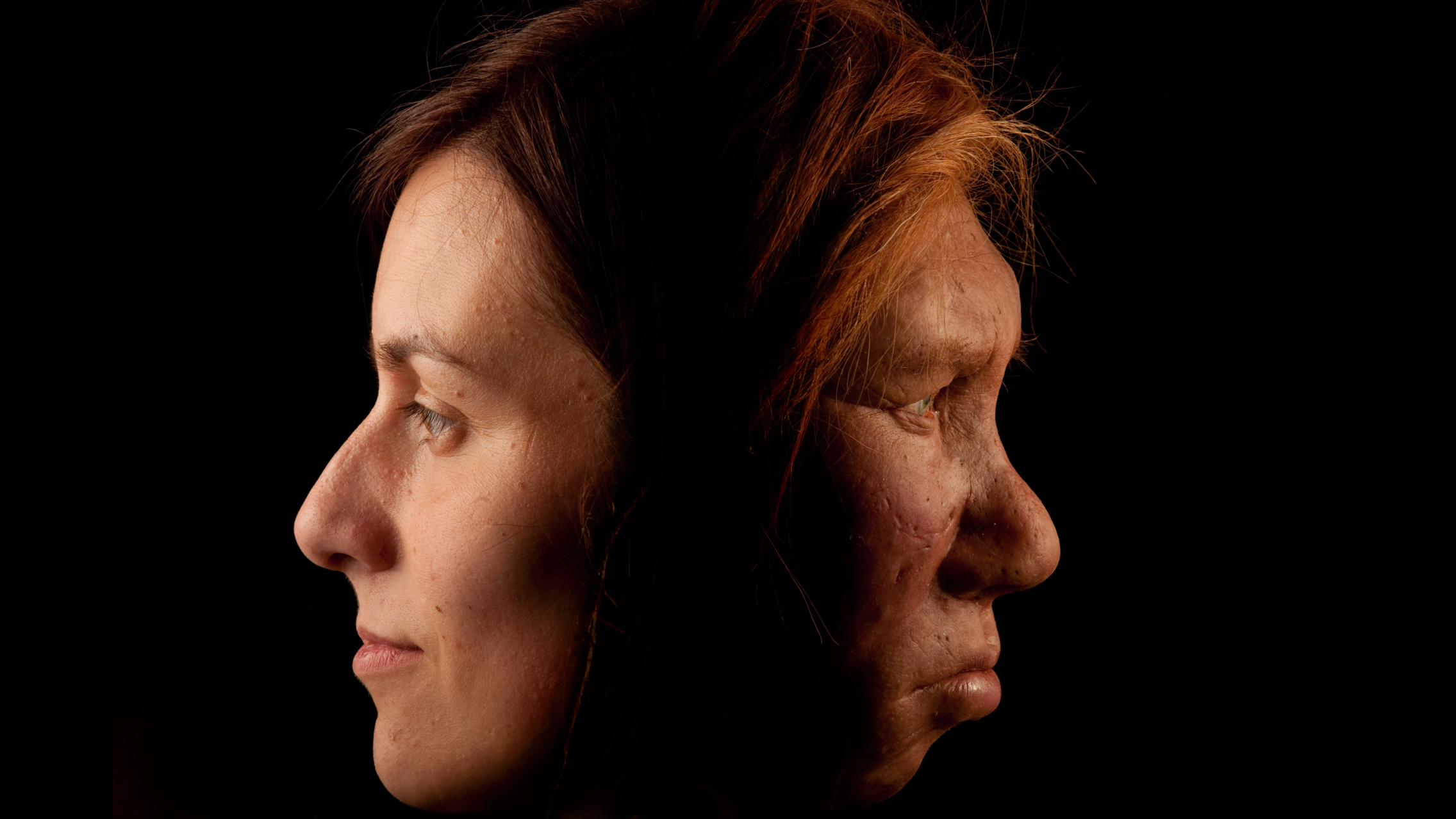
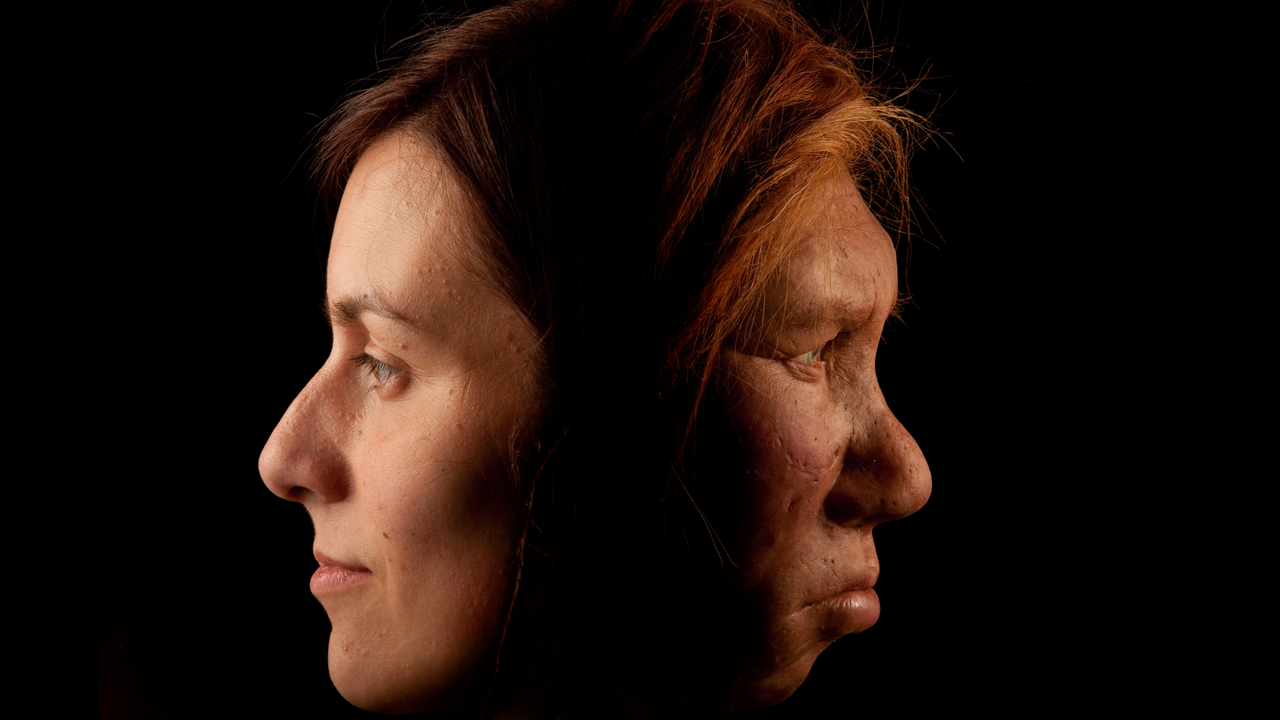
A fatal genetic incompatibility between Neanderthals and modern humans may have hastened the extinction of our ancient cousins, new research suggests.
Researchers found that different versions of a gene tied to red blood cell function may have caused Neanderthal-human hybrid women to miscarry their fetuses.
When Neanderthals and early modern humans met in Eurasia around 45,000 years ago, “they exchanged genes — and may also have passed on hidden reproductive risks that shaped the fate of both lineages,” Patrick Eppenberger, co-head of the Evolutionary Pathophysiology and Mummy Studies Group at the Institute of Evolutionary Medicine in Zurich, and colleagues wrote in a study posted to the preprint database bioRxiv Sept. 29. (It has not been peer-reviewed yet.)
The researchers focused on the PIEZO1 gene, which affects red blood cells and is found in both modern humans (Homo sapiens) and Neanderthals. They discovered that the PIEZO1 gene differed between Neanderthals and modern humans.
The Neanderthal variant, which is similar to the variant found in other great apes, allowed the hemoglobin in red blood cells to cling more tightly to oxygen molecules, while the novel H. sapiens variant allowed oxygen to be passed more efficiently into surrounding tissue. Neanderthals may have maintained the original variant because it was beneficial for surviving extreme cold and periods of starvation, the researchers suggested.
But when maternal blood has abnormally high amounts of oxygen bound to hemoglobin, that means low levels of oxygen are passed on to a fetus through the placenta. This can cause hypoxia (oxygen deficiency) or restricted growth of the fetus or miscarriage.
But because of the way the PIEZO1 gene variants are inherited, the incompatibility would arise only when a hybrid Neanderthal-human mother mated with a modern-human father or with a hybrid Neanderthal-human father.
“Many of their offspring would fail to survive,” the researchers wrote. This, in turn, would mean Neanderthal women would pass on less of their mitochondrial DNA, which is carried in the egg and passes from mother to child, the authors wrote in the study. Over the course of several generations of mating between Neanderthals and humans, this may have significantly compromised hybrid Neanderthals’ ability to have kids, the researchers noted.
“The PIEZO1 incompatibility may have accelerated the demise of the Neanderthals by gradually eroding their reproductive capacity whenever the two groups interacted,” they wrote.
April Nowell, a Paleolithic archaeologist at the University of Victoria who was not involved in the study, told Live Science in an email that the study adds a much-needed piece of the puzzle to the question of Neanderthal extinction — namely, maternal-fetal incompatibility in oxygen transfer during pregnancy.
“It’s super interesting that an allele [gene variant] that may have saved Neanderthals in the past was their ultimate undoing when they began to interbreed with modern humans,” Nowell said.
John Hawks, a biological anthropologist at the University of Wisconsin who was not involved in the study, told Live Science in an email that the maternal-fetal incompatibility of PIEZO1 was intriguing and analogous to other genetic blood conditions, such as Rh factor incompatibility in modern humans.
“This is one of many potential cases where the gene variant coming from an archaic population had some bad effects, causing it to decline in frequency over time in modern people,” Hawks said.
But PIEZO1 is not the final answer to the question of Neanderthal extinction.
“There are no single-gene explanations for what was a long and complicated interaction across many archaic human groups, as modern humans entered the places where they lived and interacted with them,” Hawks said.
Eppenberger and colleagues emphasized in their study that the effect of interbreeding between Neanderthals and modern humans was likely drawn out and subtle — “more akin to rust weakening a structure than a single catastrophic blow” — and that more research along these lines is needed.
“It is worth pondering how many other loci in the genome might have similarly given rise to hybrid incompatibilities,” they wrote.
