
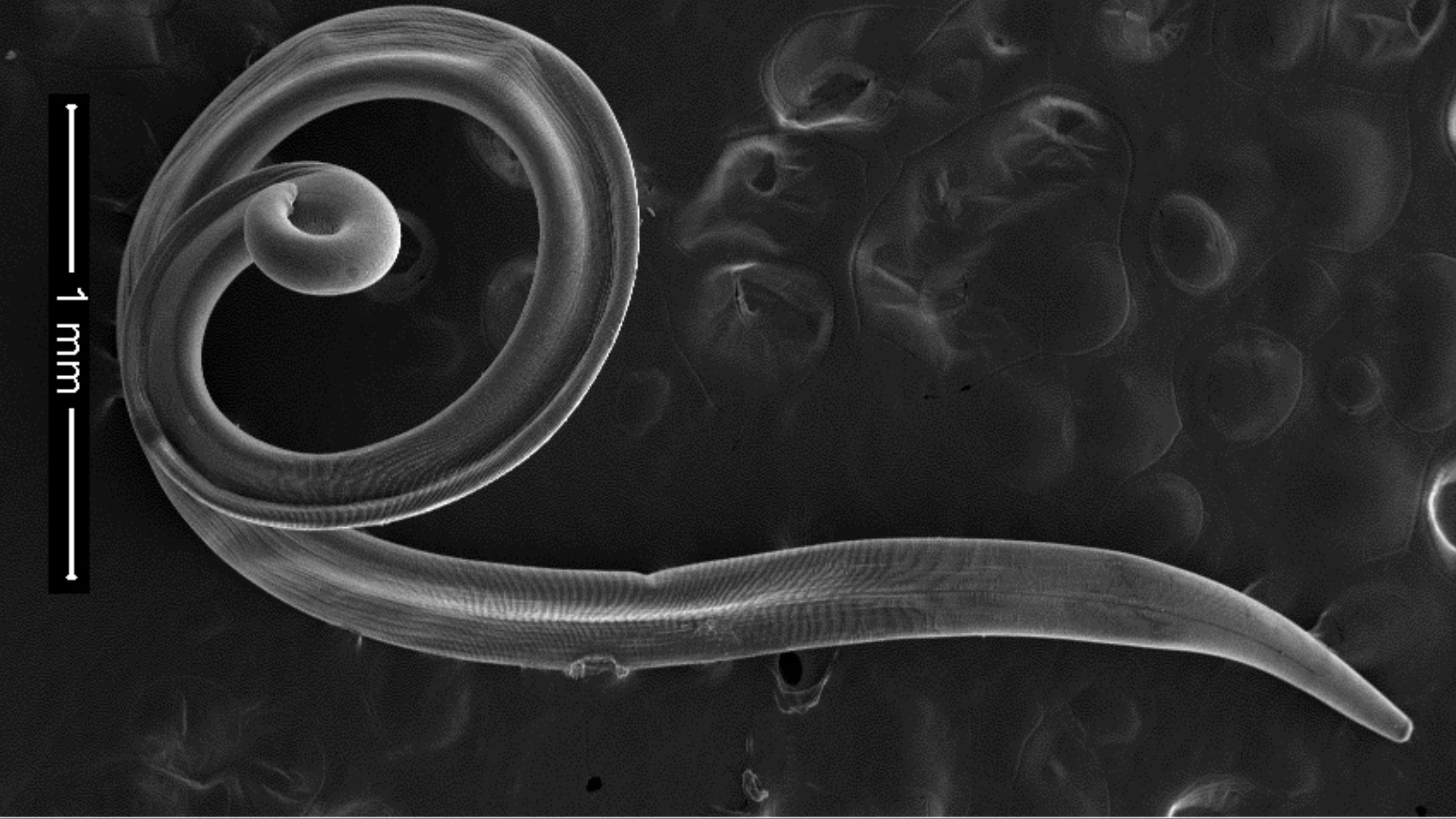
The patient: A 41-year-old woman in Beijing
The symptoms: The patient went to the hospital because she felt like there was something stuck in her right eye. When doctors looked at her eye, they noted that its outer surface, the cornea, appeared damaged, but they didn’t find any foreign bodies. They prescribed the patient eye drops, one type to treat the eye irritation and another with antibiotics in it to help prevent infection.
What happened next: The eye drops did not ease the woman’s symptoms, and she returned to the hospital the next month with the same feeling that something was stuck in her eye. She also reported persistent eye redness and itchiness.
When doctors reexamined her eye, this time they noticed that the tissue beneath her upper eyelid looked inflamed and bore “significant” pimple-like bumps, they wrote in a report of the case. They used a device called an eyelid retractor to pull back the eyelid and more closely examine the tissue beneath.
The diagnosis: There, the doctors found four small, white worms wiggling around. The medical team applied a topical anesthetic — a medicine to numb the area — and then removed the worms with forceps, and sent the extracted worms to the lab. A microscopic and genetic analysis of the worms revealed that they were a species called Thelazia callipaeda, also known as the Oriental eye worm, which can cause a parasitic infection called thelaziasis.
The treatment: After extracting the worms from the woman’s eyelid, the doctors rinsed her eye with a solution to “ensure no worms remained,” they wrote in the report. She was also prescribed an eye ointment containing an antibiotic to use several times a day, which helped reduce the risk of a subsequent bacterial infection.
“One week later, the patient’s symptoms were significantly relieved, and no recurrence was reported over the following two months,” her doctors wrote.
Image 1 of 2


What makes the case unique: Thelaziasis is relatively rare in humans. It’s seen more often in animals, including cattle, dogs, cats, foxes and rabbits. The worms are transmitted to these animals via flies that carry the parasite. The flies feed on the animals’ tears and deposit the worm larvae into their eyes as they do so. The larvae then mature inside the eye — often in the eyelid, specifically — before being picked up by another passing fly, continuing their life cycle. A variety of Thelazia species can cause the infection, but T. callipaeda is the most common culprit.
Historically, most cases of thelaziasis in humans have been reported in Asia, with China reporting the largest number overall. In the more than 100 years — between the country’s first known human cases in 1917 and 2018 — just over 650 cases were reported.
“Thelaziasis cases have been reported mainly in agricultural areas and areas with high potential for contact with domestic animals,” the report authors noted. Additionally, many people affected by the disease report being involved with animal husbandry and/or they specifically recall being recently exposed to flies.
In this case, though, the source of the woman’s infection wasn’t 100% certain. The patient was an office worker based in an urban center, and she didn’t recall a recent exposure to flying insects. She did, however, report having a pet cat who’d recently had an eye infection. “Pathological examination of the cat was not performed as the patient refused,” her doctors noted. So while the cat was the likely source of the worms, that wasn’t officially confirmed.
The report authors concluded that, even in urban centers, doctors should be aware of the symptoms of thelaziasis and consider it as a potential diagnosis. Symptoms can range from mild to severe, including the feeling of something in your eye, itching, eye pain, bleeding or inflammation of the tissue covering the eye and eyelids, ulcers in the cornea, and vision changes. The parasitic infection can also be complicated by secondary bacterial infections, which worsen these symptoms. Doctors should ask about whether patients have pets or have had recent contact with flying insects, they added.
This article is for informational purposes only and is not meant to offer medical advice.
