Close Menu
  • Home
  • UNSUBSCRIBE
  • News
  • Lifestyle
  • Tech
  • Entertainment
  • Sports
  • Travel
Facebook X (Twitter) WhatsApp
Trending
  • George Kittle’s wife shares live reaction to Achilles injury
  • ‘The scientific cost would be severe’: A Trump Greenland takeover would put climate research at risk
  • Headlines Across OC as Angel Stadium Sale Debate Intensifies
  • Anti-Islam activists clash with pro-Muslim counter-protesters in Dearborn, Michigan
  • Best monitor deal: Get the 45-inch LG Ultragear gaming monitor for its lowest price yet
  • Slovakia U21 0 – 4 England U21
  • 13 Top Sleep Products That Transform Your Bedtime Routine for Better Rest
  • Firefighters rescue puppies from burning house
Facebook X (Twitter) WhatsApp
Baynard Media
  • Home
  • UNSUBSCRIBE
  • News
  • Lifestyle
  • Tech
  • Entertainment
  • Sports
  • Travel
Baynard Media
Home»Lifestyle»‘City-killer’ asteroid 2024 YR4 could hit the moon instead of us, scientists say
Lifestyle

‘City-killer’ asteroid 2024 YR4 could hit the moon instead of us, scientists say

EditorBy EditorFebruary 12, 2025No Comments3 Mins Read
Share Facebook Twitter Pinterest LinkedIn Tumblr Reddit Telegram Email
Share
Facebook Twitter LinkedIn Pinterest Email

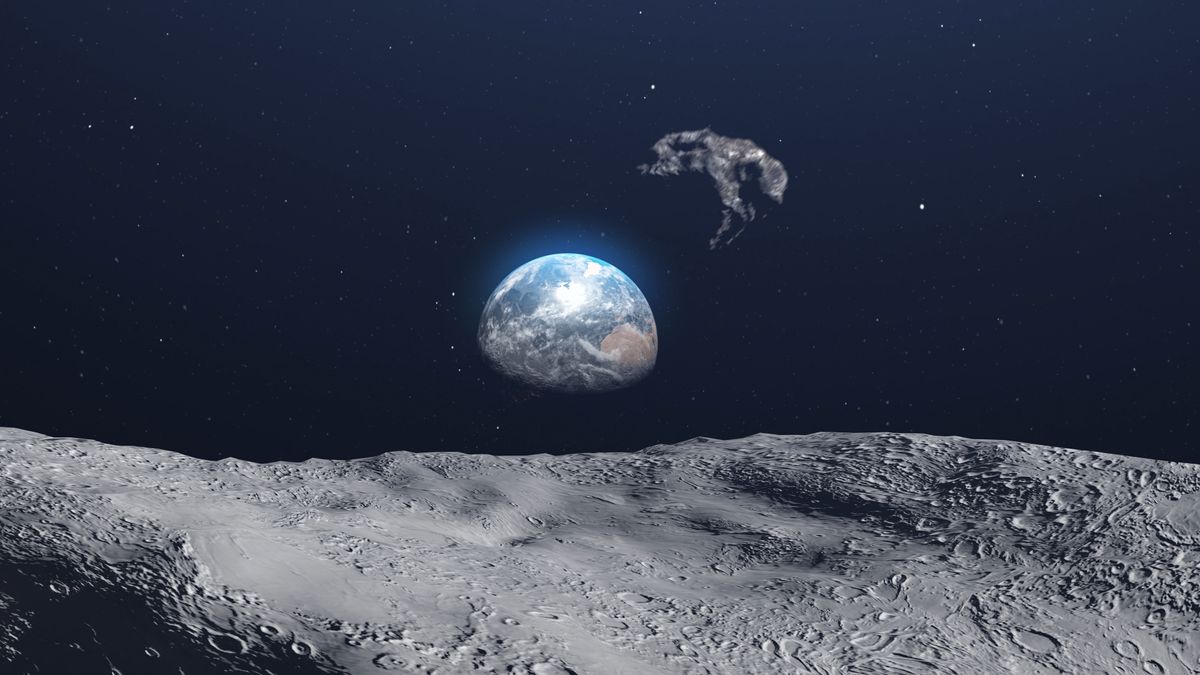
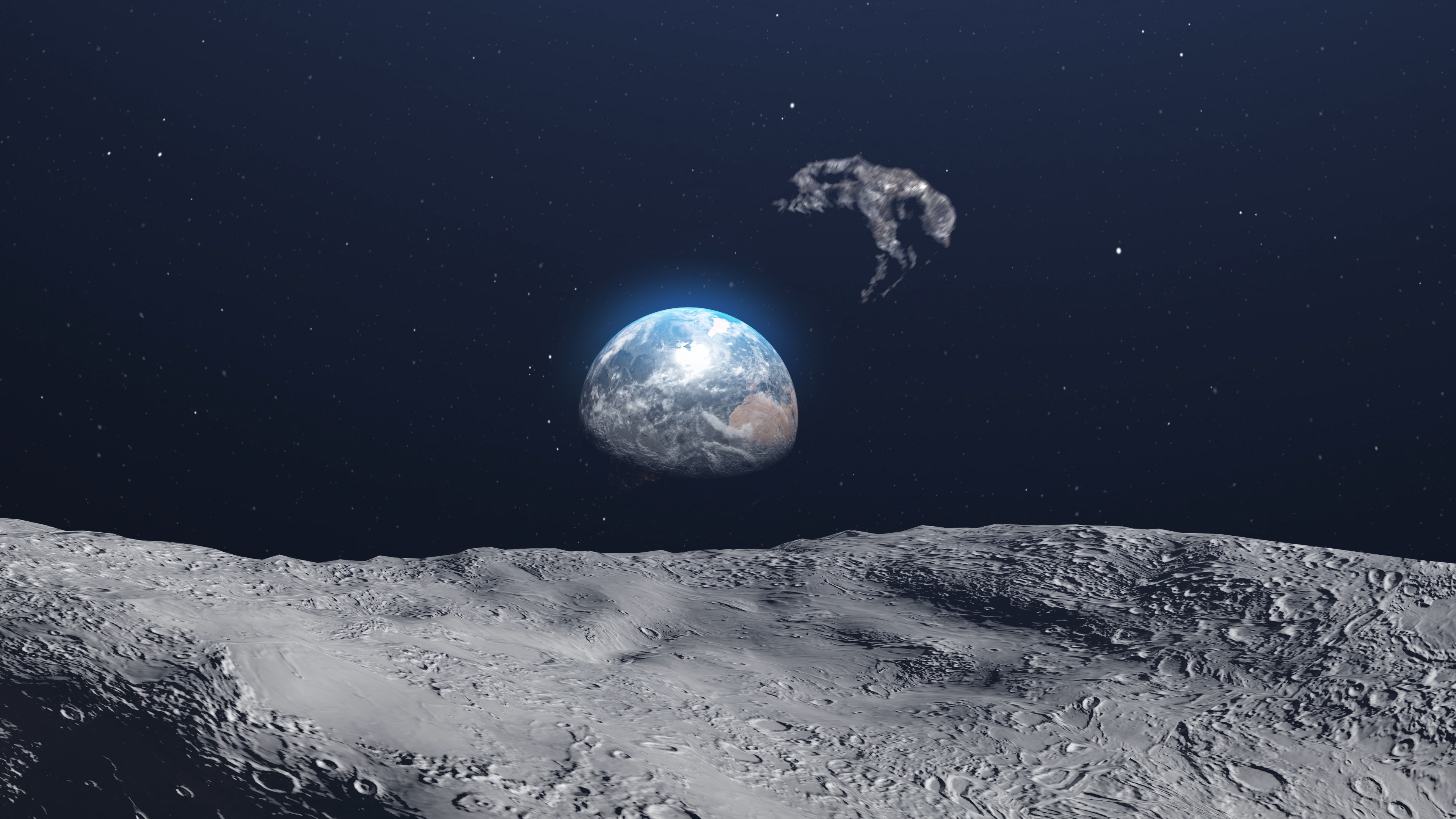
An asteroid that’s big enough to wipe out a city has a 1-in-43 chance of hitting our planet in the year 2032. But according to new calculations, there’s an even smaller chance that it might crash into the moon instead.

On Feb. 7, NASA scientists increased the likelihood of asteroid 2024 YR4 colliding with Earth on Dec. 22, 2032, nearly doubling the odds from 1.2% to 2.3%.

The potentially hazardous asteroid measures an estimated 180 feet (55 meters) across — about as wide as Walt Disney World’s Cinderella Castle is tall — and is traveling at nearly 30,000 mph (48,000 km/h). Although it is too small to end human civilization, 2024 YR4 could still wipe out a major city, releasing about 8 megatons of energy upon impact — more than 500 times the energy released by the atomic bomb that destroyed Hiroshima, Japan. But what if it hurtled into the moon instead?

David Rankin, an operations engineer for the University of Arizona’s Catalina Sky Survey, revealed in a post on Bluesky that the asteroid also has a 0.3% chance of hitting our natural satellite. The effects of this unlucky collision would likely be visible from our planet — although we, ourselves, would probably be unaffected.

“There is the possibility this would eject some material back out that could hit the Earth, but I highly doubt it would cause any major threat,” Rankin told New Scientist.

That does not mean we wouldn’t see it. Rankin told Live Science that, based on current estimates, a collision with the moon could release more energy than 340 Hiroshima bombs. “It would likely be very visible from Earth,” he said.

However, Gareth Collins, a professor of planetary science at Imperial College London, told New Scientist that “we would be quite safe on Earth.” He added that any material ejected from the collision would likely burn up in Earth’s atmosphere.

Get the world’s most fascinating discoveries delivered straight to your inbox.

Related: How many space rocks hit the moon every year?

Throughout its history, the moon has been subject to countless asteroid bombardments, as can be seen by its crater-pocked surface. However, if the moon were to take the hit from 2024 YR4, it would be left with a crater up to 1.2 miles (2 kilometers) across, New Scientist reported. (That’s just a pothole compared with the moon’s largest crater, the South Pole-Aitken basin, which spans more than 1,500 miles (2,400 km) in diameter.)

The probability of the space rock hitting either Earth or the moon is still very low, and an international team of scientists has been granted emergency use of the James Webb Space Telescope (JWST) to learn more about the space rock’s size and trajectory before it leaves Earth’s view for the next few years.

So far, astronomers have only observed 2024 YR4 using telescopes on Earth, and they’ve estimated its size by measuring the amount of light that bounces off the asteroid. But this is a fairly imprecise estimate. Instead, JWST will measure the heat emitted from the asteroid itself, which will create a much clearer picture of the asteroid’s size and surface composition.

“As of now, there is still a 97.9% chance of a miss with respect to Earth,” Rankin told Live Science in an email. “When the odds doubled from 1% to 2%, this caused a lot of noise. It’s not the same thing as going from 40% to 80% though. This asteroid is nothing to lose sleep over.”

Source link

Share. Facebook Twitter Pinterest LinkedIn Tumblr Email
Previous ArticleTrump admin considering using defense funding for deportations
Next Article Best Apple Watch deal: Save $70 on Apple Watch 10
Editor
  • Website

Related Posts

Lifestyle

‘The scientific cost would be severe’: A Trump Greenland takeover would put climate research at risk

January 17, 2026
Lifestyle

New ‘Transformer’ humanoid robot can launch a shapeshifting drone off its back — watch it in action

November 19, 2025
Lifestyle

Medieval spear pulled from Polish lake may have belonged to prince or nobleman

November 19, 2025
Add A Comment

Comments are closed.

Categories
  • Entertainment
  • Lifestyle
  • News
  • Sports
  • Tech
  • Travel
Recent Posts
  • George Kittle’s wife shares live reaction to Achilles injury
  • ‘The scientific cost would be severe’: A Trump Greenland takeover would put climate research at risk
  • Headlines Across OC as Angel Stadium Sale Debate Intensifies
  • Anti-Islam activists clash with pro-Muslim counter-protesters in Dearborn, Michigan
  • Best monitor deal: Get the 45-inch LG Ultragear gaming monitor for its lowest price yet
calendar
February 2026
M T W T F S S
 1
2345678
9101112131415
16171819202122
232425262728  
« Jan    
Recent Posts
  • George Kittle’s wife shares live reaction to Achilles injury
  • ‘The scientific cost would be severe’: A Trump Greenland takeover would put climate research at risk
  • Headlines Across OC as Angel Stadium Sale Debate Intensifies
About

Welcome to Baynard Media, your trusted source for a diverse range of news and insights. We are committed to delivering timely, reliable, and thought-provoking content that keeps you informed
and inspired

Categories
  • Entertainment
  • Lifestyle
  • News
  • Sports
  • Tech
  • Travel
Facebook X (Twitter) Pinterest WhatsApp
  • Contact Us
  • About Us
  • Privacy Policy
  • Disclaimer
  • UNSUBSCRIBE
© 2026 copyrights reserved

Type above and press Enter to search. Press Esc to cancel.