
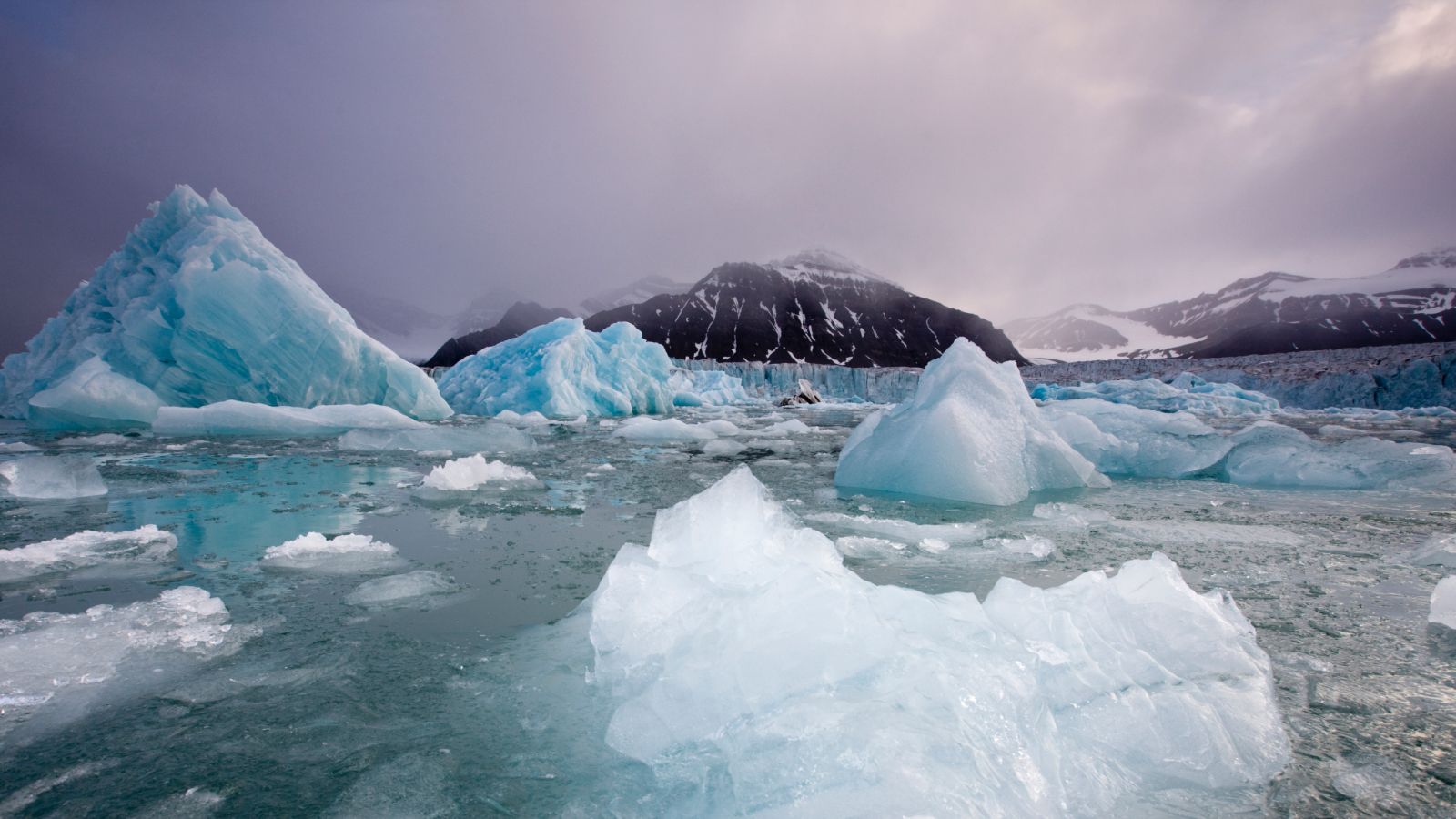
The Arctic Ocean was once an important source of greenhouse gases to the atmosphere — and it could become one again, researchers warn.
Methane (CH4) is second only to carbon dioxide (CO2) in trapping heat in Earth’s atmosphere. Since 2020, human-driven greenhouse gas emissions have increased atmospheric methane by about 10 parts per billion per year, more than twice as much as CO2. However, scientists don’t yet know how the methane cycle will respond as our planet continues to warm.
The team focused on a period of rapid warming and ocean acidification that occurred around 56 million years ago, known as the Paleocene-Eocene Thermal Maximum (PETM). The PETM is one of the best examples of a major climate shift driven by disruptions in Earth’s carbon cycle, much like the global warming we’re experiencing today.
Scientists have previously shown that the PETM was accompanied by the widespread release of CO2 and CH4 into the oceans and atmosphere, which left distinct geochemical fingerprints in sedimentary rocks from that time. But despite 30 years of research, scientists still can’t pinpoint where these gases came from.
To explore how the carbon cycle operated during the PETM, the researchers behind the new study looked at a 50-foot (15 meters) core of marine sediments drilled from the central Arctic Ocean by the Integrated Ocean Drilling Program’s Arctic Coring Expedition. The sediments date back to 66 million years, preserving the PETM warming event and the subsequent “recovery” period, during which the climate eventually restabilized.
The team extracted organic molecules from the sediments and measured different forms of carbon within them. They identified the organic molecules, known as biomarkers, to determine what microbes were living on the seafloor when the sediments were deposited. They used the forms of carbon, known as isotopes, to determine what those microbes were eating.
Methane commonly has lighter carbon isotopes than CO2, meaning methane-munching microbes produce biomarkers with characteristically light carbon isotopes. The researchers tracked these biomarkers in the core samples and found that the dominant methane-eaters in the Arctic Ocean shifted during the PETM.
Prior to the PETM, methane formed deep below the seafloor and was consumed by microbes that breathe sulfate instead of oxygen, via a process known as anaerobic oxidation of methane (AOM). But during the PETM, biomarkers from AOM microbes decreased.
Today, AOM consumes the majority of methane in marine sediments because sulfate is abundant in modern oceans. However, scientists think sulfate was considerably lower during the PETM, meaning these microbes were restricted in how much methane they could eat. The researchers suggest that a massive burp of methane during the PETM could have “overwhelmed the sedimentary AOM biofilter,” releasing methane into seawater, they wrote in the study.
Once methane reached the water column, the biomarkers indicated a different set of microbes took over. These microbes consumed methane while breathing oxygen, via a process known as aerobic oxidation of methane (AeOM).
The researchers propose that this switch could have transformed the Arctic into a significant source of CO2 after the onset of PETM warming. They explained that AOM in the sediments produces the alkaline compound bicarbonate, which helps to buffer the ocean and stabilize its pH. But AeOM in the water column releases CO2, which contributes to warming and ocean acidification. AeOM microbes also consume O2, enabling other oxygen-intolerant organisms to spread and gobble up sulfate, which further starves the AOM microbes.
Could a similar Arctic methane switch accelerate climate change today? “We think it is possible and very likely,” said study lead author Bumsoo Kim, an organic geochemist at NASA Johnson Space Center. The Arctic Ocean is becoming warmer and fresher, which would consume more oxygen, driving similar changes in the methane cycle, Kim, who was a researcher at Texas A&M University at the time of the study, told Live Science in an email.
However, other scientists are less certain. “The factors that led the Arctic to become a carbon source in the past may not be directly analogous for the future — the Arctic Ocean was physically more restricted from the global ocean and ocean chemistry was different in significant ways,” said Sandra Kirtland Turner, associate professor of paleoclimate and paleoceanography at University of California, Riverside, who was not involved in the study.
Kirtland Turner also stressed that the results are a reminder that carbon cycle feedbacks can amplify or extend warming. “Today, carbon cycle feedbacks remain poorly constrained and are rarely even considered past the year 2100,” limiting our understanding of their full impacts, she told Live Science.
