Close Menu
  • Home
  • UNSUBSCRIBE
  • News
  • Lifestyle
  • Tech
  • Entertainment
  • Sports
  • Travel
Facebook X (Twitter) WhatsApp
Trending
  • Lisa Rinna, Harry Hamlin Love Story Details
  • Gary Bettman defends US men’s hockey team after Trump’s quip about women’s squad
  • Best robot vacuum deal: Get $400 off the Mova Z60 Ultra Roller Complete Robot Vacuum and Mop
  • Aberdeen 1 – 2 Celtic
  • Pastel Dress Spring Trend: Revolve, Amazon, Abercrombie
  • ‘She was almost home’: MN soldier among those killed in Iran war
  • NASA fixes Artemis II rocket for April launch to take astronauts around moon
  • As the U.S. wages war with Iran, social media users face worsening disinformation
Facebook X (Twitter) WhatsApp
Baynard Media
  • Home
  • UNSUBSCRIBE
  • News
  • Lifestyle
  • Tech
  • Entertainment
  • Sports
  • Travel
Baynard Media
Home»Lifestyle»Ancient ‘land bridge’ that connected Siberia to US wasn’t what it seems, scientists find
Lifestyle

Ancient ‘land bridge’ that connected Siberia to US wasn’t what it seems, scientists find

EditorBy EditorDecember 10, 2024No Comments3 Mins Read
Share Facebook Twitter Pinterest LinkedIn Tumblr Reddit Telegram Email
Share
Facebook Twitter LinkedIn Pinterest Email

The Bering land bridge that spanned between Siberia and Alaska during the Ice Age was more of a Bering land bog, new research finds.

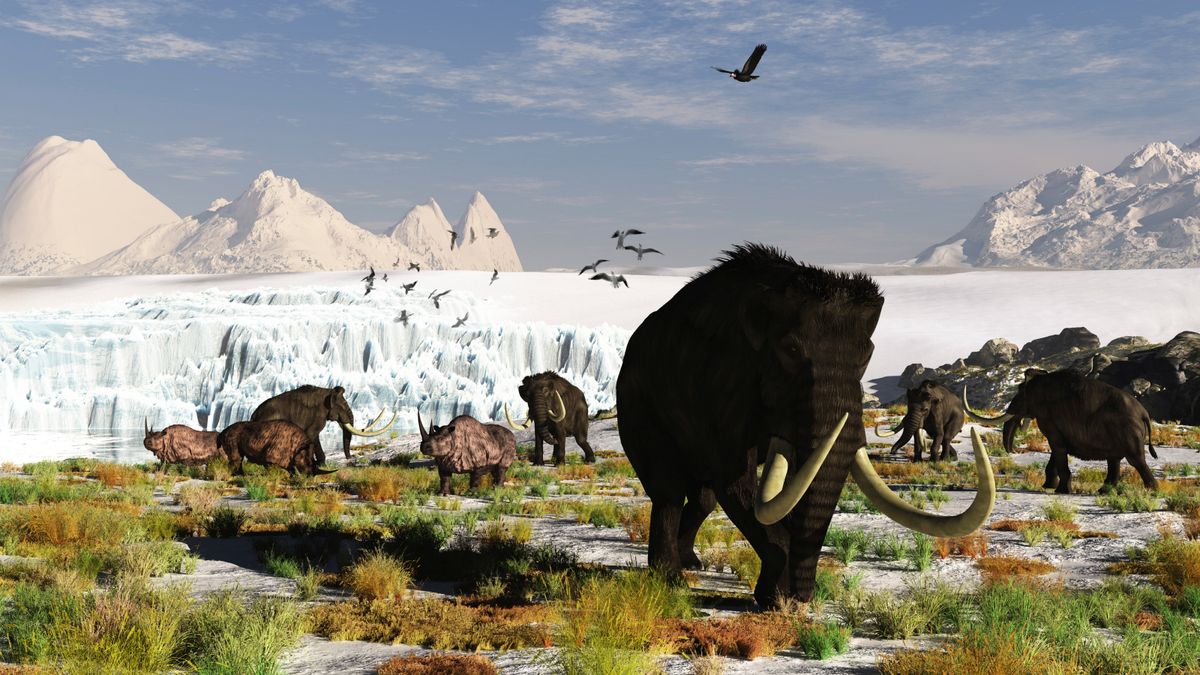
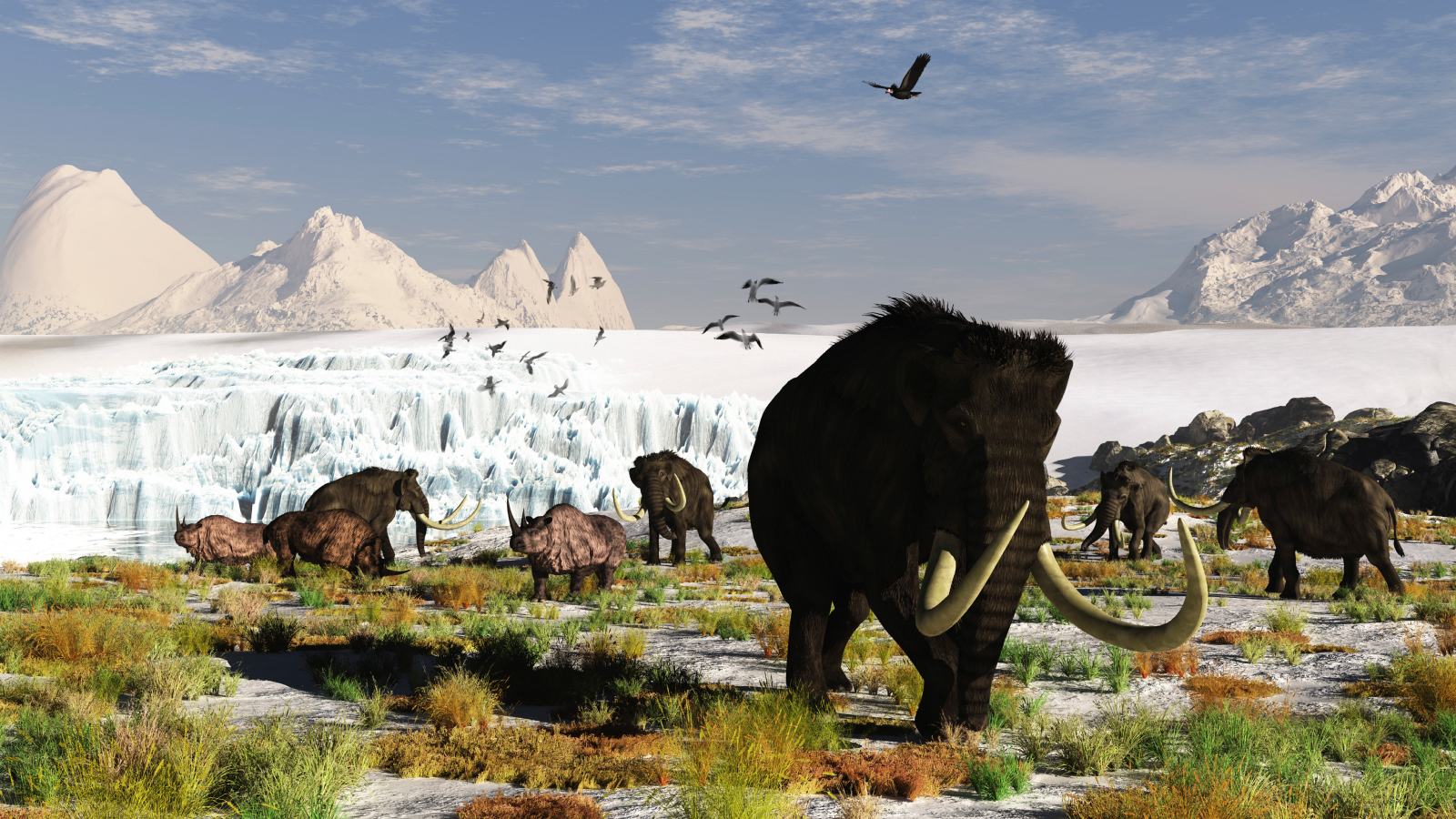
The discovery could help explain why some animals, such as birds, easily crossed the land bridge, while others, like woolly rhinos (Coelodonta antiquitatis), didn’t make the migration.

The land bridge, now submerged under the Bering Strait between Alaska and Russia, was above water from about 36,000 years ago to 11,000 years ago. Scientists thought it might have looked a lot like the grassy, arid steppe landscape in Siberia and Alaska at the time — but no one had ever investigated the ocean floor where the “bridge” once stood.

Last year, researchers led by University of Alaska Fairbanks geologist Sarah Fowell set out on the research vessel Sikuliaq to extract cores of sediment from the floor of the Bering Sea. It was the first attempt to reconstruct the ancient landscape and climate of the land bridge.

The researchers presented their results today (Dec. 10) at the annual meeting of the American Geophysical Union (AGU) in Washington, D.C. Instead of a grassy steppe, they found a marshy landscape criss-crossed by rivers and dotted with little lakes.

“We were looking for several large lakes,” Fowell said in a statement. “What we actually found was evidence of lots of small lakes and river channels.”

Lake sediments were apparent in the ocean floor cores, as were pollen, small fossils, ancient DNA and organic matter. The pollen and fossils revealed that the landscape hosted trees and mosses. The researchers also found egg cases from water fleas (Daphnia), a freshwater crustacean.

Get the world’s most fascinating discoveries delivered straight to your inbox.

This marshy environment may have been particularly welcoming for some species such as birds, but there were also spots where there was evidence of larger mammals making the migration. One site hosted mammoth DNA. Bison are also known to have crossed from Eurasia to North America during the time that the land bridge existed, and horses are known to have made it from North America to Eurasia.

“Even if it was mostly floodplains and ponds, the grazers were around, just uphill following higher, drier areas,” Fowell said.

However, the environment may have been less conducive for species that did not make the move between continents, such as the woolly rhino (a Eurasian native), American camel (native to north and central America), and the short-faced bear (native to North America).

“The watery, wet landscape could have been a barrier for some species,” Jenna Hill, a geologist with the U.S. Geological Survey who is also presenting research on the Bering Sea core data at the AGU meeting, said in the statement, “or a pathway for species that actually travel by water.” Further research will be needed to understand the full impact of the environment on migration.

Source link

Share. Facebook Twitter Pinterest LinkedIn Tumblr Email
Previous ArticleKelly Ripa and Mark Consuelos Share Intimate Details in Home Tour
Next Article David Nucifora: The mastermind tasked with replicating Irish rugby’s success with Scotland | Rugby Union News
Editor
  • Website

Related Posts

Lifestyle

NASA fixes Artemis II rocket for April launch to take astronauts around moon

March 4, 2026
Lifestyle

‘Truly extraordinary’: Mega-laser shooting at us from halfway across the universe is the brightest ‘cosmic beacon’ we’ve ever seen

March 4, 2026
Lifestyle

Chewed-up orca fins on Russian beach point to cannibalism, and scientists say it may explain why some pods are so tight-knit

March 4, 2026
Add A Comment

Comments are closed.

Categories
  • Entertainment
  • Lifestyle
  • News
  • Sports
  • Tech
  • Travel
Recent Posts
  • Lisa Rinna, Harry Hamlin Love Story Details
  • Gary Bettman defends US men’s hockey team after Trump’s quip about women’s squad
  • Best robot vacuum deal: Get $400 off the Mova Z60 Ultra Roller Complete Robot Vacuum and Mop
  • Aberdeen 1 – 2 Celtic
  • Pastel Dress Spring Trend: Revolve, Amazon, Abercrombie
calendar
March 2026
M T W T F S S
 1
2345678
9101112131415
16171819202122
23242526272829
3031  
« Feb    
Recent Posts
  • Lisa Rinna, Harry Hamlin Love Story Details
  • Gary Bettman defends US men’s hockey team after Trump’s quip about women’s squad
  • Best robot vacuum deal: Get $400 off the Mova Z60 Ultra Roller Complete Robot Vacuum and Mop
About

Welcome to Baynard Media, your trusted source for a diverse range of news and insights. We are committed to delivering timely, reliable, and thought-provoking content that keeps you informed
and inspired

Categories
  • Entertainment
  • Lifestyle
  • News
  • Sports
  • Tech
  • Travel
Facebook X (Twitter) Pinterest WhatsApp
  • Contact Us
  • About Us
  • Privacy Policy
  • Disclaimer
  • UNSUBSCRIBE
© 2026 copyrights reserved

Type above and press Enter to search. Press Esc to cancel.