Close Menu
  • Home
  • UNSUBSCRIBE
  • News
  • Lifestyle
  • Tech
  • Entertainment
  • Sports
  • Travel
Facebook X (Twitter) WhatsApp
Trending
  • Romans unceremoniously dumped plague victims down a well, mysterious mass grave in Croatia suggest
  • New AI lets robots complete tasks twice as fast
  • Mammal ancestors may have given live birth 90 million years earlier than we thought, rewriting evolutionary timelines
  • How to see and photograph the partial lunar eclipse on August 27-28
  • Watch now! The Aug. 12 total solar eclipse has begun (live stream)
  • ‘No longer will anything seem impossible or marvellous’: How an ‘immoral, foul-mouthed and violent man’ wrote the first eyewitness account of a total solar eclipse​​
  • ‘They’ll surf into the eclipse’: Readers share their plans for today’s epic solar eclipse and meteor shower mash-up
  • Young wild octopuses may form a ‘fight club’ and slap territorial fish if they get too close
Facebook X (Twitter) WhatsApp
Baynard Media
  • Home
  • UNSUBSCRIBE
  • News
  • Lifestyle
  • Tech
  • Entertainment
  • Sports
  • Travel
Baynard Media
Home»Lifestyle»Romans unceremoniously dumped plague victims down a well, mysterious mass grave in Croatia suggest
Lifestyle

Romans unceremoniously dumped plague victims down a well, mysterious mass grave in Croatia suggest

EditorBy EditorAugust 13, 2026No Comments3 Mins Read
Share Facebook Twitter Pinterest LinkedIn Tumblr Reddit Telegram Email
Share
Facebook Twitter LinkedIn Pinterest Email

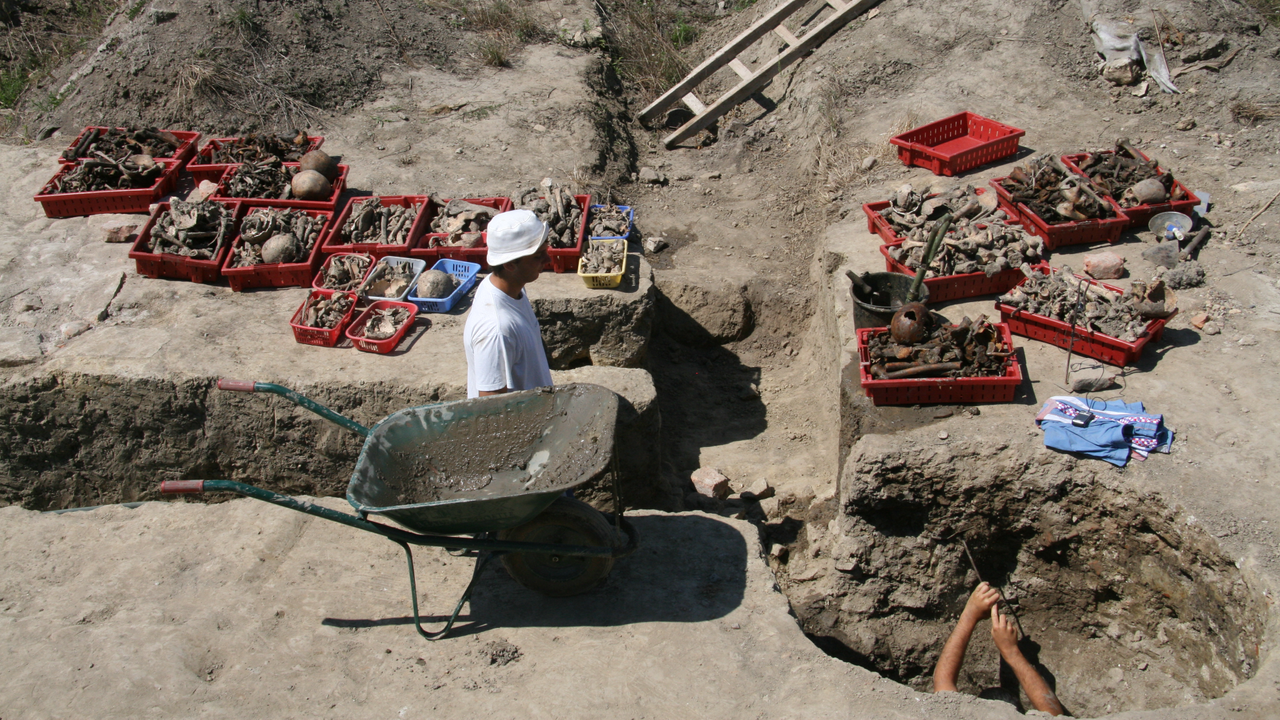
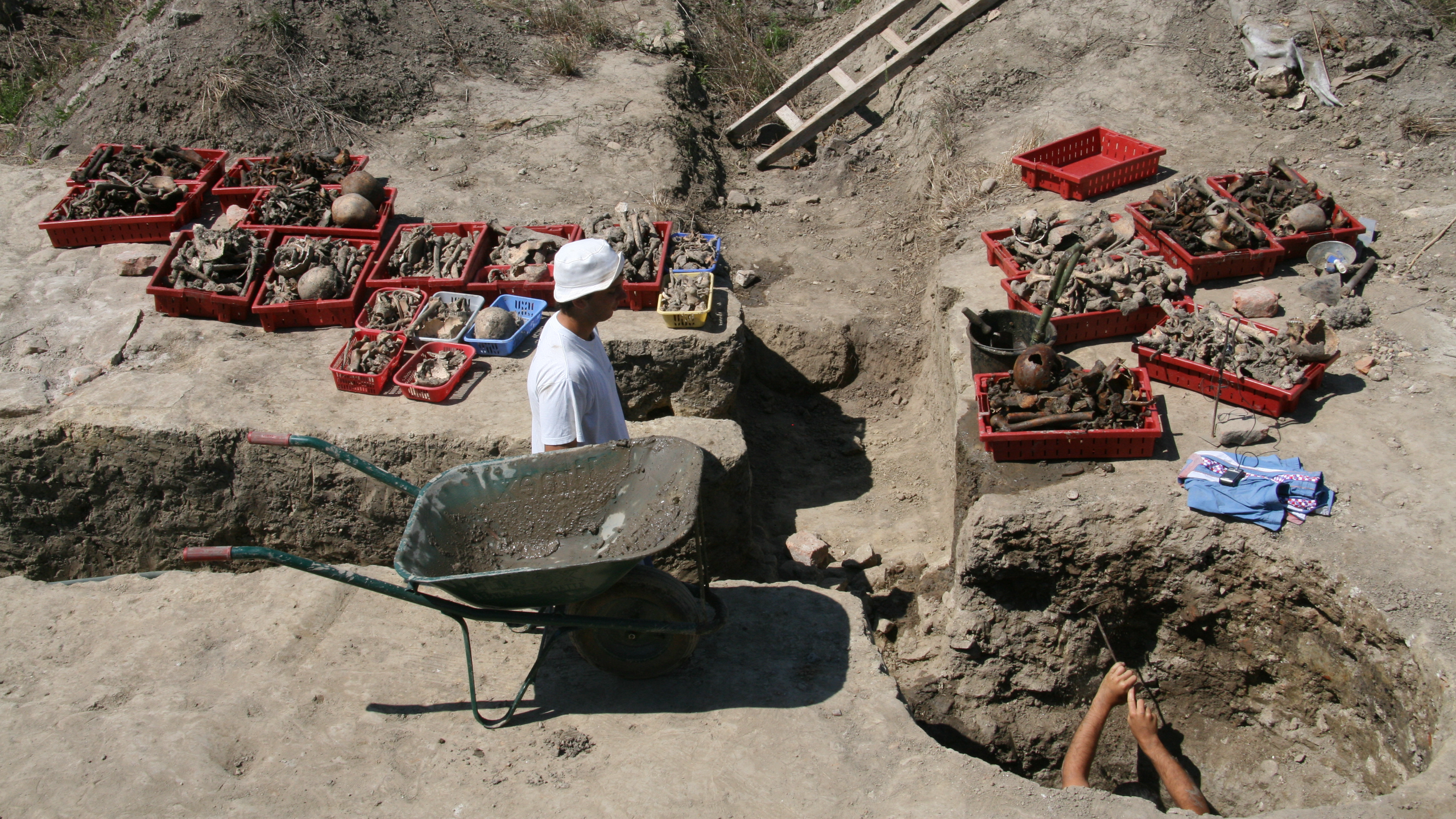
BERLIN — Nearly four dozen skeletons recovered from a deep well in the Croatian city of Osijek may be the remains of people who perished during the historic Plague of Cyprian that ravaged the Roman Empire in the mid-third century A.D.

“We have a whole bunch of these used Roman-period wells that were dug in antiquity,” Mario Novak, a bioarchaeologist at the Institute for Archaeological Research in Zagreb, told Live Science. “They basically used these dried-up wells just to throw people in — either from battle or from epidemics.”

Novak presented new research on the enigmatic burial Aug. 6 at the 25th European Paleopathology Association meeting in Berlin. It has not yet been published in a peer-reviewed journal.

Latest Videos FromLive Science

The burial was excavated in 2008 near a Roman necropolis in Osijek, which was founded by Emperor Hadrian in A.D. 133. At the time, the city was part of the province of Pannonia and named Mursa. The city of Mursa was important in Roman times because soldiers stationed there helped protect the Danube and the limits of the Roman Empire, but much of the ancient city still lies unexcavated beneath modern Osijek.

Novak and his team previously found two wells full of young male skeletons that had suffered violent injuries around the time of their deaths. This led the researchers to conclude that the men may have been involved in the Battle of Mursa in 260.


You may like

But the newly analyzed skeletons were very different from the previous mass burials, Novak said in his presentation. At least 43 people were buried in the well, and the dead included adults and children of both sexes. None of them had any major injuries.

“I would say this is a typical demographic cross-section of a civilian population. So nothing resembling those two battle-related mass burials,” Novak said. “Our working hypothesis is that these individuals might be victims of a plague.”

Get the world’s most fascinating discoveries delivered straight to your inbox.

Historical records mention one major epidemic in the middle of the third century — the Plague of Cyprian. The disease outbreak first affected Roman troops on the Danube and likely caused mass mortality events in various parts of the Roman Empire. Experts don’t yet know what caused this plague, but hemorrhagic fever and smallpox are possible contenders.

“This provides some really interesting data,” Patrick Randolph-Quinney, a biological anthropologist at Uppsala University in Sweden who was not involved in the project, told Live Science. “These weren’t really mass graves — instead, the bodies were dumped into a series of pre-existing wells at the site.”

The skeletons show evidence of non-life-threatening conditions like osteoarthritis on the vertebrae and dental cavities, Novak said. He also found a couple of possible cases of tuberculosis and scurvy. But so far, the skeletons have not revealed their cause of death.

“Obviously, harder data are needed to better contextualize this finding,” Novak said. Results from DNA analyses are forthcoming, he said, which may confirm whether the people were hastily-buried locals rather than Roman soldiers who were conscripted from all over the Roman Empire.


From Augustus to Nero, see how much you know about ancient Rome’s famous leaders with our Roman emperor quiz!

Source link

Share. Facebook Twitter Pinterest LinkedIn Tumblr Email
Previous ArticleNew AI lets robots complete tasks twice as fast
Editor
  • Website

Related Posts

Lifestyle

New AI lets robots complete tasks twice as fast

August 13, 2026
Lifestyle

Mammal ancestors may have given live birth 90 million years earlier than we thought, rewriting evolutionary timelines

August 13, 2026
Lifestyle

How to see and photograph the partial lunar eclipse on August 27-28

August 13, 2026
Add A Comment

Comments are closed.

Categories
  • Entertainment
  • Lifestyle
  • News
  • Sports
  • Tech
  • Travel
Recent Posts
  • Romans unceremoniously dumped plague victims down a well, mysterious mass grave in Croatia suggest
  • New AI lets robots complete tasks twice as fast
  • Mammal ancestors may have given live birth 90 million years earlier than we thought, rewriting evolutionary timelines
  • How to see and photograph the partial lunar eclipse on August 27-28
  • Watch now! The Aug. 12 total solar eclipse has begun (live stream)
calendar
August 2026
M T W T F S S
 12
3456789
10111213141516
17181920212223
24252627282930
31  
« Jul    
Recent Posts
  • Romans unceremoniously dumped plague victims down a well, mysterious mass grave in Croatia suggest
  • New AI lets robots complete tasks twice as fast
  • Mammal ancestors may have given live birth 90 million years earlier than we thought, rewriting evolutionary timelines
About

Welcome to Baynard Media, your trusted source for a diverse range of news and insights. We are committed to delivering timely, reliable, and thought-provoking content that keeps you informed
and inspired

Categories
  • Entertainment
  • Lifestyle
  • News
  • Sports
  • Tech
  • Travel
Facebook X (Twitter) Pinterest WhatsApp
  • Contact Us
  • About Us
  • Privacy Policy
  • Disclaimer
  • UNSUBSCRIBE
© 2026 copyrights reserved

Type above and press Enter to search. Press Esc to cancel.