
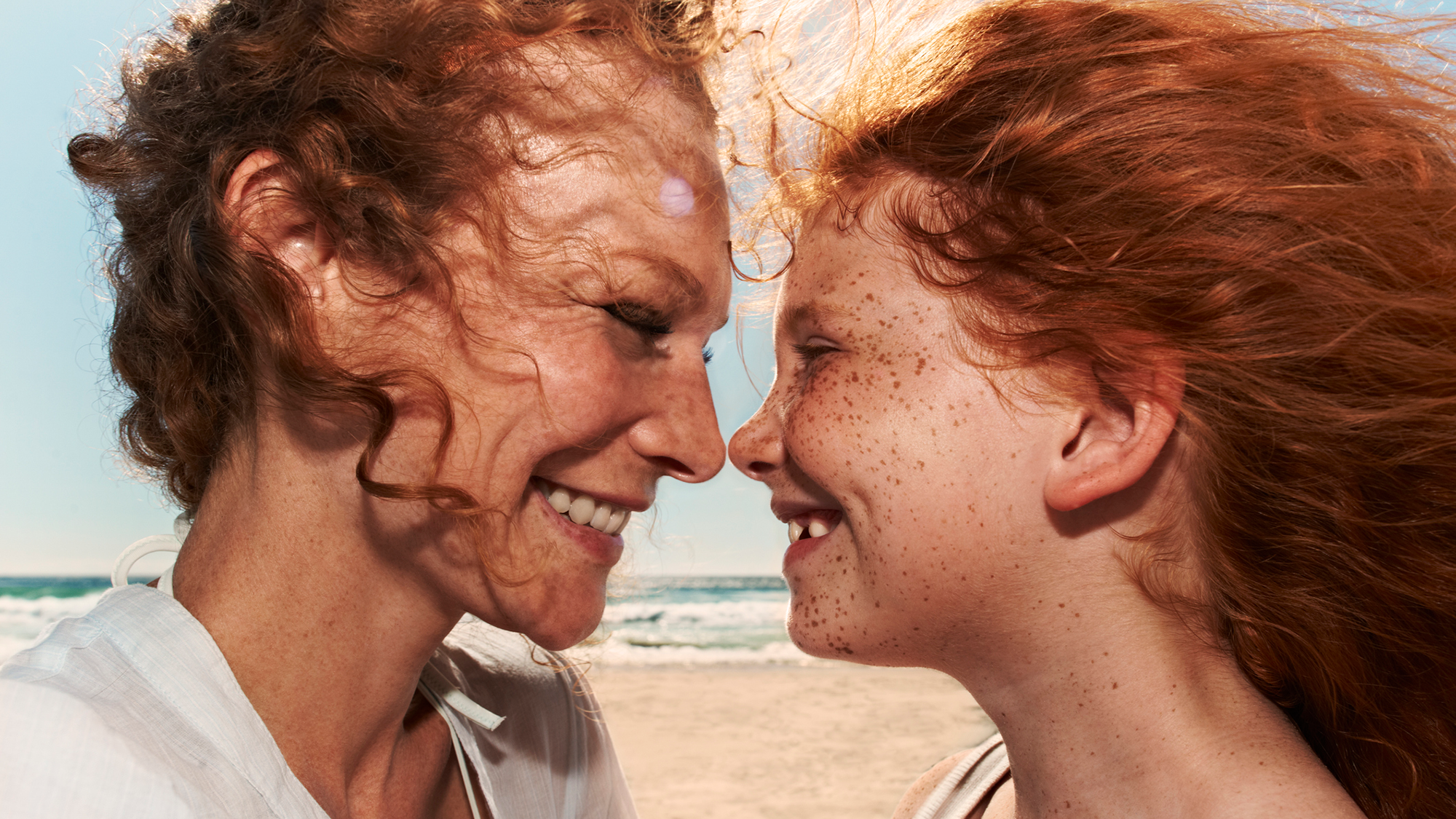
Redheads are a rare breed, with people who sport ginger locks making up less than 2% of the global population. With such low numbers, would it be possible for red hair to go “extinct,” leaving people with natural hair hues ranging from black to blond, with nary a hint of red?
In a word, no. Experts told Live Science about how the genetics of red hair means the trait is sticking around.
“There is no evidence that redheads are going extinct,” said Katerina Zorina-Lichtenwalter, a research associate at the University of Colorado Boulder’s Institute for Behavioral Genetics who has studied red hair inheritance. She told Live Science that the genes responsible for red hair “are harmless, they do not interfere with reproduction and they are not linked to a disease that would prevent people from reaching reproductive age.”
Latest Videos FromLive Science
Nevertheless, the myth of an impending red hair extinction isn’t a new one.
“The ‘Is red hair becoming extinct?’ question has been around for decades,” Ian Jackson, a professor emeritus at the University of Edinburgh’s Institute of Genetics and Cancer, told Live Science. “There have also been extinction stories about blond hair that go back to the mid-19th century.”
Sign up for our newsletter

(Image credit: Marilyn Perkins / Future)
Sign up for our weekly Life’s Little Mysteries newsletter to get the latest mysteries before they appear online.
The logic behind the supposed redhead extinction usually goes something like this: Red hair is rare; in the world’s redhead hotspots in the United Kingdom and Ireland, only about 10% of the population is categorized as redheads. And red hair is a recessive trait, meaning two redhead carriers have to have get together to have redheaded children.
There’s even the question of whether potentially deadly conditions, such as melanoma, might wipe out redheads, who are especially susceptible to sunburn. While there are people of color with red hair (Malcolm X famously had reddish hair), red hair is often linked with pale skin and, therefore, elevated skin-cancer risk. Redheads’ higher melanoma risk isn’t only because they burn more easily. It’s also due to harmful chemistry from pheomelanin, the pigment that helps create the reddish hair hue, and reduced DNA‑repair protection, which is linked to variants of the gene that causes red hair.
Keeping the flame alive
But these issues won’t doom redheads to extinction, experts said.
First, let’s look at genetics. A person needs to inherit the recessive version of MC1R — a gene involved in pigment production — from both parents. Someone with only one copy may not have red hair at all, but they can still pass the variant to their children. So, the role of carrying red hair genes through the generations is shared by people of all hair colors, not just redheads.

Redheads celebrate Redhead Day on Sept. 4, 2016 in Breda, a city in the Netherlands.
(Image credit: Brian Dowling via Getty Images)
This hidden-carrier effect is why a recessive trait can remain in a population even when it is uncommon to see. Jackson gave a simple example: If a variant is carried by half the population, only about a quarter of couples would both carry it. Among those couples, roughly one-quarter of children would inherit two copies.
For red hair to truly disappear, the relevant variants would have to be steadily removed from the gene pool. In evolutionary terms, that would usually mean people carrying these variants — or people with red hair — were having fewer children than everyone else.
“The only reason things go extinct in large populations is because you don’t produce as many kids as the others, to put it in blunt terms, and I don’t know that there’s any evidence for that,” Jonathan Rees, professor emeritus of dermatology at the University of Edinburgh, told Live Science.
Second, let’s look at skin cancer risk. Rees said people with MC1R variants have a greater skin-cancer risk “somewhere in the region of two to four fold.”
But skin cancer risk does not automatically equal evolutionary decline. Many skin cancers occur after people have already had children. Mortality rates for melanoma in the U.K. are the highest in people aged 90 and older, according to Cancer Research UK, after they’ve had more than enough time to pass on their genes.
Theoretically, before the invention of sunscreen and modern medicine, it may have been more likely for redheads to have died of skin cancer before they had children. Given that the trait has persisted, though, are there any evolutionary benefits to having red hair?
Red hair may carry surprising health advantages. For instance, recent research suggested the red‑hair pigment pheomelanin can help regulate excess cellular cysteine, which can be harmful at high concentrations.
“The vitamin D story is the one that people most often peddle,” Rees said. The idea being that lighter pigmentation of the skin (and red hair being linked to lighter skin) increases the amount of vitamin D that people can make during the gloomy winters. But he added that the evidence there is lacking, especially because it can be hard to define who, exactly, is a redhead. It’s a spectrum: where does red hair end and strawberry blond hair begin? That makes it hard to study without sequencing the genomes of large swathes of the population.
However, the frequency of red hair could still fluctuate. Jackson said the frequency may “go down somewhat as people become more mobile” and have children with partners from regions where MC1R variants are less common. But that would be a change in frequency, not extinction.
As long as MC1R variants persist silently in carriers — and as long as redheads are not having significantly fewer children than everyone else — the world’s redheads are not about to disappear.
TOPICS
