Close Menu
  • Home
  • UNSUBSCRIBE
  • News
  • Lifestyle
  • Tech
  • Entertainment
  • Sports
  • Travel
Facebook X (Twitter) WhatsApp
Trending
  • Memory may not work how we thought, study of mice in artificial hibernation finds
  • Romans unceremoniously dumped plague victims down a well, mysterious mass grave in Croatia suggest
  • New AI lets robots complete tasks twice as fast
  • Mammal ancestors may have given live birth 90 million years earlier than we thought, rewriting evolutionary timelines
  • How to see and photograph the partial lunar eclipse on August 27-28
  • Watch now! The Aug. 12 total solar eclipse has begun (live stream)
  • ‘No longer will anything seem impossible or marvellous’: How an ‘immoral, foul-mouthed and violent man’ wrote the first eyewitness account of a total solar eclipse​​
  • ‘They’ll surf into the eclipse’: Readers share their plans for today’s epic solar eclipse and meteor shower mash-up
Facebook X (Twitter) WhatsApp
Baynard Media
  • Home
  • UNSUBSCRIBE
  • News
  • Lifestyle
  • Tech
  • Entertainment
  • Sports
  • Travel
Baynard Media
Home»Lifestyle»China’s Einstein Probe detected a mysterious cosmic explosion — and scientists have no idea what caused it
Lifestyle

China’s Einstein Probe detected a mysterious cosmic explosion — and scientists have no idea what caused it

EditorBy EditorJune 25, 2026No Comments3 Mins Read
Share Facebook Twitter Pinterest LinkedIn Tumblr Reddit Telegram Email
Share
Facebook Twitter LinkedIn Pinterest Email

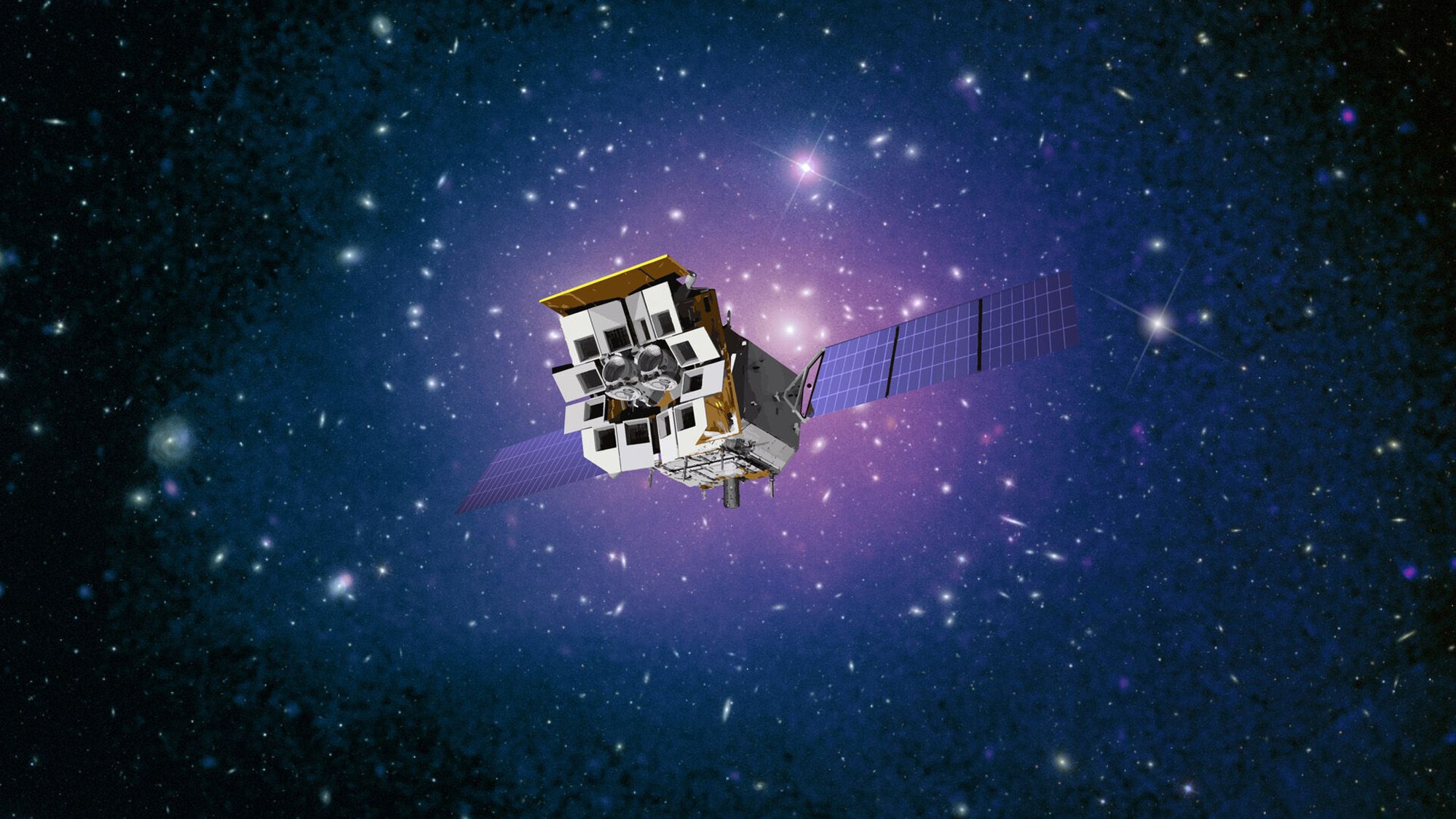
China’s Einstein Probe has spotted a cosmic explosion from a mysterious source that’s unlike anything seen before.

The burst was made up of two X-ray flares, about 200 seconds apart, that likely came from the same object. Their behavior is most consistent with powerful cosmic explosions known as gamma ray bursts — except no gamma rays were detected, scientists reported June 13 in the Monthly Notices of the Royal Astronomical Society.

Launched into low Earth orbit in 2024 by the Chinese Academy of Sciences in collaboration with the European Space Agency, the Einstein Probe is designed to scan the sky for high-energy X-ray emission events. Those events are usually short-lived, but scientists can use the data to perform detailed follow-up studies with other instruments. The Einstein Probe orbits Earth every 96 minutes and can scan almost the entire night sky about every five hours.

On March 5, 2024, the probe captured one such event, called an X-ray transient, from a celestial object scientists named EP240305a. The first flare lasted about two minutes. Roughly 200 seconds later, the probe detected a second flare lasting just over 4 minutes.

In the new study, researchers directed several ground- and space-based telescopes toward the area to collect data at X-ray, infrared, optical and radio wavelengths over the weeks that followed. They found that, following the initial burst, the X-rays faded after a few days, while radio emissions slowly petered out over several weeks.


You may like

To predict what kind of object could emit these bursts, the team compared their data to the expected emissions from several types of X-ray transients. None matched the emission patterns from EP240305a.

For example, tidal disruption events, which occur when a supermassive black hole rips apart a passing star, emit light for months or years, while radio emissions from stellar flares fade after a few hours. And other types of X-ray bursts that occur on similar timescales to EP240305a emit no radio signals at all.

Get the world’s most fascinating discoveries delivered straight to your inbox.

The most similar type of event that matches EP240305a’s behavior is a gamma ray burst (GRB), the team found. Gamma ray bursts can occur when massive stars die or collide. But without detecting any gamma rays directly, the team can’t yet say that this was the signal’s origin.

“In the case of EP240305a, the current data do not allow us to firmly establish a GRB origin, and we therefore conservatively classify it as a gamma-ray-dark GRB-like transient or more broadly an extragalactic fast X-ray transient,” the researchers wrote in the study.

If the signal was due to a gamma ray burst, the jet of gamma rays may have been pointed away from Earth, or it may have been surrounded by material that hid or reduced the gamma radiation emitted.

Collecting data on this and other unusual X-ray transients could help scientists figure out what causes them, the team wrote in the study.

R. Ma et al. (2026) Multiwavelength Analysis of the Einstein Probe X-ray Transient EP240305a. Monthly Notices of the Royal Astronomical Society, stag1138. https://doi.org/10.1093/mnras/stag1138

Source link

Share. Facebook Twitter Pinterest LinkedIn Tumblr Email
Previous ArticleSatellites reveal Earth has a surprising symmetry in the way it reflects light — and it might be tied to the El Niño cycle
Next Article ‘A weird result from an already weird hominin’: Archaeologists discover all Homo naledi skeletons found in South African cave are female
Editor
  • Website

Related Posts

Lifestyle

Memory may not work how we thought, study of mice in artificial hibernation finds

August 13, 2026
Lifestyle

Romans unceremoniously dumped plague victims down a well, mysterious mass grave in Croatia suggest

August 13, 2026
Lifestyle

New AI lets robots complete tasks twice as fast

August 13, 2026
Add A Comment

Comments are closed.

Categories
  • Entertainment
  • Lifestyle
  • News
  • Sports
  • Tech
  • Travel
Recent Posts
  • Memory may not work how we thought, study of mice in artificial hibernation finds
  • Romans unceremoniously dumped plague victims down a well, mysterious mass grave in Croatia suggest
  • New AI lets robots complete tasks twice as fast
  • Mammal ancestors may have given live birth 90 million years earlier than we thought, rewriting evolutionary timelines
  • How to see and photograph the partial lunar eclipse on August 27-28
calendar
August 2026
M T W T F S S
 12
3456789
10111213141516
17181920212223
24252627282930
31  
« Jul    
Recent Posts
  • Memory may not work how we thought, study of mice in artificial hibernation finds
  • Romans unceremoniously dumped plague victims down a well, mysterious mass grave in Croatia suggest
  • New AI lets robots complete tasks twice as fast
About

Welcome to Baynard Media, your trusted source for a diverse range of news and insights. We are committed to delivering timely, reliable, and thought-provoking content that keeps you informed
and inspired

Categories
  • Entertainment
  • Lifestyle
  • News
  • Sports
  • Tech
  • Travel
Facebook X (Twitter) Pinterest WhatsApp
  • Contact Us
  • About Us
  • Privacy Policy
  • Disclaimer
  • UNSUBSCRIBE
© 2026 copyrights reserved

Type above and press Enter to search. Press Esc to cancel.