Close Menu
  • Home
  • UNSUBSCRIBE
  • News
  • Lifestyle
  • Tech
  • Entertainment
  • Sports
  • Travel
Facebook X (Twitter) WhatsApp
Trending
  • Drug-induced ‘brain freeze’ may help protect the brain after a stroke, early study suggests
  • ‘Unequivocal evidence’ of the age of Earth’s oldest impact crater turns out to be off by half a billion years
  • Something is interfering with alien radio signals in space, new paper claims — and there’s an easy way to fix it
  • NASA satellite captures wave of warm water hundreds of miles long that signals a devastatingly strong El Niño
  • 9 of the best technology conspiracy theories
  • Bizarre ‘bull’s-eye’ cloud rings appear above erupting volcano on Atlantic island — Earth from space
  • IBD is caused by a broken ‘inflammation brake’ in some patients
  • Hanging lamp in the form of a sandaled right foot: A 1,600-year-old bronze lamp with multilayered Christian symbolism
Facebook X (Twitter) WhatsApp
Baynard Media
  • Home
  • UNSUBSCRIBE
  • News
  • Lifestyle
  • Tech
  • Entertainment
  • Sports
  • Travel
Baynard Media
Home»Lifestyle»‘Unequivocal evidence’ of the age of Earth’s oldest impact crater turns out to be off by half a billion years
Lifestyle

‘Unequivocal evidence’ of the age of Earth’s oldest impact crater turns out to be off by half a billion years

EditorBy EditorJune 24, 2026No Comments3 Mins Read
Share Facebook Twitter Pinterest LinkedIn Tumblr Reddit Telegram Email
Share
Facebook Twitter LinkedIn Pinterest Email

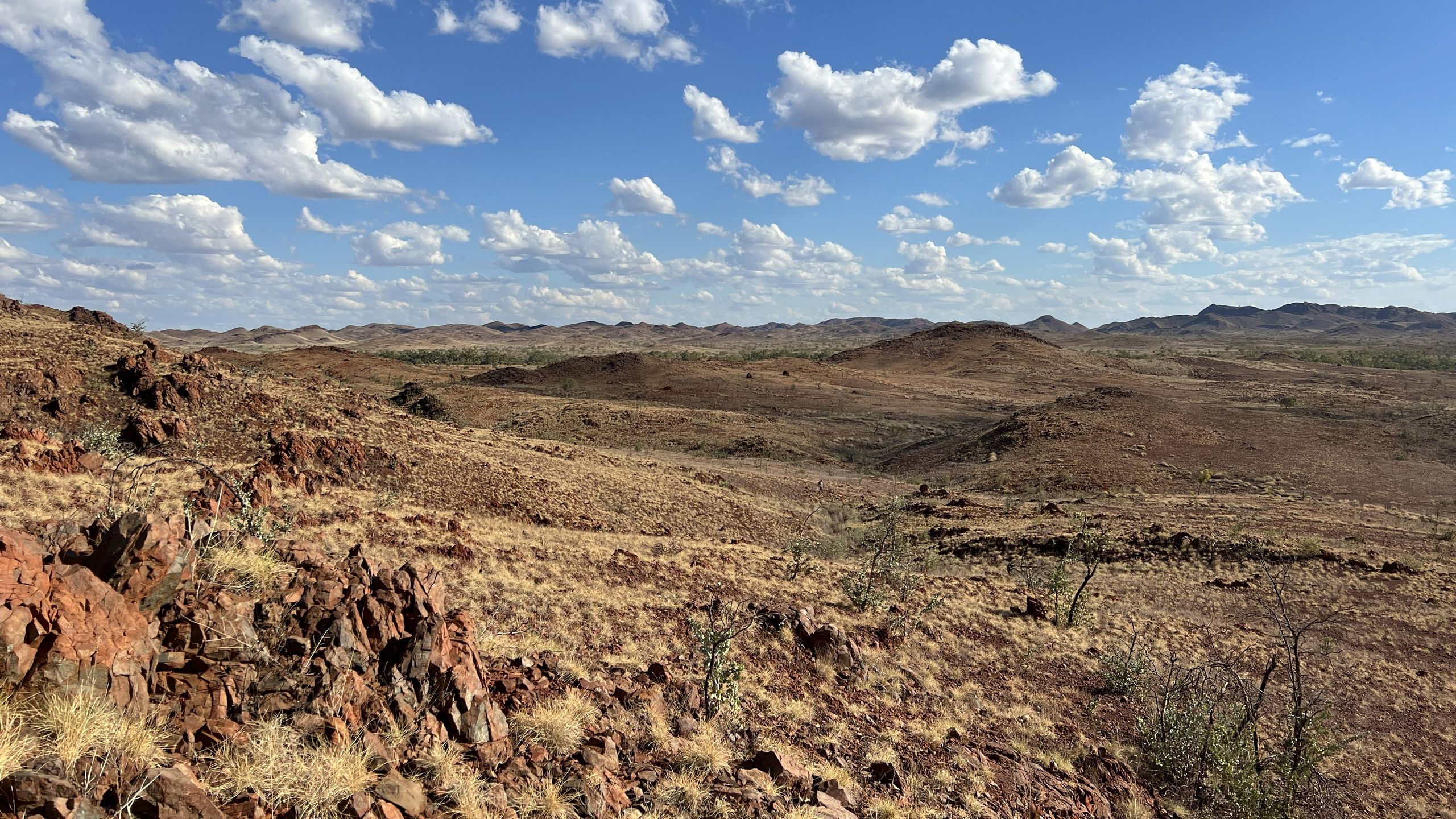
Earth’s oldest known impact crater formed when a meteorite slammed into what is now Australia about 3 billion years ago ‪—‬ 470 million years later than scientists previously claimed, a new study suggests.

The impact crater, known as the North Pole Dome crater, is located in Western Australia’s Pilbara region, which is home to some of the planet’s oldest rocks. It remains a record-breaking structure, beating the world’s next-oldest known meteorite impact crater — the Yarrabubba impact structure, also in Western Australia — by roughly 800 million years.

“While the site had previously been identified as an ancient impact structure, its exact age remained uncertain,” study first author Chris Kirkland, a professor in the School of Earth and Planetary Sciences at Curtin University in Australia, said in a statement. “The impact left a ‘mineral clock’ behind. By dating minerals that were remade or newly grown in the damaged rocks, we can now pin down when this extraordinary event happened.”

In a study published last year, Kirkland and his colleagues said they had “unequivocal evidence” that the North Pole Dome crater was 3.47 billion years old, based on an analysis of cone-shaped chunks of rock known as “shatter cones” that form when the shock waves from a meteorite impact propagate downward.

However, a study published four months later in the journal Science Advances called the other team’s results “inaccurate,” arguing that the impact occurred no earlier than 2.7 billion years ago.


You may like

For the new study, Kirkland and his colleagues used advanced mineral dating techniques to estimate the ages of zircon, apatite, calcite and muscovite in shatter cones from the North Pole Dome crater. The researchers analyzed two samples of shatter-cone-bearing rocks, as well as a shocked quartz vein — a sheet-like deposit that typically forms when superhot, mineral-rich water circulates in the cracks between shocked rocks.

Three images of rocks in the North Pole Dome area and a scan of the mineral zircon.

Researchers analyzed zircon and other minerals in North Pole Dome rocks.

(Image credit: Curtin University)

“The key evidence comes from zircon, a tiny but extraordinarily resilient mineral that can keep geological time for billions of years,” Kirkland said. “Some zircons at North Pole Dome have unusual branching, skeletal shapes. We interpret these as impact-modified crystals, formed when older zircon was disrupted, partly recrystallised, and in places regrown during the intense heating caused by the impact.”

Get the world’s most fascinating discoveries delivered straight to your inbox.

The age recorded in zircon was the same as that locked inside apatite minerals, giving the researchers confidence that the impact occurred a little more than 3 billion years ago. The younger shatter cones in the Science Advances study may have formed subsequently due to tectonic and thermal activity, the team wrote in the new paper, which was published Tuesday (June 23) in the journal Geology.

“Ancient impact craters are incredibly difficult to date because over billions of years, rocks are altered by heat, pressure and fluids, which can obscure or reset the original impact signals,” Kirkland said. “The new age places the North Pole Dome structure as Earth’s oldest known impact crater and the only recognised example from the Archean eon [4 billion to 2.5 billion years ago], a time when the planet’s earliest continents were forming.”

Kirkland, C. L., Kaempf, J., Johnson, T. E., Ribeiro, B. V., Zametzer, A., Smithies, R. H. & McDonald, B. J. (2026). How old is the North Pole Dome5impact, Western Australia? Geology. https://doi.org/10.1130/G54866.1


Planet Earth quiz: What do you know about our planet’s most amazing features?

Source link

Share. Facebook Twitter Pinterest LinkedIn Tumblr Email
Previous ArticleSomething is interfering with alien radio signals in space, new paper claims — and there’s an easy way to fix it
Next Article Drug-induced ‘brain freeze’ may help protect the brain after a stroke, early study suggests
Editor
  • Website

Related Posts

Lifestyle

Drug-induced ‘brain freeze’ may help protect the brain after a stroke, early study suggests

June 24, 2026
Lifestyle

Something is interfering with alien radio signals in space, new paper claims — and there’s an easy way to fix it

June 23, 2026
Lifestyle

NASA satellite captures wave of warm water hundreds of miles long that signals a devastatingly strong El Niño

June 23, 2026
Add A Comment

Comments are closed.

Categories
  • Entertainment
  • Lifestyle
  • News
  • Sports
  • Tech
  • Travel
Recent Posts
  • Drug-induced ‘brain freeze’ may help protect the brain after a stroke, early study suggests
  • ‘Unequivocal evidence’ of the age of Earth’s oldest impact crater turns out to be off by half a billion years
  • Something is interfering with alien radio signals in space, new paper claims — and there’s an easy way to fix it
  • NASA satellite captures wave of warm water hundreds of miles long that signals a devastatingly strong El Niño
  • 9 of the best technology conspiracy theories
calendar
June 2026
M T W T F S S
1234567
891011121314
15161718192021
22232425262728
2930  
« May    
Recent Posts
  • Drug-induced ‘brain freeze’ may help protect the brain after a stroke, early study suggests
  • ‘Unequivocal evidence’ of the age of Earth’s oldest impact crater turns out to be off by half a billion years
  • Something is interfering with alien radio signals in space, new paper claims — and there’s an easy way to fix it
About

Welcome to Baynard Media, your trusted source for a diverse range of news and insights. We are committed to delivering timely, reliable, and thought-provoking content that keeps you informed
and inspired

Categories
  • Entertainment
  • Lifestyle
  • News
  • Sports
  • Tech
  • Travel
Facebook X (Twitter) Pinterest WhatsApp
  • Contact Us
  • About Us
  • Privacy Policy
  • Disclaimer
  • UNSUBSCRIBE
© 2026 copyrights reserved

Type above and press Enter to search. Press Esc to cancel.