

Insects are disappearing, and they are leaving global food security gaps in their wake. Over the past three decades, bugs have been declining at an alarming rate across the globe — up to 1% per year, by some estimates. The drop has been so intense that some scientists have dubbed it an “insect apocalypse.”
Because many insects pollinate crops, lower insect abundance has hurt everything from ecosystem health to crop yields. But historically, such consequences have been tough for scientists to measure directly. Now, in a new paper published May 6 in the journal Nature, researchers have quantified the impact of insect pollinator declines on human health for the first time.
The finding was stark: Insect pollinators were responsible for an estimated 44% of the villagers’ farming income and over 20% of their intake of some essential nutrients, including vitamin A, vitamin E and folate. As fewer and less-diverse pollinators visited the crops, people’s income and dietary health declined.
“Over half of the children in our study were too short for their age, which is largely driven by poor diets that depend upon insect pollinated vegetables, legumes and fruits,” study co-author Naomi Saville, a researcher at the University College London Institute for Global Health and a study co-author, said in a statement.
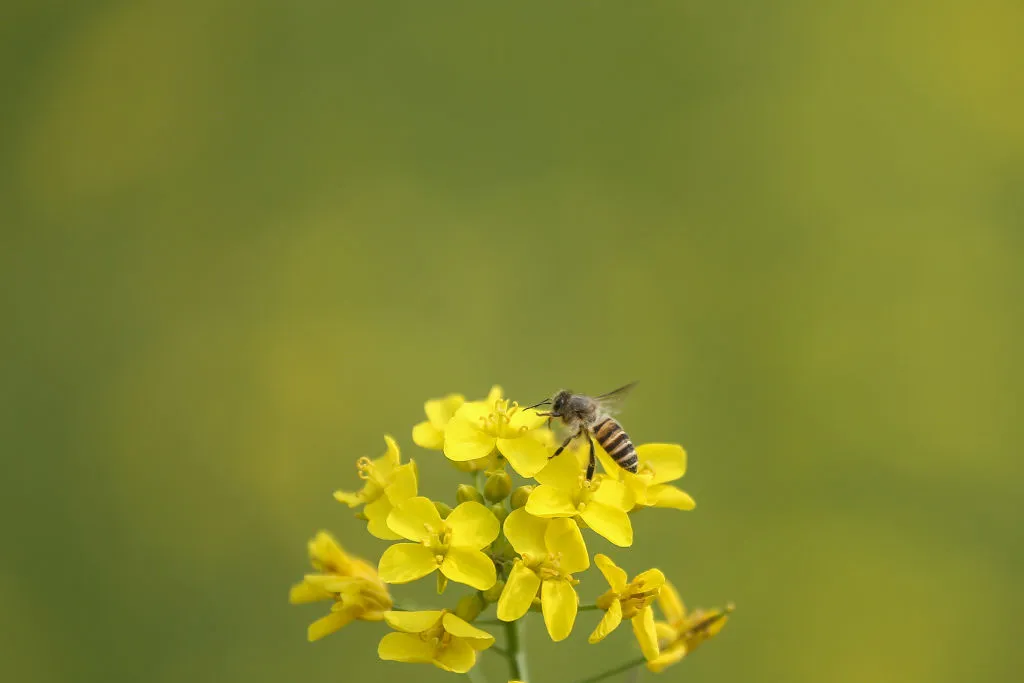
Insects like bees play a pivotal role in boosting crop yields, so their global decline is bad news for food security.
(Image credit: NurPhoto via Getty Images)
When Saville’s team extrapolated their data into a future with even fewer pollinators, the impacts were more pronounced. If no agricultural practices changed, they predicted a 7% loss of vitamin A and folate intake for the villagers by 2030. Deficiencies in these nutrients can lead to vision loss and birth defects.
Although the researchers only studied farming communities in Nepal, the new results offer a glimpse into the hidden burden of pollinator loss worldwide. Roughly 2 billion people rely primarily on smallholder farming like the villages in the study. About three-quarters of global crops need insect pollination to thrive, and a few crops — like coffee, almonds and chocolate — are totally reliant on pollinating insects to survive. If current trends continue, it could jeopardize many farmers’ ability to grow food on a meaningful scale, the study authors said.
But the new study also found ways to counteract this downward spiral. According to the team’s models, simple interventions — like planting native wildflowers near farms, keeping wild bees and reducing pesticide usage — can help boost pollinator numbers. Such measures could increase farming income above current levels by up to 30% and boost vitamin A and folate intake by 5% and 9%, respectively.
“Biodiversity is not a luxury,” study co-author Thomas Timberlake, an ecologist at the University of York in England, said in a statement. “It is fundamental to our health, nutrition and livelihoods.”
Timberlake, T. P., Sapkota, S., Saville, N. M., Cirtwill, A. R., Baral, S. C., Bhusal, D. R., Devkota, K., Giri, S., Harris-Fry, H. A., Joshi, D., Kortsch, S., Myers, S. S., Roslin, T., Smith, M. R., & Memmott, J. (2026). Pollinators support the nutrition and income of vulnerable communities. Nature. https://doi.org/10.1038/s41586-026-10421-x
