Close Menu
  • Home
  • UNSUBSCRIBE
  • News
  • Lifestyle
  • Tech
  • Entertainment
  • Sports
  • Travel
Facebook X (Twitter) WhatsApp
Trending
  • Icy object beyond Pluto has an atmosphere that shouldn’t exist, study suggests
  • Researcher discovers shortcut to Mars that could cut travel time in half — if we build the right spacecraft
  • Canadian ’emoji’ lake vanishes after dramatic, landslide-like collapse — Earth from space
  • The universe may end trillions of years sooner than we thought
  • ‘They weren’t burned by accident’: Mysterious green rocks discovered high in Pyrenees reveal ancient copper-smelting camp
  • Full moon helps paint vibrant, muddy ‘brushstrokes’ in Indonesian river — Earth from space
  • Estrogen in both the male and female brain shapes responses to trauma, study suggests
  • NASA just released 12,000 more Artemis II photos ‪—‬ here are a dozen of our favorites
Facebook X (Twitter) WhatsApp
Baynard Media
  • Home
  • UNSUBSCRIBE
  • News
  • Lifestyle
  • Tech
  • Entertainment
  • Sports
  • Travel
Baynard Media
Home»Lifestyle»Icy object beyond Pluto has an atmosphere that shouldn’t exist, study suggests
Lifestyle

Icy object beyond Pluto has an atmosphere that shouldn’t exist, study suggests

EditorBy EditorMay 5, 2026No Comments4 Mins Read
Share Facebook Twitter Pinterest LinkedIn Tumblr Reddit Telegram Email
Share
Facebook Twitter LinkedIn Pinterest Email

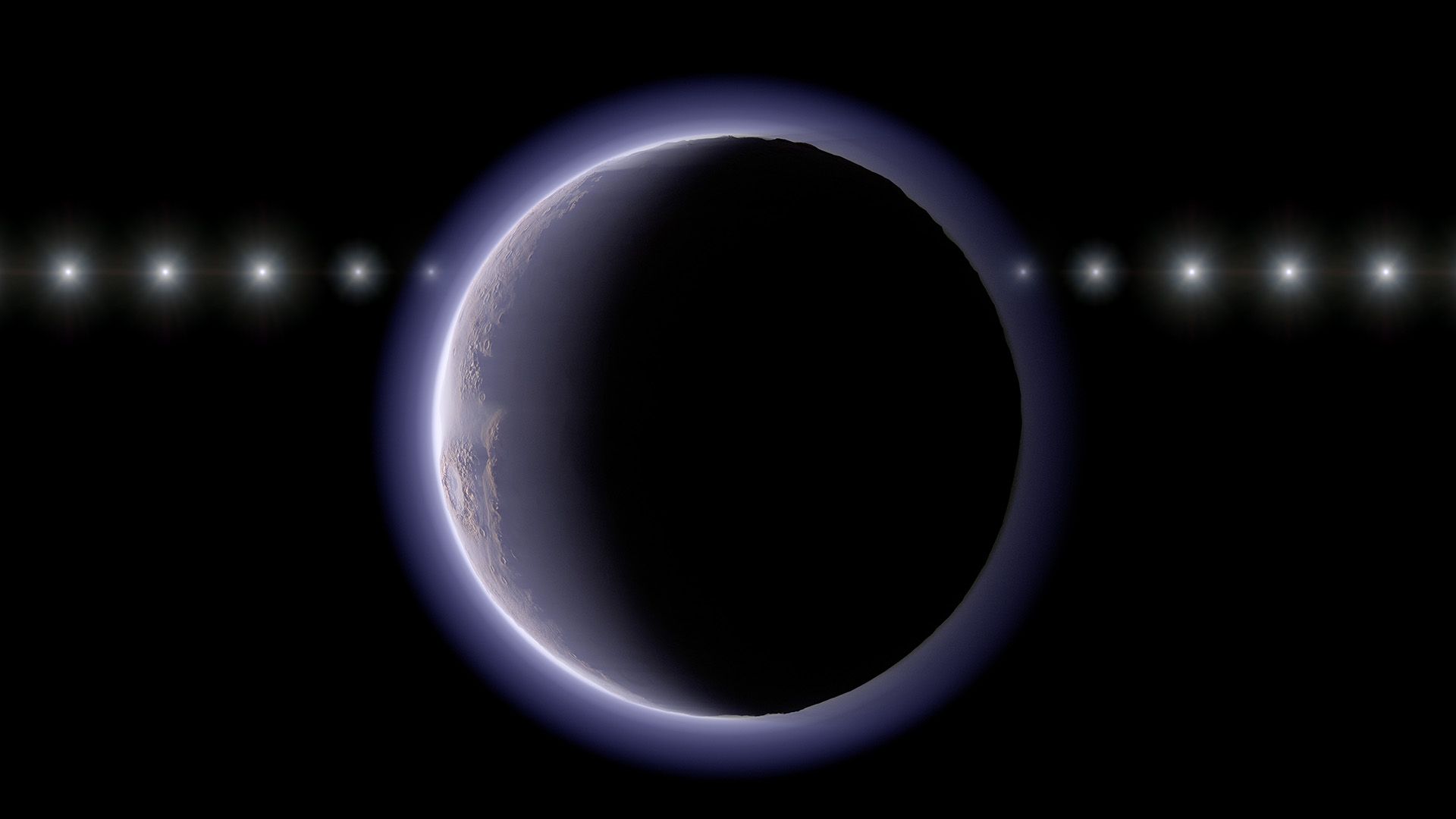
Astronomers have detected an atmosphere that shouldn’t exist on an icy object beyond the orbit of Pluto — sparking calls for follow-up observations.

Japanese astronomers found evidence for a thin atmosphere surrounding the body, which is located within the Kuiper Belt in the cold outer reaches of the solar system, according to a new study published May 4 in the journal Nature Astronomy.

The object, known as (612533) 2002 XV93, is supposed to be too small and too cold to sustain an atmosphere. At about 311 miles (500 kilometers) across — a little wider than the Grand Canyon is long — the object is more than four times smaller than Pluto, which was thought to be the only body beyond Neptune with an atmosphere in our solar system.


You may like

The new observations challenge assumptions about which objects can sustain atmospheres in our solar system. However, these initial findings must be verified by outside researchers, with some experts keen to make follow-up observations with the James Webb Space Telescope (JWST) to confirm the atmosphere exists.

“This is an amazing development, but it sorely needs independent verification,” Alan Stern, a planetary scientist and principal investigator for NASA’s New Horizons mission to explore Pluto and the Kuiper Belt, who was not involved in the new study, told the Associated Press. “The implications are profound if verified.”

Oddball ice ball

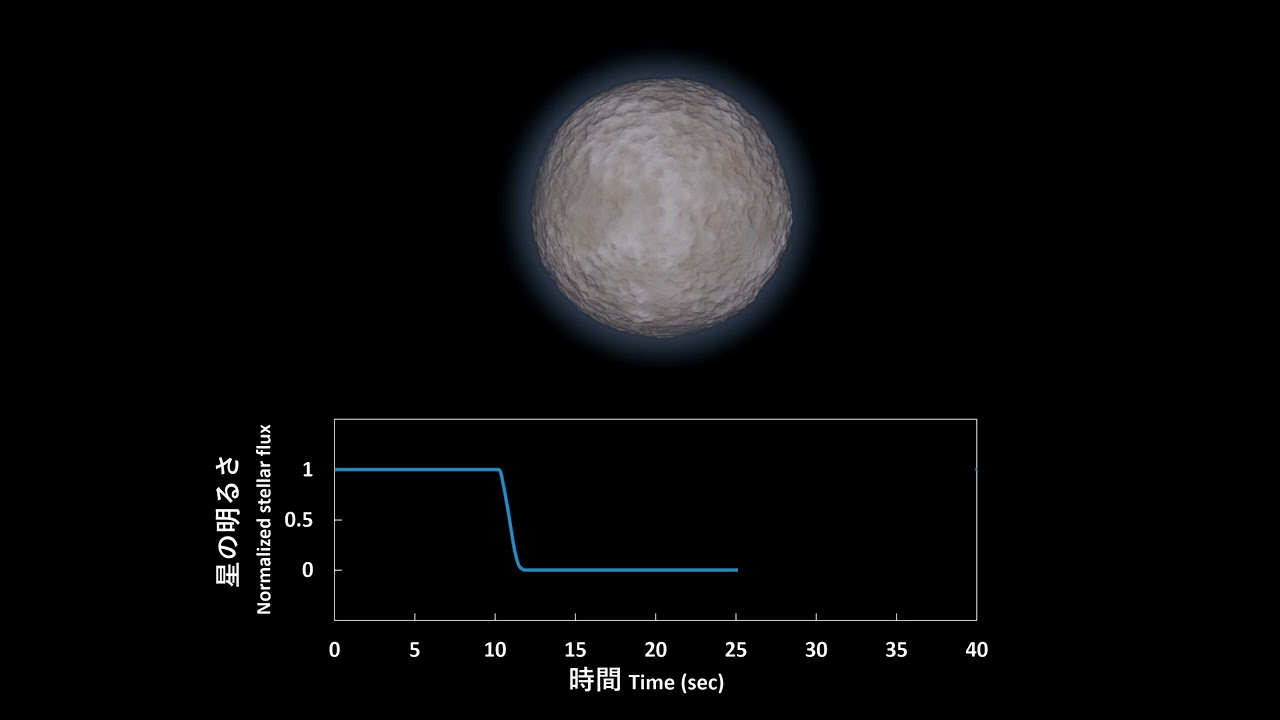
Researchers observed (612533) 2002 XV93 as it passed directly in front of a distant star in January 2024. The observations were made by a team of professional and amateur astronomers from three sites in Japan. Their data hinted at attenuation — or gradual loss of starlight caused by an atmosphere, according to the study.

“The observation data showed a smooth change of the star’s brightness near the edge of the shadow, lasting about 1.5 seconds,” study first author Ko Arimatsu, an associate professor and senior lecturer at the National Astronomical Observatory of Japan, told CNN. “This kind of smooth brightness change is naturally explained if the starlight was bent by a very thin atmosphere around the object.”
Get the world’s most fascinating discoveries delivered straight to your inbox.

Conceptual video for Arimatsu et al. (2026) – YouTube
Conceptual video for Arimatsu et al. (2026) - YouTube


Watch On

The team’s observations suggested that the atmosphere is extremely thin, around 5 million to 10 million times thinner than Earth’s atmosphere — too thin to support life. The potential atmosphere is also not permanent, with calculations suggesting that it will last less than 1,000 years unless it’s restocked with gas.

The discovery raises questions about how an atmosphere could have formed around this small, cold world. Previous JWST observations revealed that the object’s surface doesn’t appear to have any frozen gas that could have sublimated to produce an atmosphere. The researchers speculated that the atmosphere could be sustained by cryovolcanoes (ice volcanoes), with some unknown event forcing gases to the object’s surface.

Another possibility is that the object was hit by another icy body, such as a comet, which then produced gases to form an atmosphere. Future observations, particularly by JWST — an infrared telescope designed to probe atmospheres around alien worlds — could help solve the mystery, according to Arimatsu.

“That is why future monitoring is so important,” Arimatsu told the Associated Press. “If the atmosphere fades over the next several years, that would support an impact origin. If it persists, or varies seasonally, that would point more toward ongoing internal gas supply.”

Arimatsu, K., Yoshida, F., Hayamizu, T., Takita, S., Hosoi, K., Ootsubo, T., & Watanabe, J. (2026). Detection of an atmosphere on a trans-Neptunian object beyond Pluto. Nature Astronomy. https://doi.org/10.1038/s41550-026-02846-1


See how well you know our planetary neighborhood with our solar system quiz!

Source link

Share. Facebook Twitter Pinterest LinkedIn Tumblr Email
Previous ArticleResearcher discovers shortcut to Mars that could cut travel time in half — if we build the right spacecraft
Editor
  • Website

Related Posts

Lifestyle

Researcher discovers shortcut to Mars that could cut travel time in half — if we build the right spacecraft

May 5, 2026
Lifestyle

Canadian ’emoji’ lake vanishes after dramatic, landslide-like collapse — Earth from space

May 5, 2026
Lifestyle

The universe may end trillions of years sooner than we thought

May 5, 2026
Add A Comment

Comments are closed.

Categories
  • Entertainment
  • Lifestyle
  • News
  • Sports
  • Tech
  • Travel
Recent Posts
  • Icy object beyond Pluto has an atmosphere that shouldn’t exist, study suggests
  • Researcher discovers shortcut to Mars that could cut travel time in half — if we build the right spacecraft
  • Canadian ’emoji’ lake vanishes after dramatic, landslide-like collapse — Earth from space
  • The universe may end trillions of years sooner than we thought
  • ‘They weren’t burned by accident’: Mysterious green rocks discovered high in Pyrenees reveal ancient copper-smelting camp
calendar
May 2026
M T W T F S S
 123
45678910
11121314151617
18192021222324
25262728293031
« Apr    
Recent Posts
  • Icy object beyond Pluto has an atmosphere that shouldn’t exist, study suggests
  • Researcher discovers shortcut to Mars that could cut travel time in half — if we build the right spacecraft
  • Canadian ’emoji’ lake vanishes after dramatic, landslide-like collapse — Earth from space
About

Welcome to Baynard Media, your trusted source for a diverse range of news and insights. We are committed to delivering timely, reliable, and thought-provoking content that keeps you informed
and inspired

Categories
  • Entertainment
  • Lifestyle
  • News
  • Sports
  • Tech
  • Travel
Facebook X (Twitter) Pinterest WhatsApp
  • Contact Us
  • About Us
  • Privacy Policy
  • Disclaimer
  • UNSUBSCRIBE
© 2026 copyrights reserved

Type above and press Enter to search. Press Esc to cancel.