
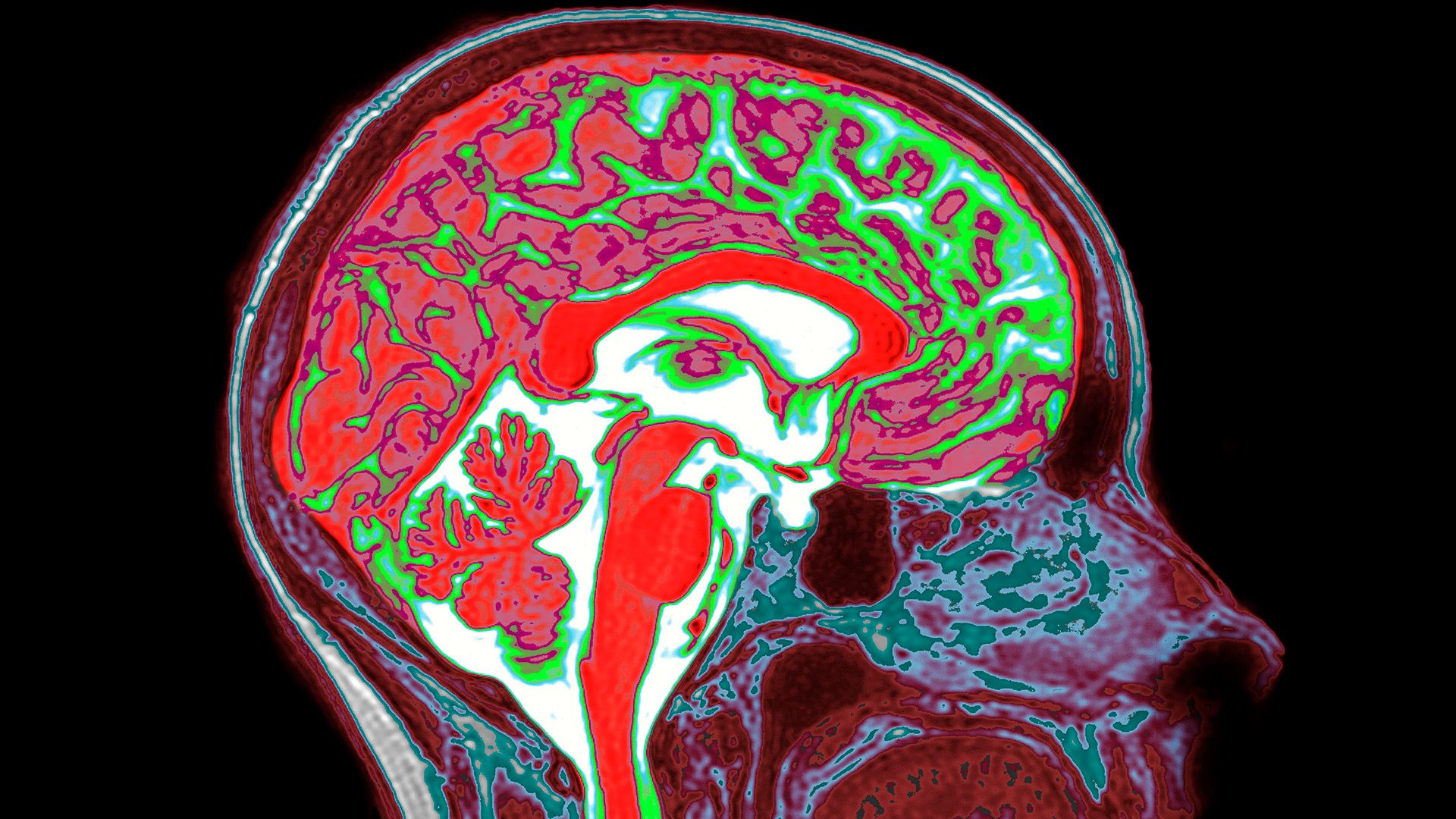
High estrogen in the brain’s memory center may worsen one’s resilience against traumatic events, swaying the tendency to develop memory problems or post-traumatic stress in the aftermath, a new study in mice suggests.
The research, published in April in the journal Neuron, explored the effects of estrogen in the mouse brain. It zoomed in on the hippocampus, a key part of the brain involved in learning and memory. Both male and female mammals produce significant amounts of estrogen in the hippocampus, despite it often being framed as a “female” hormone.
The study suggests that these local estrogen concentrations may influence one’s vulnerability to memory problems following major acute stress. Although the research was conducted in mice, the authors think it likely has relevance to humans.
“I think this is highly translatable,” study senior author Dr. Tallie Z. Baram, a professor, developmental neuroscientist and child neurologist at the University of California, Irvine, told Live Science.
Estrogen isn’t always a memory booster
Traumatic experiences can cause memory disturbances, including difficulty remembering specific personal experiences and having fearful reactions to formerly safe, familiar situations. When these issues persist and are accompanied by intrusive memories of the traumatic event, they are classified as post-traumatic stress disorder (PTSD).
About 10% to 12% of women experience PTSD in their lifetime, compared with 5% to 6% of men. Some of that difference may stem from variance in men’s and women’s lived experiences; for instance, women have higher rates of sexual assault at young ages than men do. Biological differences between women and men are another potential factor, but their contribution to the phenomenon is poorly understood.
The new study highlights hippocampal estrogen as one difference that might matter. “The research has uncovered important new avenues for research on PTSD,” Victoria Luine, a professor emerita of psychology at Hunter College in New York City who wasn’t involved in the work, told Live Science in an email.
In the study, researchers simulated acute traumatic events by exposing lab mice to multiple stressors at the same time, including bright lights, loud music and the odors of other stressed-out mice. They ran the mice through various memory tests before and after the stressful experience and compared these rodents with a group that did not experience such stressors.
Compared with unstressed mice, the stressed-out male mice performed worse on the various memory tests, and those deficits persisted for weeks. “Even a month later, they had a memory deficit — so it’s a really perseverative effect,” Heller said.
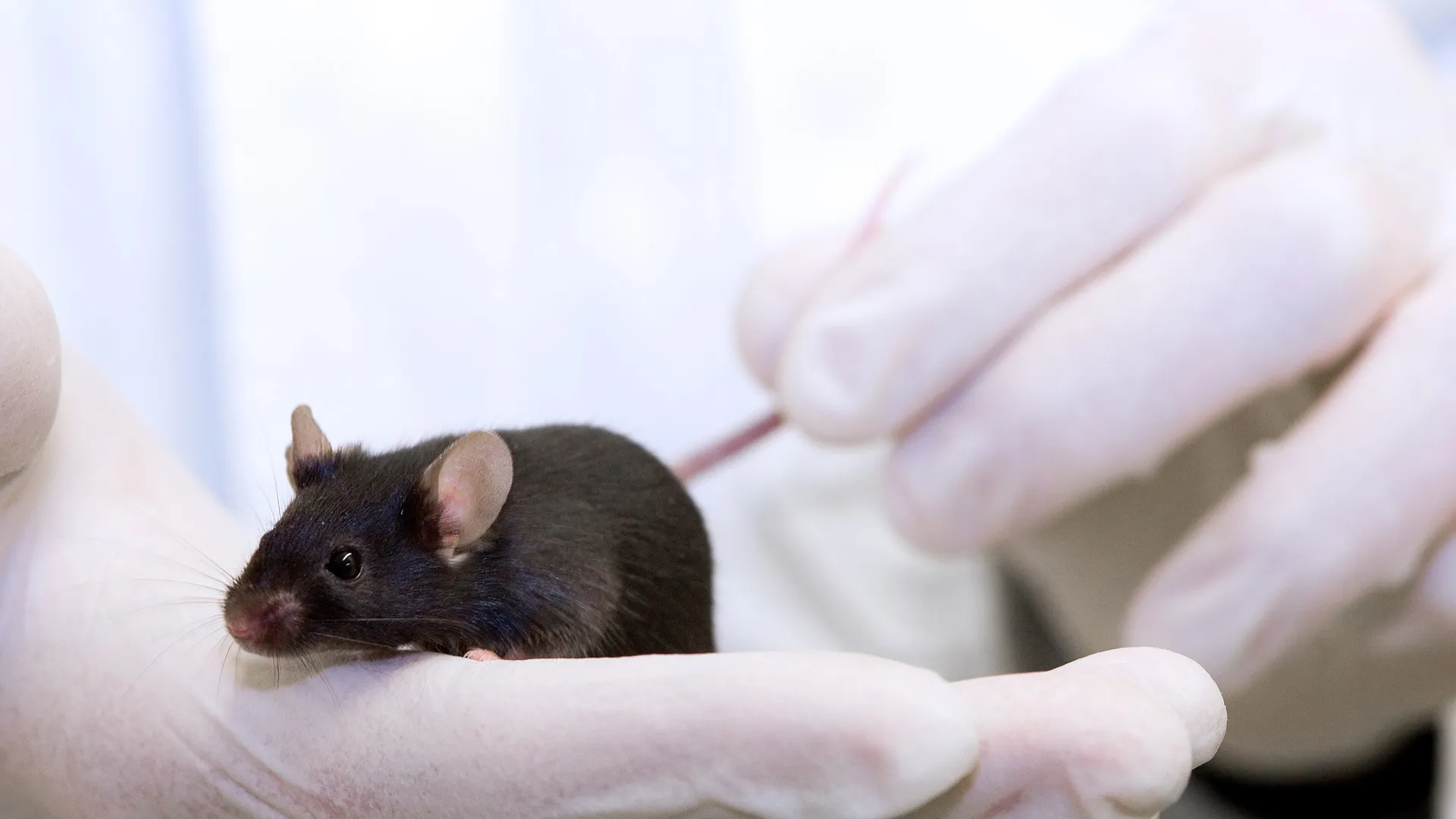
The hormone cycles of female mice and humans are similar, but they occur on very different timescales, with the mouse cycle being about one-seventh the length of the human cycle.
(Image credit: dra_schwartz via Getty Images)
A similar pattern was seen in female mice that were stressed out during proestrus, the phase of their hormone cycle when estrogen peaks and the body prepares for ovulation. Both sets of mice learned to associate certain cues with the stressful experience and avoid them, with females being more sensitive to those cues than males were.
But interestingly, female mice that were stressed during estrus, when estrogen plummets and ovulation occurs, showed resilience. Their behavior and memory remained comparable to those of unstressed mice. “The female mice that had low levels of estrogen laughed it off — they were completely protected,” Baram said.
Studies suggest hippocampal estrogen levels are similar in male and proestrus female mice, while estrus females have lower levels. The researchers confirmed this using a technique called mass spectrometry, finding that estrus mice had half the amount of hippocampal estrogen that the males and proestrus females did.
In this context, that lack of estrogen in the hippocampus appeared to guard against the negative effects of stress. This finding was surprising, Baram noted, because estrogen is generally thought to promote memory function in both sexes and declines in estrogen, as seen during menopause, are tied to memory problems. That said, menopause takes place over a much longer timeline than the female mouse hormone cycle, which takes only four or five days.
A connection to DNA
Why do estrogen levels matter for memory? “Estrogen receptors directly control gene expression,” Heller said. By binding to its receptors, estrogen turns the activity of certain genes up or down.
Heller’s lab studies mechanisms that control gene activity in the context of psychiatric disorders. One of those mechanisms is chromatin remodeling, meaning changes in how DNA is packaged in a cell that can shift which genes can be activated at a given time. A portion of the chromatin can be “open,” exposing genes to machinery that turns them on, or “closed,” which typically shuts genes down.
It turns out that the high hippocampal estrogen in male mice and proestrus female mice opens up their chromatin in a way that might leave them vulnerable to memory issues ushered by severe stress. Female mice in estrus, by contrast, have a totally distinct chromatin profile that appears to be protective.
What is it about women at that stage in life that makes them more vulnerable to memory loss with aging?
Tallie Z. Baram, professor, developmental neuroscientist and child neurologist at the University of California, Irvine
“We can see that the function of many of those [open] genes relates to synapse biology,” Heller said. Synapses are the points at which different neurons meet and exchange electrical signals, and they’re central to the physical structure of memories in the brain.
It may be that, in most circumstances, it’s useful to have high levels of hippocampal estrogen because they “open” the chromatin, enabling the hippocampus to forge new memories quickly in response to new experiences, Baram noted. But when these experiences consist of severe acute stress, “that same plasticity, that same ability of the brain to learn, turns problematic,” she said. If the results carry over to humans, women may be particularly vulnerable to these memory impacts in certain phases of their menstrual cycles or points in their lifespans when estrogen is high.
In males and females, different flavors of estrogen receptor were responsible for the stress-induced memory issues. The reasons for this difference will be a matter of future study, Baram said. Additionally, future research could attempt to pinpoint exactly where the different estrogen receptors are located throughout the hippocampus, Heller said.
The study provides a “strong demonstration that estrogens drive sex-dependent, stress-induced changes in chromatin networks which can dramatically alter neural functions like memory,” Luine said. What’s more, “these results present cogent evidence that sex is a powerful biological variable.”
Historically, female lab animals were excluded from studies because it was thought that their hormone cycles were too complex and would muck up the findings. The field of neuroscience exemplified this trend. In recent years, the U.S. National Institutes of Health (NIH) has required that scientists take sex differences into account when designing NIH-funded human and animal studies, but progress has been slow on both fronts — and current federal leadership has signaled a lack of support for the initiative.
It’s important to include both sexes in research to truly understand how the brain functions and responds to external factors, like stress, Luine said. “An important aim of this and other studies is to protect humans against PTSD,” she added, and this study strongly suggests preventive treatments for PTSD might need to be tailored by sex.
Beyond PTSD, Baram thinks the research could have implications for women’s risk of aging-related memory problems and dementia.
The decline of estrogen in menopause is thought to raise this risk, but prior to menopause comes perimenopause — a period with massive spikes in estrogen. The study’s findings hint that if stress shows up during perimenopause, the combination of stress and high estrogen levels may contribute to memory problems. Thus, perimenopause may represent another time when women are particularly vulnerable to memory disturbances, Baram suggested.
“We need to start thinking a little bit differently,” she said. “What is it about women at that stage in life that makes them more vulnerable to memory loss with aging?”
This article is for informational purposes only and is not meant to offer medical advice.
See how much you know about the most complex organ in the human body with our brain quiz!
