Close Menu
  • Home
  • UNSUBSCRIBE
  • News
  • Lifestyle
  • Tech
  • Entertainment
  • Sports
  • Travel
Facebook X (Twitter) WhatsApp
Trending
  • ‘They don’t bear the costs when it comes to pollution’: The environmental costs of AI are astounding, and the world’s poorest will pay for it as the top 1% profits
  • ‘River in the Sky’: China’s doomed plan to create a ‘cloud seeding corridor’ tells us how far the country will go to solve its climate crisis
  • ‘They reliably chose the statistically more favorable option’: A crow researcher explains how these winged geniuses process numbers, and what it could reveal about human math smarts
  • Atlantic ‘cold blob’ is responsible for shifts in the Indian summer monsoon that threaten over 1 billion people
  • China’s secretive Tianwen-2 mission is about to attempt a daring landing on near-Earth asteroid Kamo’oalewa
  • Oldest known plague victims found in a 5,500-year-old burial ground in Siberia — and many of them were children
  • ‘This was a pioneering achievement’: Stone Age people put up posts to observe the solstices near Stonehenge long before the stones of sacred site were placed
  • ‘It’s a huge deal’: Archaeologists discover second cannonball from the Battle of the Alamo, and it was likely fired by Texans
Facebook X (Twitter) WhatsApp
Baynard Media
  • Home
  • UNSUBSCRIBE
  • News
  • Lifestyle
  • Tech
  • Entertainment
  • Sports
  • Travel
Baynard Media
Home»Lifestyle»The Eta Aquariid meteor shower peaks this week: How to see ‘shooting stars’ dropped by Halley’s Comet
Lifestyle

The Eta Aquariid meteor shower peaks this week: How to see ‘shooting stars’ dropped by Halley’s Comet

EditorBy EditorMay 3, 2026No Comments3 Mins Read
Share Facebook Twitter Pinterest LinkedIn Tumblr Reddit Telegram Email
Share
Facebook Twitter LinkedIn Pinterest Email

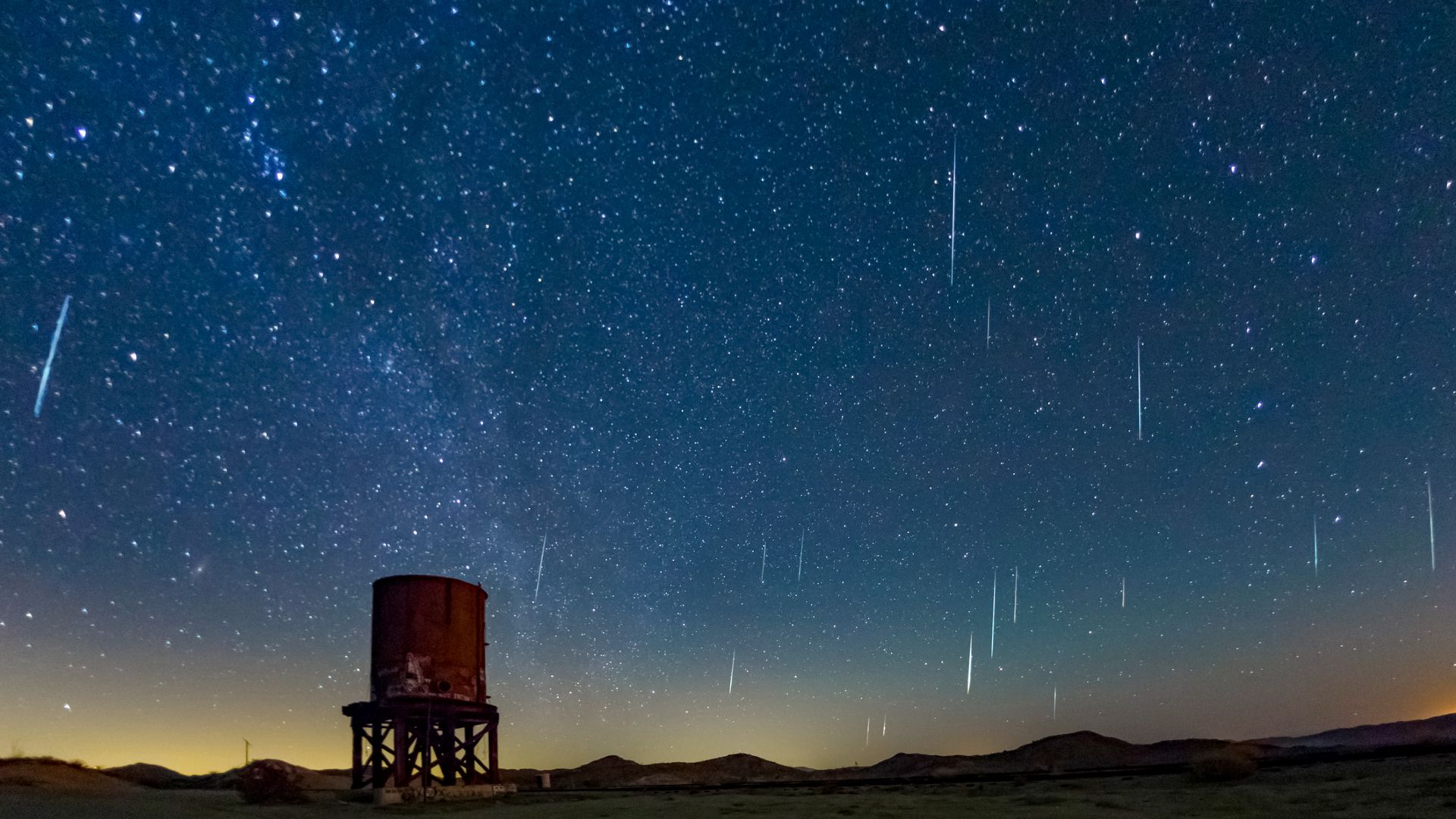
The Eta Aquariid meteor shower will peak overnight from May 5-6, giving skywatchers a chance to spot fast-moving “shooting stars” created by debris from Halley’s Comet.

The Eta Aquariids (also spelled Eta Aquarids) are active from April 19 to May 28 each year, with meteors appearing to radiate from the constellation Aquarius, specifically near the star Eta Aquarii, according to Time and Date. The star, which is 168 light-years away, is visible to the naked eye — however, that distant star really has nothing to do with the shower.

The shower is one of two annual meteor displays linked to the famous Halley’s Comet, which takes about 76 years to orbit the sun. The last time it was in the inner solar system was in 1986, and it will return in 2061.


You may like

Halley’s Comet is currently traveling through the outer reaches of the solar system, beyond the orbit of Neptune. But twice each year, Earth passes through the trail of dust and debris that the comet has previously left behind. That creates both the Eta Aquariids in April and May and the Orionid meteor shower from early October to early November.

As Earth moves through Halley’s debris, tiny particles enter the atmosphere at around 40.7 miles per second (65.4 kilometers per second), according to the American Meteor Society, producing swift meteors and persistent glowing trails. Bright fireballs are possible, but rare. Eta Aquariid activity is strongest for about a week centered on the peak night.

From the Northern Hemisphere, the shower usually produces medium rates of around 10 to 30 meteors per hour. That’s because the radiant, Eta Aquarii, stays relatively low on the eastern horizon. However, meteors may still appear as long “Earthgrazers” that skim low across the sky.

The Eta Aquariids are strongest when viewed from the Southern tropics, where the radiant rises higher in the sky before sunrise. Under ideal dark-sky conditions, up to 50 meteors per hour are possible.

Get the world’s most fascinating discoveries delivered straight to your inbox.

For this year’s meteor shower, moonlight will make it harder to spot meteors. On the peak night of May 5-6, the moon will be a waning gibbous that’s 84% full, and its brightness could reduce rates to fewer than 10 meteors visible per hour, according to the American Meteor Society.

The best time to watch will be before dawn on May 6, when the radiant point is highest in the sky and the moon is lower, which improves visibility for fainter meteors. You’ll want to watch the shower with your naked eyes, after letting them adjust to the dark — however, a good astrophotography camera is recommended if you want to try your hand at photographing a meteor shower.

Source link

Share. Facebook Twitter Pinterest LinkedIn Tumblr Email
Previous Article‘I’m more hopeful that birds can endure than maybe even our own species’: Paleontologist Steve Brusatte on why birds are the ultimate survivors
Next Article ‘Sacrifice zones’ around critical mineral mines are rife with pollution, child workers and birth defects
Editor
  • Website

Related Posts

Lifestyle

‘They don’t bear the costs when it comes to pollution’: The environmental costs of AI are astounding, and the world’s poorest will pay for it as the top 1% profits

June 18, 2026
Lifestyle

‘River in the Sky’: China’s doomed plan to create a ‘cloud seeding corridor’ tells us how far the country will go to solve its climate crisis

June 18, 2026
Lifestyle

‘They reliably chose the statistically more favorable option’: A crow researcher explains how these winged geniuses process numbers, and what it could reveal about human math smarts

June 18, 2026
Add A Comment

Comments are closed.

Categories
  • Entertainment
  • Lifestyle
  • News
  • Sports
  • Tech
  • Travel
Recent Posts
  • ‘They don’t bear the costs when it comes to pollution’: The environmental costs of AI are astounding, and the world’s poorest will pay for it as the top 1% profits
  • ‘River in the Sky’: China’s doomed plan to create a ‘cloud seeding corridor’ tells us how far the country will go to solve its climate crisis
  • ‘They reliably chose the statistically more favorable option’: A crow researcher explains how these winged geniuses process numbers, and what it could reveal about human math smarts
  • Atlantic ‘cold blob’ is responsible for shifts in the Indian summer monsoon that threaten over 1 billion people
  • China’s secretive Tianwen-2 mission is about to attempt a daring landing on near-Earth asteroid Kamo’oalewa
calendar
June 2026
M T W T F S S
1234567
891011121314
15161718192021
22232425262728
2930  
« May    
Recent Posts
  • ‘They don’t bear the costs when it comes to pollution’: The environmental costs of AI are astounding, and the world’s poorest will pay for it as the top 1% profits
  • ‘River in the Sky’: China’s doomed plan to create a ‘cloud seeding corridor’ tells us how far the country will go to solve its climate crisis
  • ‘They reliably chose the statistically more favorable option’: A crow researcher explains how these winged geniuses process numbers, and what it could reveal about human math smarts
About

Welcome to Baynard Media, your trusted source for a diverse range of news and insights. We are committed to delivering timely, reliable, and thought-provoking content that keeps you informed
and inspired

Categories
  • Entertainment
  • Lifestyle
  • News
  • Sports
  • Tech
  • Travel
Facebook X (Twitter) Pinterest WhatsApp
  • Contact Us
  • About Us
  • Privacy Policy
  • Disclaimer
  • UNSUBSCRIBE
© 2026 copyrights reserved

Type above and press Enter to search. Press Esc to cancel.