Close Menu
  • Home
  • UNSUBSCRIBE
  • News
  • Lifestyle
  • Tech
  • Entertainment
  • Sports
  • Travel
Facebook X (Twitter) WhatsApp
Trending
  • ‘The push towards renewables is unstoppable because it’s in a country’s self-interest’: Climate scientist Andy Reisinger on Trump, Iran, and the future of Earth
  • Science news this week: Atlantic current edges closer to collapse, scientists make artificial-neuron breakthrough, and a copy of the “Iliad” is found inside an Egyptian mummy
  • Why are some constellations visible for only part of the year?
  • Science history: Chernobyl nuclear power plant melts down, bringing the world to the brink of disaster — April 26, 1986
  • El Niño could be here by May, new forecast reveals —‬ here’s what it means for summer weather
  • ‘A completely new reality’: Bolder measures are needed to prevent extreme water shortages in cities like Phoenix and Las Vegas that depend on the Colorado River
  • New York City is at major risk of flooding that could leave 4.4 million people exposed to extreme damage, study finds
  • ‘Brain-eating’ amoebas are nearly always fatal. New treatments may change that.
Facebook X (Twitter) WhatsApp
Baynard Media
  • Home
  • UNSUBSCRIBE
  • News
  • Lifestyle
  • Tech
  • Entertainment
  • Sports
  • Travel
Baynard Media
Home»Lifestyle»Science news this week: Atlantic current edges closer to collapse, scientists make artificial-neuron breakthrough, and a copy of the “Iliad” is found inside an Egyptian mummy
Lifestyle

Science news this week: Atlantic current edges closer to collapse, scientists make artificial-neuron breakthrough, and a copy of the “Iliad” is found inside an Egyptian mummy

EditorBy EditorApril 25, 2026No Comments6 Mins Read
Share Facebook Twitter Pinterest LinkedIn Tumblr Reddit Telegram Email
Share
Facebook Twitter LinkedIn Pinterest Email

We celebrated Earth Day this week, and the science news was filled with troubling implications for the pale blue dot we call home.

Topping the list was a new study that suggests the collapse of a vital Atlantic Ocean current is much closer than we thought. The Atlantic Meridional Overturning Circulation recycles vast quantities of carbon and keeps Western Europe and the U.S. East Coast warm. Yet many studies suggest the current’s collapse is imminent, and the new research used fresh data and a novel analysis to find that we could be underestimating just how close the threat is. One team of scientists has even suggested the extreme measure of building a giant dam across the Bering strait to fend off the current’s collapse.

In other concerning developments, new satellite images show that oil spills are wreaking untold ecological havoc in the Persian Gulf and El Niño could be here by May.

Even closer to home, we reported on how and why Florida is facing its worst drought in 15 years, how New York City is at major risk of flooding, and how extreme water shortages could hit Phoenix and Las Vegas. Meanwhile, in New Zealand, a glowing ring of plankton has been linked to a deadly underwater plateau.

Scientists invent artificial neurons

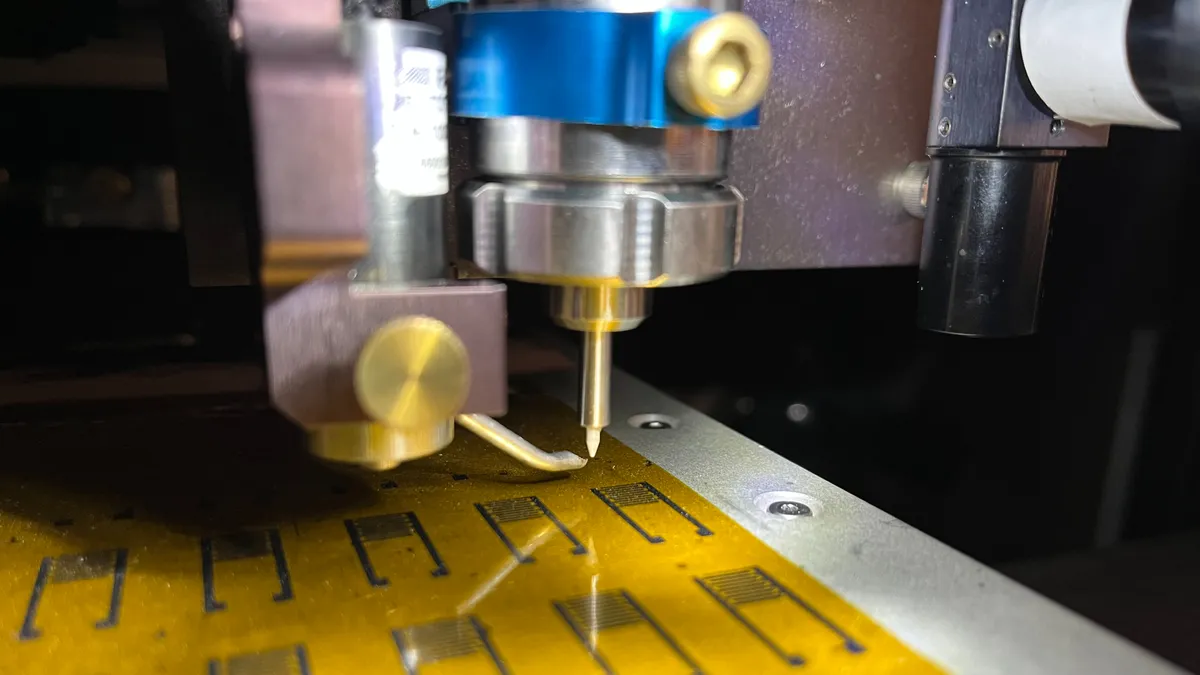
A close up of a metal machine with a long needle pointing to a yellow shiny sheet with brass pieces on it.

To make the artificial neurons, the researchers use an aerosol jet printer to deposit electronic inks onto a flexible polymer substrate. (Image credit: Northwestern University/Amanda B. Morris)

Tiny, artificial neurons that can communicate with real brain cells could lay the groundwork for more advanced computers and computer-brain interfaces. A new study we reported on this week used inks laced with flakes of semiconductors and conductors printed onto a polymer substrate to create neurons.

These artificial neurons produced electrical spiking patterns that closely resembled those in human brains, while the flexibility of the polymer enabled a complex and evolving artificial neural architecture to take shape.

When placed next to mouse neurons in the lab, the artificial neurons caused the real neurons to fire at the same pace — strongly suggesting that the two could communicate the same signals. Although a lot of work remains, the finding could be the first step toward creating computers with human-like neural structures.

Get the world’s most fascinating discoveries delivered straight to your inbox.

Discover more health news

—Gene therapy improves hearing in 90% of patients with inherited deafness in largest trial of its kind

—Diagnostic dilemma: A teen’s classic diabetes symptoms didn’t improve with treatment — revealing she also had a much rarer syndrome

—‘A landmark moment for the field’: FDA approves first-ever gene therapy for inherited deafness

Life’s Little Mysteries

A glowing orange night sky is full of stars overlooking a winter landscape with a large tree in the left of the image

The Orion constellation can be clearly seen in the winter in the Northern Hemisphere. In the Southern Hemisphere, it’s high in the night sky during the summer, but it appears upside down. (Image credit: wenbin via Getty Images)

Why are some stars constant fixtures in the night sky and others shift in and out of view with the passing of the seasons? It has to do with Earth’s own characteristic wobble.

—If you enjoyed this, sign up for our Life’s Little Mysteries newsletter

Mummy found with the “Iliad”
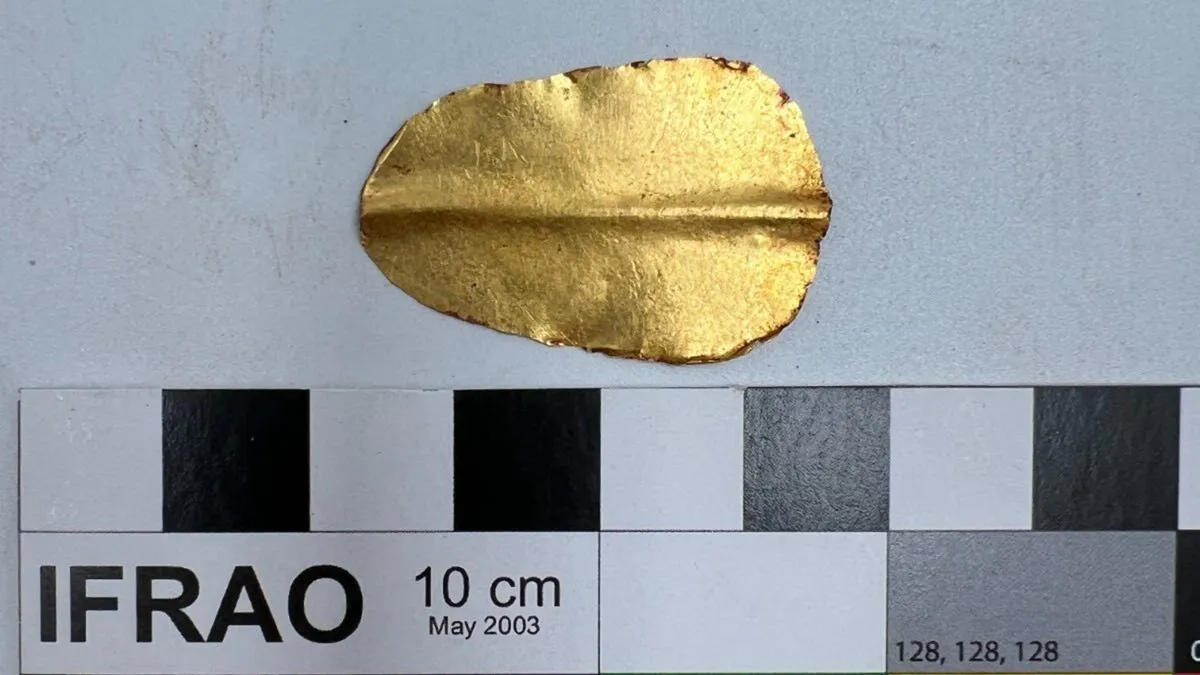
A close up of a gold tongue against a white background with a ruler next to it.

One of the gold tongues found inside a mummy at the archaeological site of Oxyrhynchus in Egypt. (Image credit: Courtesy of the Egyptian Ministry of Tourism and Antiquities)

Ever had a book you just couldn’t put down? A Roman-era mummy in Egypt may have you beat, having been found with part of Homer’s epic poem the “Iliad” inside its abdomen.

The mummy dates to between 30 B.C. and A.D. 641, when the Romans controlled Egypt, and was found within a cemetery in the modern-day town of Al-Bahnasa, which was known as Oxyrhynchus in ancient times.

Little is known about the ancient bookworm, aside from him being an adult man, but he was discovered at the same cemetery as dozens of other mummies with golden tongues, which ancient Egyptians believed granted them the power to speak with the gods in the afterlife.

Discover more archaeology news

—Neanderthal toddlers grew faster than modern humans, probably because of the harsh environment they evolved in

—DNA study of nearly 200 Indigenous genomes reveals unknown Asian ‘ghost’ population contributed to American ancestry

—700-year-old mummy from Bolivia contains earliest confirmed evidence of strep throat bacteria in the Americas

Also in science news this week

—NASA shuts off another Voyager 1 instrument as humanity’s most distant spacecraft prepares for risky ‘Big Bang’ maneuver to save power

—Bruce the parrot is missing his upper beak —‬ but that hasn’t stopped him from becoming an undefeated jousting champion

—‘Kraken’ octopus that lived at the time of the dinosaurs was a 62-foot-long apex predator of the ocean

—Artemis II heat shield aced its blistering reentry, ghostly underwater photo reveals

—Artemis moon landing could face long delay while NASA waits for next-generation spacesuits

—Advanced AI-powered table-tennis-playing robot can match up to the professionals — watch it in action

Science long read
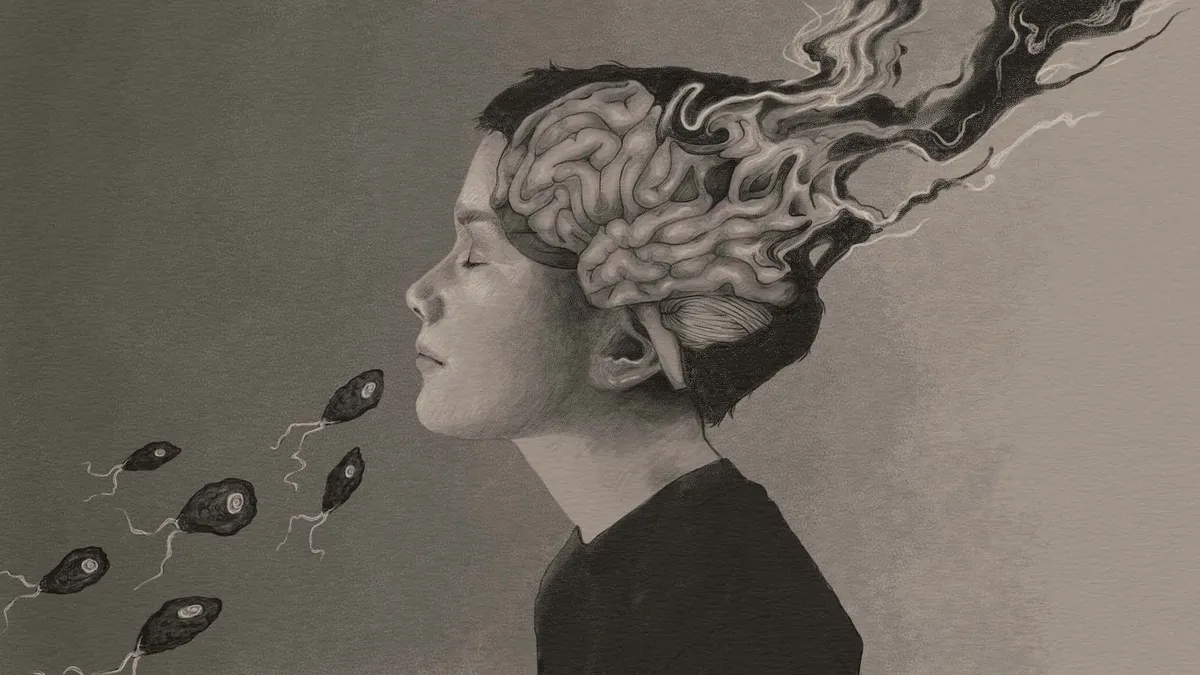
A pencil drawing showing brain eating amoebas entering a boy's nose, and an artistic representation of the boy's brain breaking down

New research suggests polar bears could be more adaptable to changes in climate than expected. (Image credit: Marilyn Perkins for Live Science)

Brain-eating amoebas are comparatively rare infections, yet they are almost always fatal. Thriving in warm fresh water, they charge into the body like “a bull in a china shop,” destroying brain tissue on a massive scale. As climate change heats waters, possibly expanding these microorganisms’ range, Live Science reported on the race to create groundbreaking treatments to kill them.

Something for the weekend

If you’re looking for things to keep you busy over the weekend, here are some of the best interviews and quizzes published this week.

—‘The chances of you living 50 years are very small’: Theoretical physicist explains why humanity likely won’t survive to see all the forces unified [Interview]

—‘Strong, undeniable public examples of something positive’: Astronaut Chris Hadfield on why Artemis II hit him hard, and why we need to send a guitar to the moon [Interview]

—Earth quiz: What do you know about our planet’s most amazing features? [Quiz]

Science news in pictures

A timelapse image showing a bright streak of light crossing in front of a comet's long tail to form an X-like shape in the night sky. A medieval castle is illuminated in the foreground.

A green fireball lit up the skies of Lindisfarne Castle in the United Kingdom. (Image credit: Petr Horálek/Josef Kujal)

Photographers Petr Horálek and Josef Kujal captured this extraordinary cosmic coincidence on April 18 in the skies over the ruins of the 15th-century Kunětická Hora Castle in the Czech Republic, with the “Great Comet of 2026” contender crossing paths with a fireball meteor in the sky to form a giant X. Don’t tell Elon Musk.

Follow Live Science on social media

Want more science news? Follow our Live Science WhatsApp Channel for the latest discoveries as they happen. It’s the best way to get our expert reporting on the go, but if you don’t use WhatsApp we’re also on Facebook, X (formerly Twitter), Flipboard, Instagram, TikTok, Bluesky and LinkedIn.


Source link

Share. Facebook Twitter Pinterest LinkedIn Tumblr Email
Previous ArticleWhy are some constellations visible for only part of the year?
Next Article ‘The push towards renewables is unstoppable because it’s in a country’s self-interest’: Climate scientist Andy Reisinger on Trump, Iran, and the future of Earth
Editor
  • Website

Related Posts

Lifestyle

‘The push towards renewables is unstoppable because it’s in a country’s self-interest’: Climate scientist Andy Reisinger on Trump, Iran, and the future of Earth

April 25, 2026
Lifestyle

Why are some constellations visible for only part of the year?

April 25, 2026
Lifestyle

Science history: Chernobyl nuclear power plant melts down, bringing the world to the brink of disaster — April 26, 1986

April 25, 2026
Add A Comment

Comments are closed.

Categories
  • Entertainment
  • Lifestyle
  • News
  • Sports
  • Tech
  • Travel
Recent Posts
  • ‘The push towards renewables is unstoppable because it’s in a country’s self-interest’: Climate scientist Andy Reisinger on Trump, Iran, and the future of Earth
  • Science news this week: Atlantic current edges closer to collapse, scientists make artificial-neuron breakthrough, and a copy of the “Iliad” is found inside an Egyptian mummy
  • Why are some constellations visible for only part of the year?
  • Science history: Chernobyl nuclear power plant melts down, bringing the world to the brink of disaster — April 26, 1986
  • El Niño could be here by May, new forecast reveals —‬ here’s what it means for summer weather
calendar
April 2026
M T W T F S S
 12345
6789101112
13141516171819
20212223242526
27282930  
« Mar    
Recent Posts
  • ‘The push towards renewables is unstoppable because it’s in a country’s self-interest’: Climate scientist Andy Reisinger on Trump, Iran, and the future of Earth
  • Science news this week: Atlantic current edges closer to collapse, scientists make artificial-neuron breakthrough, and a copy of the “Iliad” is found inside an Egyptian mummy
  • Why are some constellations visible for only part of the year?
About

Welcome to Baynard Media, your trusted source for a diverse range of news and insights. We are committed to delivering timely, reliable, and thought-provoking content that keeps you informed
and inspired

Categories
  • Entertainment
  • Lifestyle
  • News
  • Sports
  • Tech
  • Travel
Facebook X (Twitter) Pinterest WhatsApp
  • Contact Us
  • About Us
  • Privacy Policy
  • Disclaimer
  • UNSUBSCRIBE
© 2026 copyrights reserved

Type above and press Enter to search. Press Esc to cancel.