
Bird populations are in free fall across North America. And in some hotspots their decline is accelerating, a new study reveals.
Wild bird numbers declined at an accelerating rate in California, the Midwest and the Mid-Atlantic between 1987 and 2021. Across these hotspots, losses were associated with high-intensity agriculture, according to the study.
Birds perform important roles in the ecosystem, including spreading plant seeds and keeping insect populations under control. For decades, scientists have been concerned that bird populations are falling due to human activities, both in North America and globally — a plight shared by many other animals. What’s special about the new research is that it reveals how the decline in North America has accelerated since the late 1980s.
“We are not talking about the decline but the acceleration of the decline,” study lead author François Leroy, a postdoctoral researcher in macroecology at The Ohio State University, told Live Science. “We see that this decline is getting faster and faster with the intensification of human activities.”
Leroy and his colleagues mapped bird decline by studying data from the North American Breeding Bird Survey, which is an annual surveying effort by professional biologists and skilled amateurs to monitor bird populations across North America. As a part of the survey, participants walk along specific routes and record the birds they find.
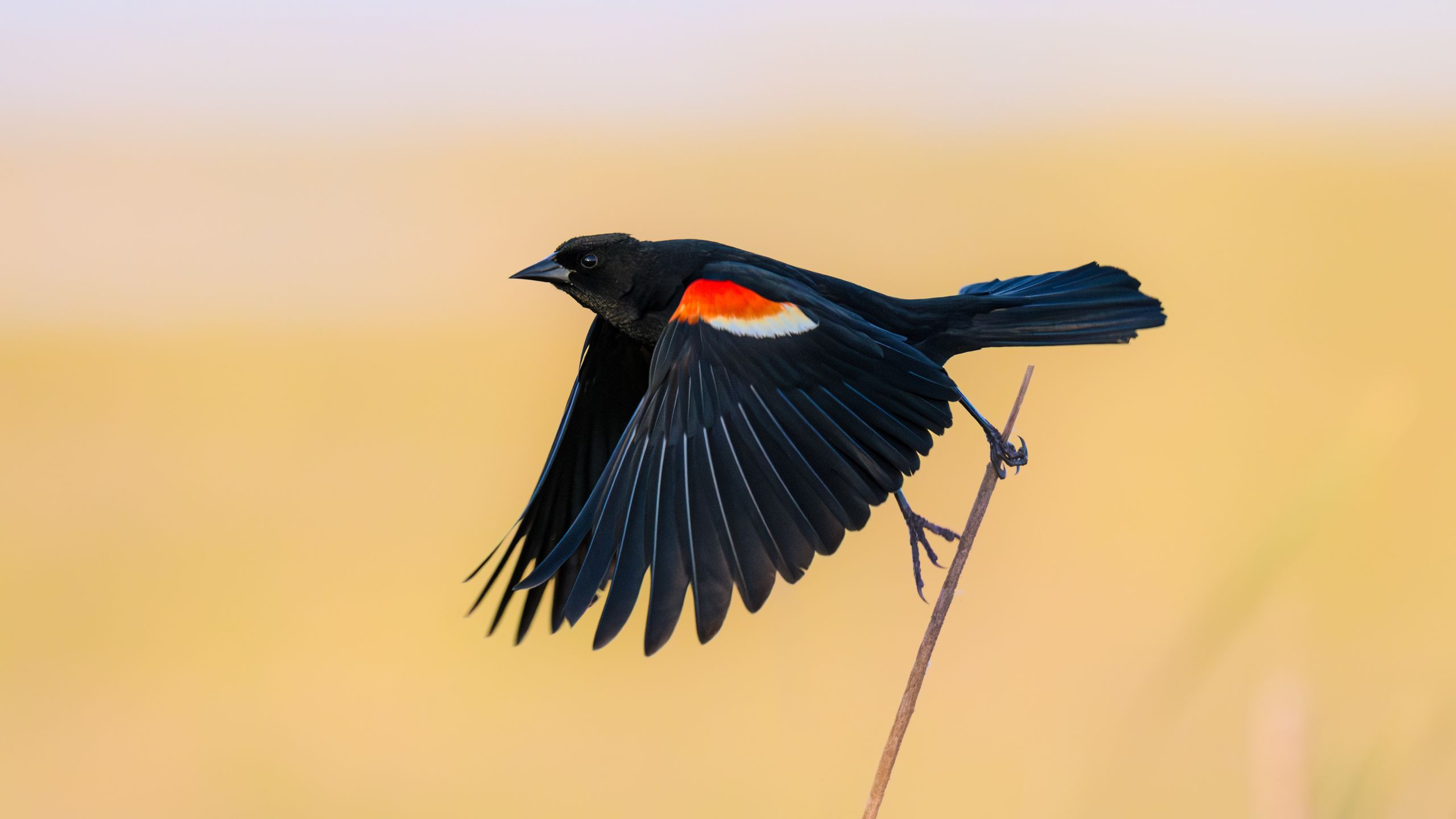
The researchers focused on specific routes with enough data to measure the rate of decline over 35 years. These routes were primarily in the U.S. and included 261 bird species. Across all of the species surveyed, the overall abundance of birds fell by at least 15%, with significant drops documented in about half (122) of the species and accelerating declines reported in about a quarter (63) of the species. Common birds — like red-winged blackbirds (Agelaius phoeniceus), house finches (Haemorhous mexicanus) and American crows (Corvus brachyrhynchos) — were among the native species found to have suffered an accelerated decline.
The study focused on the rate of decline in specific routes, so it’s unclear how many individual birds were lost across the entire continent during the study period. However, previous research has found that billions of birds have disappeared in recent decades.
A 2019 study published in the journal Science estimated that the North American bird population decreased by 2.9 billion individual birds between 1970 and 2017. That estimate equated to a drop of 29%, which is almost double the 15% decline documented in the new study. However, the 2019 study also covered an earlier and longer time period when there may have been more severe losses.
People only started surveying North American birds in the second half of the 20th century, but we’ve been killing them directly and indirectly for much longer than that. For example, commercial hunting by humans forced passenger pigeons (Ectopistes migratorius), a species estimated to have once had a population of 3 billion to 5 billion, to extinction in 1914.
What caused the “birdemic”?
The new study demonstrated that birds were incurring losses not just at the species level but across whole families of species and across different habitats. To better understand the worrying trend, the researchers compared the bird data to potential contributing factors, such as temperature change, rainfall and land-cover changes.
The acceleration of bird decline coincided with large areas of croplands and high usage of fertilizers and pesticides, which are signs of intense agriculture. This tracks with research in Europe that has found that agricultural intensification has negatively impacted bird diversity.
Intense agriculture can destroy, change and break up traditional bird habitat. The amount of land used for farming in the U.S. hasn’t changed that much since the 1980s. Agriculture has become more consolidated in that time, with a decline in midsize farms and a shift to larger farming operations, but there’s slightly less land being used for farming overall. Thus, the bird losses can’t be blamed solely on the amount of farmland. However, they could be the result of changes in farming practices.

Leroy said that from the new study, it’s not really possible to say which specific practice in agriculture is the worst for bird losses. However, he noted that from previously published studies, it seems like pesticide use is one of the main suspects.
A 2023 study published in the journal PNAS found that the use of pesticides and fertilizers was the key to agricultural intensification being the main pressure behind most bird population drops, particularly in birds that feed on invertebrates. Most disappearing bird species depend on insects for food, and insects are in steep decline as they are killed through the use of pesticides. Birds also consume pesticides directly.
Leroy said he would like to see what farmers think about the correlation between agricultural intensification and bird losses. He and his co-authors also noted in the study that agriculture warms landscapes by reducing the amount of vegetation and altering its properties, which may then amplify warming impacts on birds.
While the findings were mostly bad news for birds, there were some bright spots. For example, the researchers found some local increases in forest bird populations, which likely benefited from the reforesting of old farmland. There was also a small pocket of land just north of the U.S.-Canada border where the overall abundance of birds increased — the only region in which this occurred. However, Leroy said he had “no clue” why this was the case.
“It doesn’t mean that Canada is doing better because if you look at other regions in Canada, there were also some significant declines,” he added.
