Close Menu
  • Home
  • UNSUBSCRIBE
  • News
  • Lifestyle
  • Tech
  • Entertainment
  • Sports
  • Travel
Facebook X (Twitter) WhatsApp
Trending
  • Hantavirus LIVE: American passengers from cruise head to specialized facilities in Nebraska
  • New ‘trick’ fixes major flaw in neutral-atom quantum computers — inching us closer to a superpowerful system
  • A 2025 Alaskan tsunami was one of the largest on record, new research finds
  • Lion’s head pendant: An ancient Egyptian board game piece that was later repurposed into a magical religious object with baboons
  • Are we more closely related to cats or dogs?
  • Declassified Apollo 12 images show UFOs on the moon — Space photo of the week
  • ‘More than 100 million years of evolution’: How snakes evolved and lost their legs
  • More polar bears are approaching human sites as the climate warms, and it’s not just the skinny ones
Facebook X (Twitter) WhatsApp
Baynard Media
  • Home
  • UNSUBSCRIBE
  • News
  • Lifestyle
  • Tech
  • Entertainment
  • Sports
  • Travel
Baynard Media
Home»Lifestyle»Every ant is a queen in this parasitic species — and they reproduce by cloning themselves and hijacking other ant colonies
Lifestyle

Every ant is a queen in this parasitic species — and they reproduce by cloning themselves and hijacking other ant colonies

EditorBy EditorMarch 3, 2026No Comments4 Mins Read
Share Facebook Twitter Pinterest LinkedIn Tumblr Reddit Telegram Email
Share
Facebook Twitter LinkedIn Pinterest Email

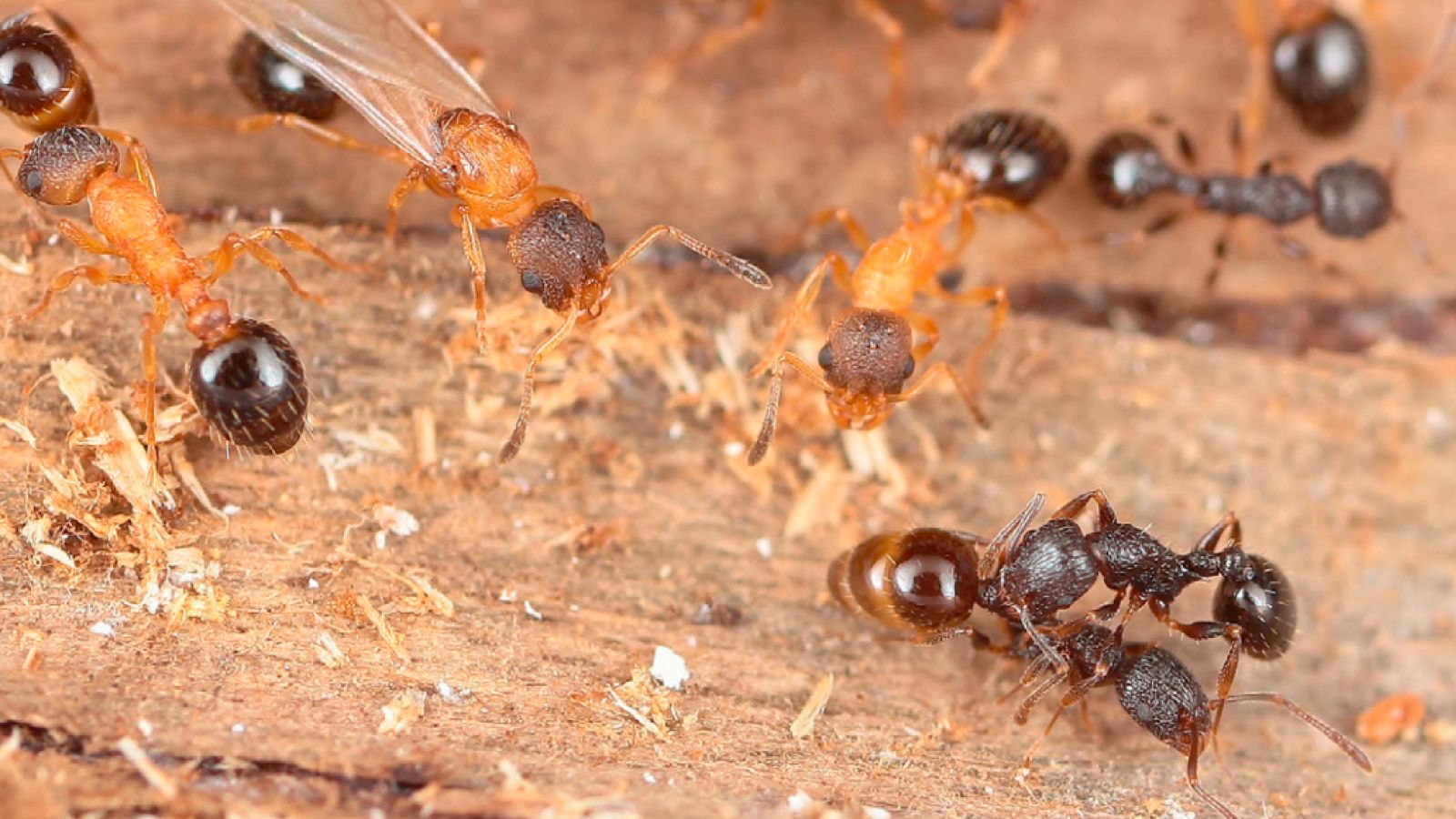
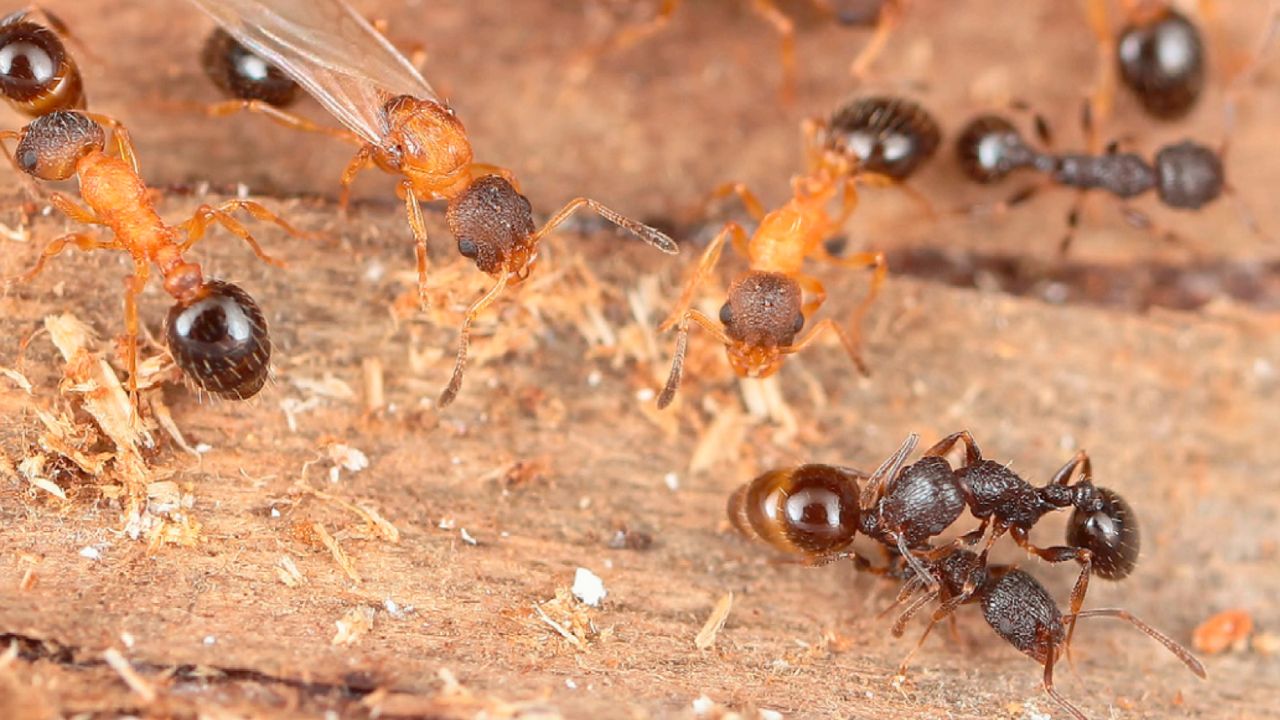
A rare ant species in Japan has no males or workers ‪—‬ only queens, scientists have found. These ant queens live parasitically in the nests of another ant species and reproduce asexually to create clone queens to take over other nests.

The parasitic ant, Temnothorax kinomurai, is the “first known species with only queens,” said Jürgen Heinze, a biologist at the University of Regensburg in Germany, and co-author of a new study describing the findings.

Most ants live in regimented, closely related societies in which queens retain sperm cells from when they mated before founding the colony. They use these sperm cells selectively to either lay fertilized eggs that will become female workers or queens, or unfertilized eggs that develop as short-lived males.


You may like

But there are also parasitic queens that infiltrate the colonies of other species and take them over, often getting the workers to serve them and rear their offspring until their own brood has taken over.

Keiko Hamaguchi, a biologist at the Kansai Research Center in Kyoto, Japan, and her colleagues have been investigating T. kinomurai, which has been found in only nine locations in Japan. The ant was suspected to operate differently and produce just queens without any workers or males, but it wasn’t known for sure.

Young T. kinomurai queens invade the nests of a related species, Temnothorax makora, stinging the host queen and the most aggressive workers that try to stop the coup. If the takeover works, the surviving workers raise the alien queen’s young.

“T. kinomurai needs the host workers for foraging and brood care and cannot produce offspring without them,” Heinze told Live Science via email.

Get the world’s most fascinating discoveries delivered straight to your inbox.

To work out what happens, Hamaguchi’s team collected six colonies run by T. kinomurai queens and kept them in nest boxes in the lab. From these colonies, they reared 43 offspring, none of which were males, according to examination of the genitals, or workers, which would be smaller. All were queens.

When presented with new potential host T. makora colonies, seven of the 43 offspring, which had never mated, succeeded in coup attempts. This is in line with the typical high failure rate of the risky business of founding a parasitic colony. The seven queens produced a total of 57 offspring, which were also all queens. The findings were published Feb. 23 in the journal Current Biology.

Queens of some ant species can clone themselves through asexual reproduction, known as parthenogenesis. Other ants exploit social parasitism, hijacking the workforce of unrelated colonies to rear their own offspring.


You may like

“Yet, until now, no species had been shown to merge both strategies, despite the intuitive evolutionary logic behind such a combination,” Jonathan Romiguier, an evolutionary biologist at the University of Montpellier in France who wasn’t involved in the work, told Live Science via email.

“Given that there are over 15,000 ant species out there, this is quite unusual,” added Daniel Kronauer, a biologist at The Rockefeller University in New York who wasn’t involved in the study.

The benefits of sexual and asexual reproduction are normally finely balanced, he said. Asexual reproduction can allow an organism to maximize its own genetic contributions to the next generation by producing genetically identical daughters, and asexual species can often outcompete their sexual counterparts because they don’t have to invest energy and resources into finding mates and producing males.

But sexual reproduction produces genetically diverse workers, which can be beneficial for an ant colony when it comes to pathogen defense and division of labor.

However, given that T. kinomurai queens don’t produce workers anymore, those benefits have disappeared, Kronauer told Live Science. “This could shift the balance in favor of asexual reproduction and, ultimately, the loss of males,” he said.

Hamaguchi, K., Kinomura, K., Kitazawa, R., Kanzaki, N., & Heinze, J. (2026). A parasitic, parthenogenetic ant with only queens and without workers or males. Current Biology, 36(4), R123–R124. https://doi.org/10.1016/j.cub.2025.11.080

Source link

Share. Facebook Twitter Pinterest LinkedIn Tumblr Email
Previous ArticleApple announces new M5 MacBook Air with 512GB of starting storage
Next Article Israel pounds Beirut as IDF troops cross Lebanon border
Editor
  • Website

Related Posts

Lifestyle

Hantavirus LIVE: American passengers from cruise head to specialized facilities in Nebraska

May 11, 2026
Lifestyle

New ‘trick’ fixes major flaw in neutral-atom quantum computers — inching us closer to a superpowerful system

May 11, 2026
Lifestyle

A 2025 Alaskan tsunami was one of the largest on record, new research finds

May 11, 2026
Add A Comment

Comments are closed.

Categories
  • Entertainment
  • Lifestyle
  • News
  • Sports
  • Tech
  • Travel
Recent Posts
  • Hantavirus LIVE: American passengers from cruise head to specialized facilities in Nebraska
  • New ‘trick’ fixes major flaw in neutral-atom quantum computers — inching us closer to a superpowerful system
  • A 2025 Alaskan tsunami was one of the largest on record, new research finds
  • Lion’s head pendant: An ancient Egyptian board game piece that was later repurposed into a magical religious object with baboons
  • Are we more closely related to cats or dogs?
calendar
May 2026
M T W T F S S
 123
45678910
11121314151617
18192021222324
25262728293031
« Apr    
Recent Posts
  • Hantavirus LIVE: American passengers from cruise head to specialized facilities in Nebraska
  • New ‘trick’ fixes major flaw in neutral-atom quantum computers — inching us closer to a superpowerful system
  • A 2025 Alaskan tsunami was one of the largest on record, new research finds
About

Welcome to Baynard Media, your trusted source for a diverse range of news and insights. We are committed to delivering timely, reliable, and thought-provoking content that keeps you informed
and inspired

Categories
  • Entertainment
  • Lifestyle
  • News
  • Sports
  • Tech
  • Travel
Facebook X (Twitter) Pinterest WhatsApp
  • Contact Us
  • About Us
  • Privacy Policy
  • Disclaimer
  • UNSUBSCRIBE
© 2026 copyrights reserved

Type above and press Enter to search. Press Esc to cancel.