Close Menu
  • Home
  • UNSUBSCRIBE
  • News
  • Lifestyle
  • Tech
  • Entertainment
  • Sports
  • Travel
Facebook X (Twitter) WhatsApp
Trending
  • Non-Binding Climate Action Plan Signed by Orange County
  • Humans and Neanderthals interbred — but it was mostly male Neanderthals and female humans who coupled up, study finds
  • Tesla sues Calif. DMV after agency said the ‘self-driving’ cars don’t actually drive themselves
  • Wigan Warriors vs Leigh Leopards latest score
  • Joy Anna Duggar on Pregnancy Rumors, Rare Personal Update
  • Vance says Americans ‘cannot give power’ back to Democrats following SOTU antics
  • Firefox adds an AI killswitch
  • India smash second-highest T20 World Cup score as they thumped Zimbabwe
Facebook X (Twitter) WhatsApp
Baynard Media
  • Home
  • UNSUBSCRIBE
  • News
  • Lifestyle
  • Tech
  • Entertainment
  • Sports
  • Travel
Baynard Media
Home»Lifestyle»Vera C. Rubin Observatory alerts scientists to 800,000 new asteroids, exploding stars and other cosmic phenomena in just one night
Lifestyle

Vera C. Rubin Observatory alerts scientists to 800,000 new asteroids, exploding stars and other cosmic phenomena in just one night

EditorBy EditorFebruary 26, 2026No Comments3 Mins Read
Share Facebook Twitter Pinterest LinkedIn Tumblr Reddit Telegram Email
Share
Facebook Twitter LinkedIn Pinterest Email

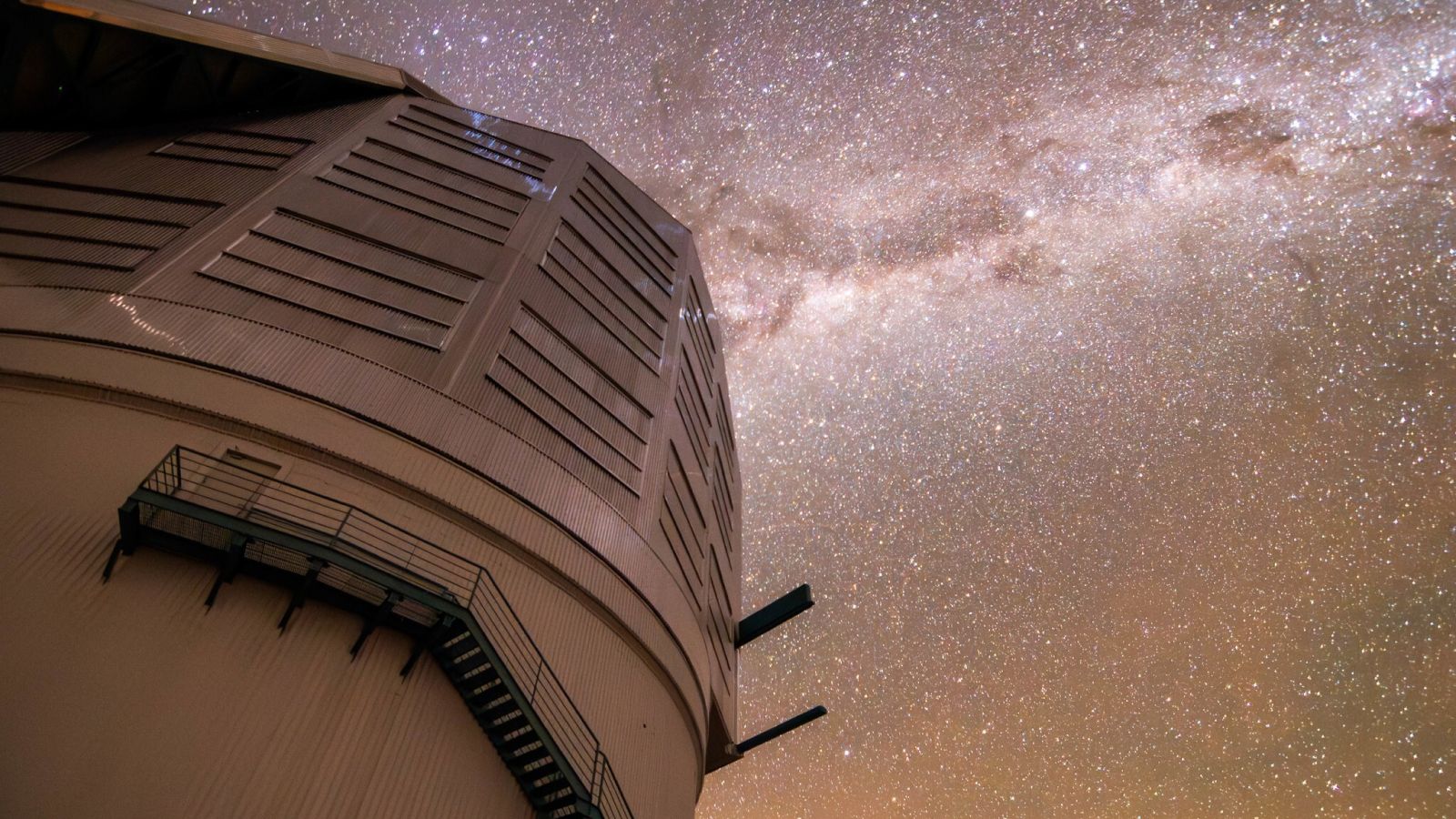
The newly commissioned Vera C. Rubin Observatory has issued 800,000 astronomy alerts in just one night — a staggering number of nightly discoveries that is expected to grow nearly tenfold by the end of this year.

The telescope, which scans the full sky from its perch atop Cerro Pachón mountain in Chile, produced the alerts to direct scientists to “new asteroids, exploding stars, and other changes in the night sky,” representatives for the U.S. National Science Foundation (NSF) said in a statement.

And Rubin is just getting started, as scientists expect it will eventually issue 7 million alerts every night.


You may like

“By connecting scientists to a vast and continuous stream of information, [the observatory] will make it possible to follow the universe’s events as they unfold, from the explosive to the most faint and fleeting,” Luca Rizzi, an NSF program director for research infrastructure, said in the statement.

Catching supernovas, asteroids, and interstellar objects in the act

A table showing changes among 5 solar system objects in one night

A sample of five solar systems objects that changed in brightness or position during Rubin’s nightly observations. According to the NSF: “As new images are taken, Rubin Observatory’s sophisticated software automatically compares each one with a template image. The template image, built by combining Rubin’s previous images of the same area in the same filter, is subtracted from the new image, leaving only the changes.” (Image credit: NSF–DOE Vera C. Rubin Observatory/NOIRLab/SLAC/AURA)

These alerts will enable scientists to collaborate to an unprecedented degree, the NSF noted, because Rubin will spot information quickly for follow-up by other telescopes on the ground or in space. Rubin’s alerts may also shed light on ongoing astronomical mysteries that require quick wayfinding to gather more information.

“Scientists will have a greater ability to catch supernovae in their earliest moments, discover and track asteroids to assess potential threats to Earth, and spot rare interstellar objects as they race through the solar system,” NSF representatives wrote in the statement. “Scientists can then use these data to better understand the nature of dark matter, dark energy, and other unknown aspects of the universe.”

Rubin’s alert system is starting up shortly before the observatory begins a 10-year program, known as the Legacy Survey of Space and Time (LSST), later this year. Rubin will do nightly sky scans to generate an image of the entire Southern Hemisphere sky every few nights, using the largest-ever digital camera to spot any changes in the view overhead.

Get the world’s most fascinating discoveries delivered straight to your inbox.

The observatory’s debut images, released in June 2025, revealed more than 10 million galaxies in and around the Virgo Cluster — many of them never studied before — as well as 2,000 previously undiscovered asteroids, spotted after just a few nights of observations.

The first year of the LSST program alone is expected to image more night-sky objects than those of all other optical observatories combined throughout human history, according to the NSF. Every night’s LSST observations will produce 10 terabytes of data, which also required background engineering in image processing, databases and data distribution to achieve the milestone.

The observatory’s alerts are all available to read for free on the public alert broker website ANTARES.

Source link

Share. Facebook Twitter Pinterest LinkedIn Tumblr Email
Previous ArticleGet a free $20 gift card when you pre-order the Samsung Galaxy Buds 4 at Amazon
Next Article Pilot who helped capture Maduro honored by Trump in camera-ready moment
Editor
  • Website

Related Posts

Lifestyle

Humans and Neanderthals interbred — but it was mostly male Neanderthals and female humans who coupled up, study finds

February 26, 2026
Lifestyle

Diagnostic dilemma: A parasite never before seen in humans was behind a woman’s lung infection, organ damage and forgetfulness

February 26, 2026
Lifestyle

Follow the BBC’s Kingdom on your travels with this great deal on a top-rated VPN

February 26, 2026
Add A Comment

Comments are closed.

Categories
  • Entertainment
  • Lifestyle
  • News
  • Sports
  • Tech
  • Travel
Recent Posts
  • Non-Binding Climate Action Plan Signed by Orange County
  • Humans and Neanderthals interbred — but it was mostly male Neanderthals and female humans who coupled up, study finds
  • Tesla sues Calif. DMV after agency said the ‘self-driving’ cars don’t actually drive themselves
  • Wigan Warriors vs Leigh Leopards latest score
  • Joy Anna Duggar on Pregnancy Rumors, Rare Personal Update
calendar
February 2026
M T W T F S S
 1
2345678
9101112131415
16171819202122
232425262728  
« Jan    
Recent Posts
  • Non-Binding Climate Action Plan Signed by Orange County
  • Humans and Neanderthals interbred — but it was mostly male Neanderthals and female humans who coupled up, study finds
  • Tesla sues Calif. DMV after agency said the ‘self-driving’ cars don’t actually drive themselves
About

Welcome to Baynard Media, your trusted source for a diverse range of news and insights. We are committed to delivering timely, reliable, and thought-provoking content that keeps you informed
and inspired

Categories
  • Entertainment
  • Lifestyle
  • News
  • Sports
  • Tech
  • Travel
Facebook X (Twitter) Pinterest WhatsApp
  • Contact Us
  • About Us
  • Privacy Policy
  • Disclaimer
  • UNSUBSCRIBE
© 2026 copyrights reserved

Type above and press Enter to search. Press Esc to cancel.