
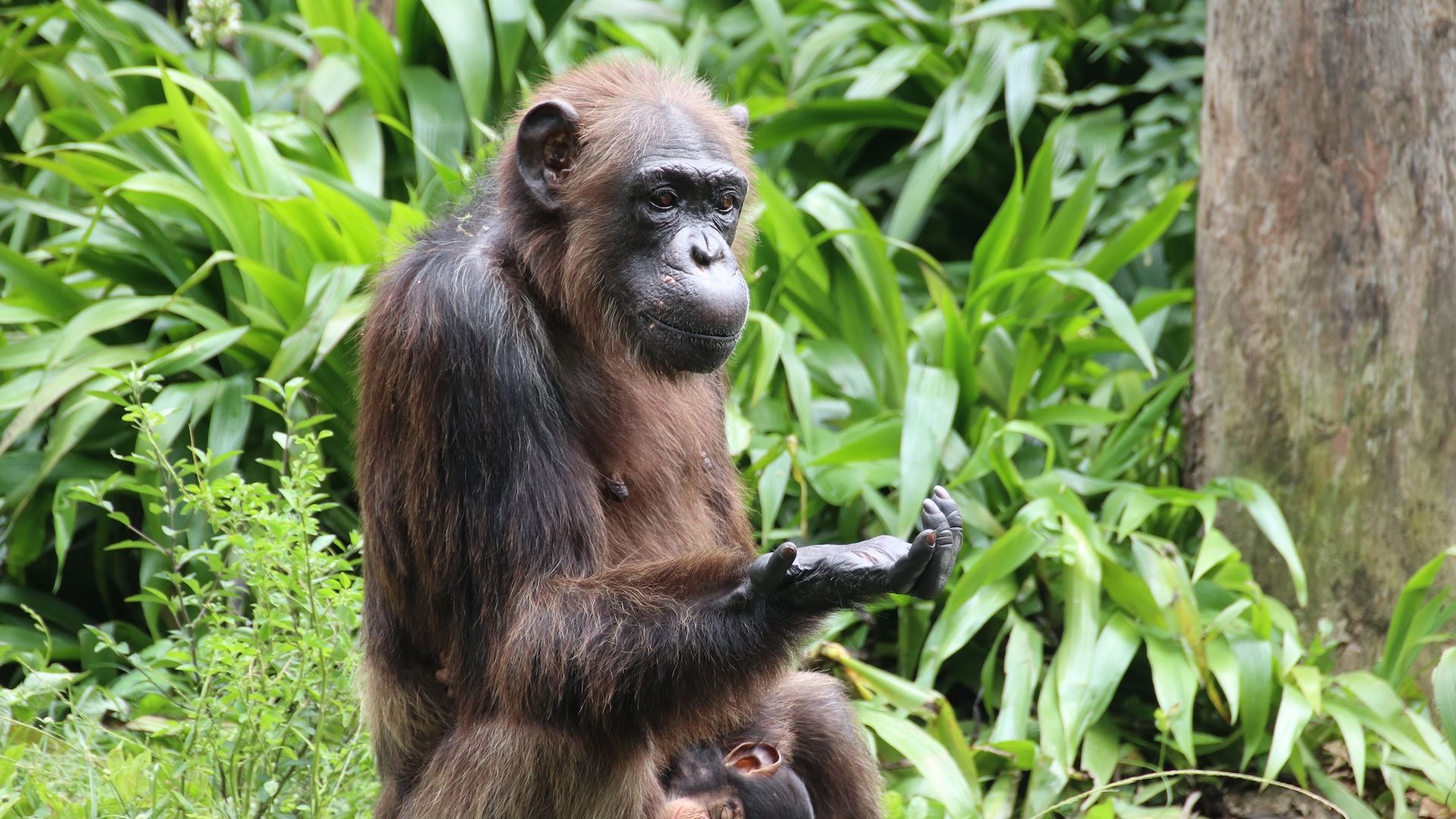
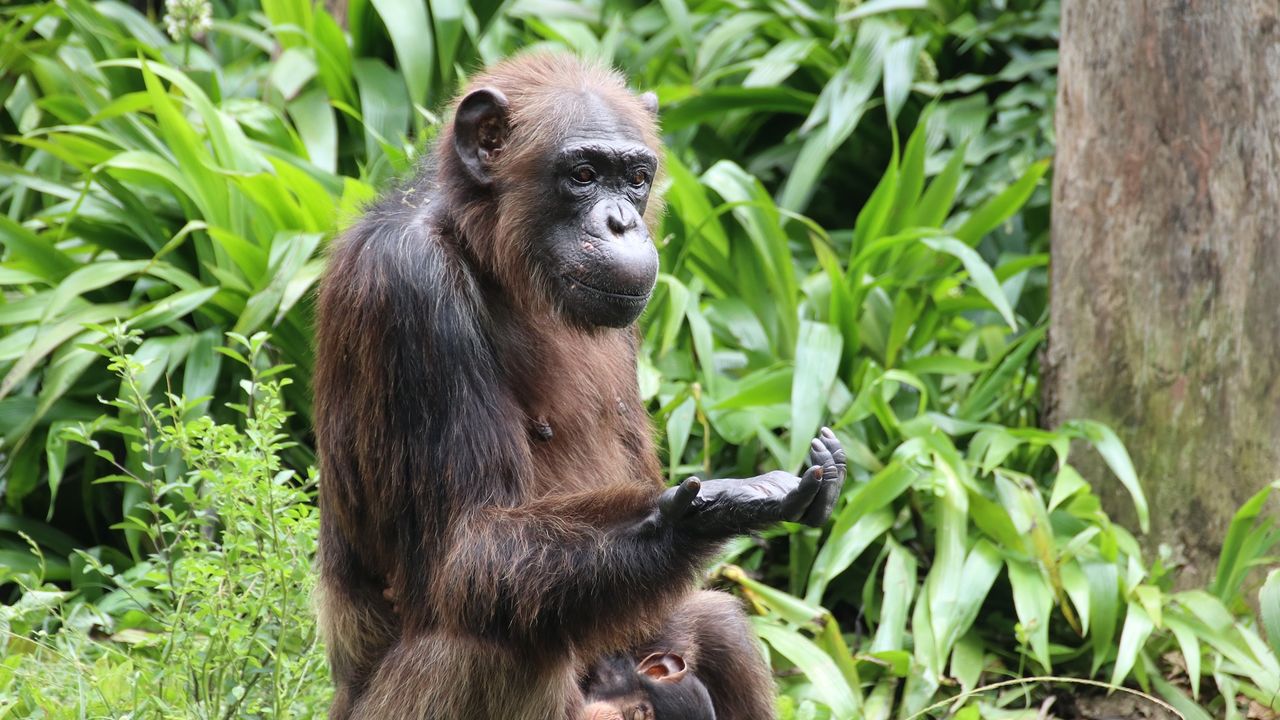
Chimpanzees use a variant of the “scientific method” — discarding prior beliefs if convincing new evidence comes along to change their minds, new research suggests.
When tasked with finding a tasty treat hidden in one of two boxes, chimps (Pan troglodytes) evaluated several strands of evidence. And they switched their choices if new, contradictory evidence emerged, the study found.
“When they revise their beliefs, they actually explicitly represent the evidence they have, and they weigh different types of evidences,” study co-author Jan Engelmann, a comparative psychologist at the University of California, Berkeley, told Live Science.
Humans routinely use metacognition to weigh different strands of evidence and create plans based on the information available. We also update our strategies when our plans don’t go as we hoped.
Scientists have long known that primate species can assess evidence. Chimpanzees look for food by tracking crumb trails and will seek out more information if existing evidence isn’t clear. But we didn’t know if chimps could perform a key metacognitive task: changing beliefs in response to new evidence. Engelmann’s team used several behavioral tests to answer this question, all of which involved food rewards placed in one of two boxes. In the first two tests, the chimps were trained to choose one of the boxes to receive the food inside and presented with two pieces of conflicting evidence as to which box contained the food. The chimps were presented with one piece of evidence, chose a box, and then given the other piece of evidence and allowed to choose again.
The evidence varied in strength. In one “strong” evidence condition, the team cut a window into the side of one of the boxes, which enabled the chimp to see the food inside. To give “weak” evidence, the researchers shook the other box to indicate something was inside it. The apes were far more likely to change their minds when the researchers presented strong evidence after their initial choice than when they presented weak evidence.
But these results didn’t tell the researchers why the chimps changed their minds.
“You can revise your beliefs without really thinking about the evidence,” Engelmann said.
The researchers arranged a third test in which they showed the chimps three boxes. One box had strong evidence that it contained food, the second had weak evidence, and the third had none. Before they could pick, the “strong evidence box” was removed. Left with a binary choice, the apes consistently picked the weak evidence over no evidence at all. This showed that the chimps considered both the strong and weak evidence in their decision-making, rather than just considering the strong evidence without reflecting on the other options available, Engelmann said.
In the final experiments, the researchers tested two further metacognitive abilities in the apes. This time, after the researchers presented the weak and strong evidence for the two boxes, they offered another piece of weak evidence. This was either the same weak evidence as before — the researchers rattling the box to show something was inside it — or a new piece of evidence: the sound of a researcher dropping a second piece of food into the box.
The apes were more likely to change their mind and choose that box when they heard two different pieces of evidence, rather than the same piece of evidence twice, showing that they considered how various pieces of evidence combined to strengthen an argument.
In the final test, the researchers again added extra evidence for the apes to consider after they had made their first choice. This time, the new evidence undermined the first piece of evidence; for example, by showing the chimps a pebble inside one of the boxes that could have made the rattling sound they had previously heard. The apes consistently responded to this contradictory evidence by changing their mind.
To Cathal O’Madagain, a cognitive scientist at the University of Mohammad VI Polytechnic in Morocco who was not involved with the study, this final experiment was key to proving the apes’ metacognitive ability. “Study five is showing a kind of rationality that studies one and two are not showing,” he told Live Science. Test five showed that the original and contradictory evidence were linked, and the apes’ changed minds reflected that they were “keeping track” of the original information, he added.
O’Madagain said that the paper, in concert with other, earlier studies of chimpanzee rationality, shows that chimps passed what he called the “high bar” of rationality, making choices based on evidence and keeping that evidence in mind as their world changed. The new findings suggest that discoveries about other animals’ minds aren’t limited by their shortcomings, but by our own, O’Madagain said “The biggest constraint on our understanding of other animals’ intelligence is our ability to come up with appropriate ways to check it.”
Engelmann and his team now plan to extend their experiments to other non-human primates to see if they can pass this rationality test, too.
