Close Menu
  • Home
  • UNSUBSCRIBE
  • News
  • Lifestyle
  • Tech
  • Entertainment
  • Sports
  • Travel
Facebook X (Twitter) WhatsApp
Trending
  • OpenAI’s internal AI model just solved an 80-year-old math problem ‪—‬ and mathematicians verified it
  • Skeletal remains of Queen Elisenda, one of the most powerful rulers in medieval Europe, unearthed in Barcelona — along with several others who bore unexplained stab wounds
  • Tests that measure ‘biological age’ aren’t helpful for tracking your health, scientists say
  • Japan hits 6G key milestone with high-frequency speeds topping 100 Gbps
  • War has brought Iran’s water crisis to a breaking point: ‘Things will collapse unless there is meaningful structural change’
  • Fingal’s Cave: Scotland’s ‘cave of melody’ where eerie echoes bounce off pillars of solidified lava
  • Controversial ‘JuMBO’ planets discovered by James Webb telescope may not be an illusion after all
  • Scientists found the optimal robot body, and it has 20 legs ‪—‬ watch it scale walls and move through trees
Facebook X (Twitter) WhatsApp
Baynard Media
  • Home
  • UNSUBSCRIBE
  • News
  • Lifestyle
  • Tech
  • Entertainment
  • Sports
  • Travel
Baynard Media
Home»Lifestyle»We were wrong about how the moon’s largest and oldest crater formed — and that’s great news for NASA’s next lunar landing
Lifestyle

We were wrong about how the moon’s largest and oldest crater formed — and that’s great news for NASA’s next lunar landing

EditorBy EditorOctober 15, 2025No Comments5 Mins Read
Share Facebook Twitter Pinterest LinkedIn Tumblr Reddit Telegram Email
Share
Facebook Twitter LinkedIn Pinterest Email

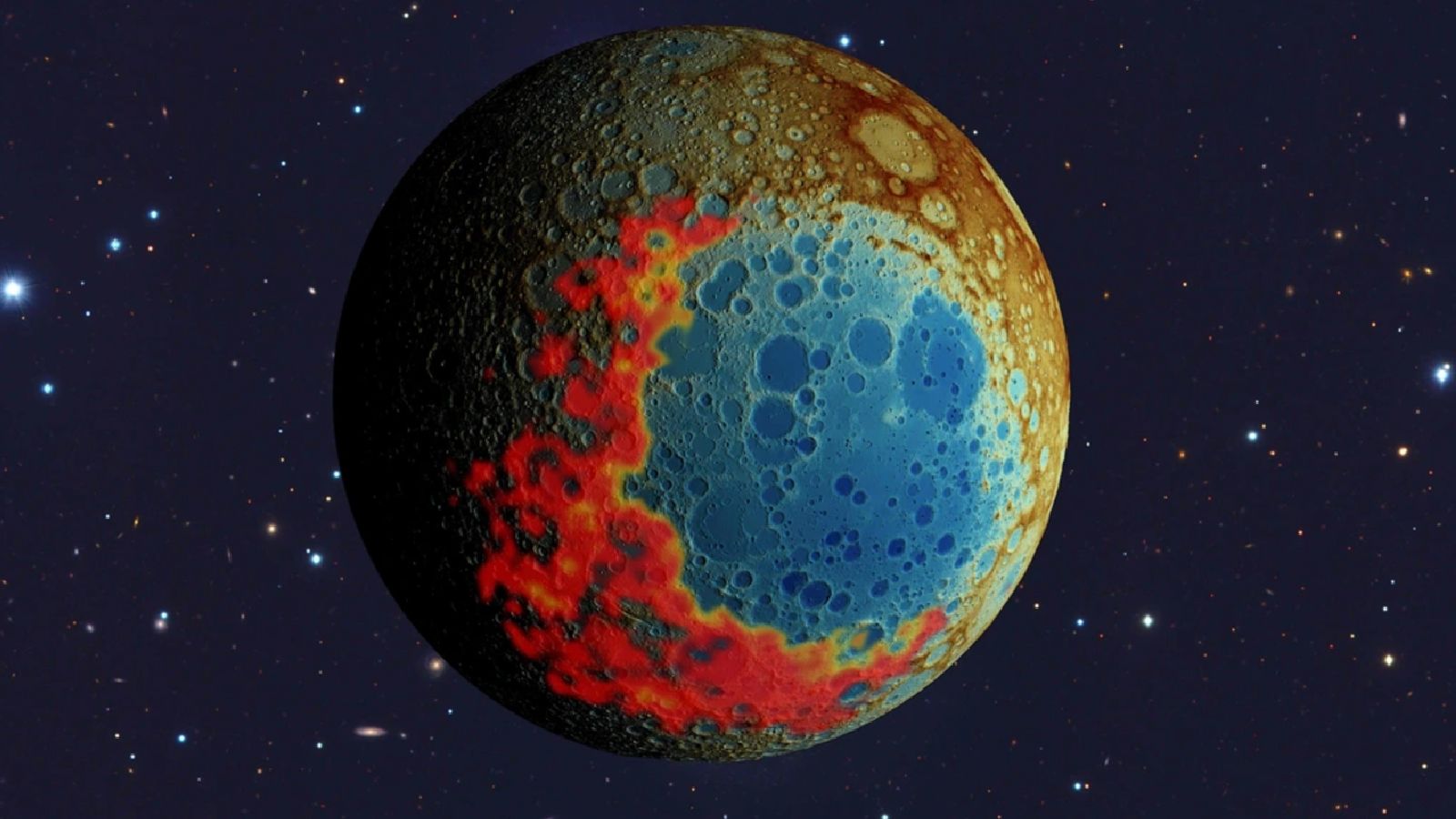
The largest and oldest crater on the moon did not form as we initially suspected, a new study suggests. The findings hint that a specific region of the lunar surface could be more scientifically interesting than we thought — with big implications for NASA’s upcoming Artemis missions, which are scheduled to land astronauts within this newly realized area of interest as soon as 2027.

The moon formed around 4.46 billion years ago, when an ancient Mars-size protoplanet, known as Theia, collided with Earth, creating a giant cloud of debris that combined into a large spherical satellite orbiting our planet. For the next 200 million years or so, the lunar surface was covered by a hellish magma ocean, as a result of gravitational squeezing from Earth. But as the moon moved farther away from our planet, the molten rock eventually cooled and crystalized, forming an outer rocky crust that has remained largely unchanged ever since — aside from a near-constant bombardment of space rocks.

Shortly after the moon cooled off, around 4.3 billion years ago, an asteroid more than 10 times wider than the one that wiped out the dinosaurs slammed into what is now the satellite’s permanent far side. This birthed the South Pole-Aitken (SPA) basin, a giant impact crater around 1,550 miles (2,500 kilometers) across and up to 5 miles (8 km) deep. Researchers believe that this extreme impact may have ejected a mix of radioactive material, dubbed “potassium, rare earth elements and phosphorus” or KREEP, that was left over from the past magma ocean. (The chemical symbol for potassium is K, hence the name KREEP.)


You may like

KREEP is believed to have formed during the final cooling phase of the moon, when radioactive elements built up in the space between the moon’s newly formed mantle and crust. Studying these elements more closely could help shed light on several mysteries surrounding this period of lunar evolution, including why the crust on the moon’s far side is thicker than its visible near side.

Until now, researchers believed that the SPA basin was formed by an asteroid impacting the moon from the south, which would have splashed a layer of KREEP around the crater’s northern rim. However, in a new study, published Oct. 8 in the journal Nature, researchers found that the impact actually occurred from the north, meaning that the resulting KREEP is plastered around the southern edge of the crater — right where the crewed Artemis III mission is scheduled to land.

A photo of a mountain range on the moon taken by the Apollo 8 astronauts

This photo, taken by the Apollo 8 astronauts in December 1968, shows the lunar mountains surrounding the northern rim of the South Pole-Aitken basin. (Image credit: NASA)

“This means that the Artemis missions will be landing on the down-range rim of the basin — the best place to study the largest and oldest impact basin on the moon,” study lead author Jeffrey Andrews-Hanna, a planetary scientist at the University of Arizona, said in a statement. This is “where most of the ejecta, material from deep within the moon’s interior, should be piled up,” he added.

The researchers became suspicious of the SPA basin’s true origins when they compared its shape to other impact craters in the solar system, including Mars’ Hellas basin and Pluto’s Sputnik basin. All three craters have a similar shape, with one rounded end and another more pointed, making them look somewhat like an avocado or teardrop. The pointed tip of these craters likely represents the direction of impact, enabling researchers to guess which way the SPA basin asteroid hit.

Get the world’s most fascinating discoveries delivered straight to your inbox.

These suspicions were confirmed when the team analyzed data from the Lunar Prospector, a NASA spacecraft that orbited the moon from 1998 to 1999 and measured the radioactivity of surface elements. This revealed a high concentration of thorium — a radioactive element and key component of KREEP — around the crater’s southwestern rim.

Collecting KREEP-y samples

A photo of the Orion spacecraft from the Artemis I mission with the moon and Earth in the background

The uncrewed Orion capsule of the Artemis I mission circled the moon for around two weeks in late 2022. (Image credit: NASA)

The Artemis III mission, which aims to put humans on the moon for the first time since 1972, is currently scheduled for mid-2027, following the completion of the Artemis II mission, which is due to launch at some point before the end of April 2026. The initial mission will send a crewed spacecraft to orbit the moon, similar to the uncrewed Artemis I spacecraft, which successfully circled the moon in late 2022.

The Artemis III astronauts will land near the moon’s south pole in one of nine potential sites, most of which lie inside the KREEP splash zone surrounding SPA, according to NASA. If they land in the right place, this could give the team the chance to collect valuable KREEP samples.

However, there is some uncertainty about when Artemis III will actually launch.

Both Artemis II and Artemis III have already been delayed several times. Historically high cuts proposed to NASA’s 2026 budget have also led some experts to predict further delays, which may end up handing China the advantage in the race to return humans to the moon.

China has also already acquired the first samples of the moon’s far side, which were returned to Earth in June 2024 by the Chang’e 6 spacecraft, from inside the SPA basin. However, despite sharing the valuable lunar rocks with several other countries, NASA has not yet been allowed to anlayze these samples.


Moon quiz: What do you know about our nearest celestial neighbor?

Source link

Share. Facebook Twitter Pinterest LinkedIn Tumblr Email
Previous ArticleResearchers develop AI to help detect hard-to-spot lobular breast cancer
Next Article Trump Threatens More Permanent Job Cuts
Editor
  • Website

Related Posts

Lifestyle

OpenAI’s internal AI model just solved an 80-year-old math problem ‪—‬ and mathematicians verified it

May 30, 2026
Lifestyle

Skeletal remains of Queen Elisenda, one of the most powerful rulers in medieval Europe, unearthed in Barcelona — along with several others who bore unexplained stab wounds

May 29, 2026
Lifestyle

Tests that measure ‘biological age’ aren’t helpful for tracking your health, scientists say

May 29, 2026
Add A Comment

Comments are closed.

Categories
  • Entertainment
  • Lifestyle
  • News
  • Sports
  • Tech
  • Travel
Recent Posts
  • OpenAI’s internal AI model just solved an 80-year-old math problem ‪—‬ and mathematicians verified it
  • Skeletal remains of Queen Elisenda, one of the most powerful rulers in medieval Europe, unearthed in Barcelona — along with several others who bore unexplained stab wounds
  • Tests that measure ‘biological age’ aren’t helpful for tracking your health, scientists say
  • Japan hits 6G key milestone with high-frequency speeds topping 100 Gbps
  • War has brought Iran’s water crisis to a breaking point: ‘Things will collapse unless there is meaningful structural change’
calendar
June 2026
M T W T F S S
1234567
891011121314
15161718192021
22232425262728
2930  
« May    
Recent Posts
  • OpenAI’s internal AI model just solved an 80-year-old math problem ‪—‬ and mathematicians verified it
  • Skeletal remains of Queen Elisenda, one of the most powerful rulers in medieval Europe, unearthed in Barcelona — along with several others who bore unexplained stab wounds
  • Tests that measure ‘biological age’ aren’t helpful for tracking your health, scientists say
About

Welcome to Baynard Media, your trusted source for a diverse range of news and insights. We are committed to delivering timely, reliable, and thought-provoking content that keeps you informed
and inspired

Categories
  • Entertainment
  • Lifestyle
  • News
  • Sports
  • Tech
  • Travel
Facebook X (Twitter) Pinterest WhatsApp
  • Contact Us
  • About Us
  • Privacy Policy
  • Disclaimer
  • UNSUBSCRIBE
© 2026 copyrights reserved

Type above and press Enter to search. Press Esc to cancel.