Close Menu
  • Home
  • UNSUBSCRIBE
  • News
  • Lifestyle
  • Tech
  • Entertainment
  • Sports
  • Travel
Facebook X (Twitter) WhatsApp
Trending
  • Chinese medical practitioners used extremely toxic plant as a topical anesthetic 600 years ago, study finds
  • Bead net funerary shroud: A 2,500-year-old beaded veil from Egypt depicting the deceased’s transformation into Osiris
  • Rare genetic disease makes scientists reconsider what the ‘seat of fear’ in the brain really is
  • It’s illegal to repair most of our devices. There’s a surprising reason for that.
  • Jupiter’s Ganymede, the largest moon in the solar system, may be heating up
  • Bizarre patterns on Venus have scientists puzzled
  • Scientists trained an AI model using an IBM quantum computer — and it answered questions correctly that the base model couldn’t
  • How did animals survive the asteroid that killed the dinosaurs?
Facebook X (Twitter) WhatsApp
Baynard Media
  • Home
  • UNSUBSCRIBE
  • News
  • Lifestyle
  • Tech
  • Entertainment
  • Sports
  • Travel
Baynard Media
Home»Lifestyle»Miniature Skeleton: A ghostly 2,000-year-old party favor from a Roman banquet
Lifestyle

Miniature Skeleton: A ghostly 2,000-year-old party favor from a Roman banquet

EditorBy EditorOctober 13, 2025No Comments2 Mins Read
Share Facebook Twitter Pinterest LinkedIn Tumblr Reddit Telegram Email
Share
Facebook Twitter LinkedIn Pinterest Email

QUICK FACTS

Name: Miniature Skeleton

What it is: A bronze skeleton with moving joints

Where it is from: The Roman Empire

When it was made: Circa 25 B.C. to A.D. 100

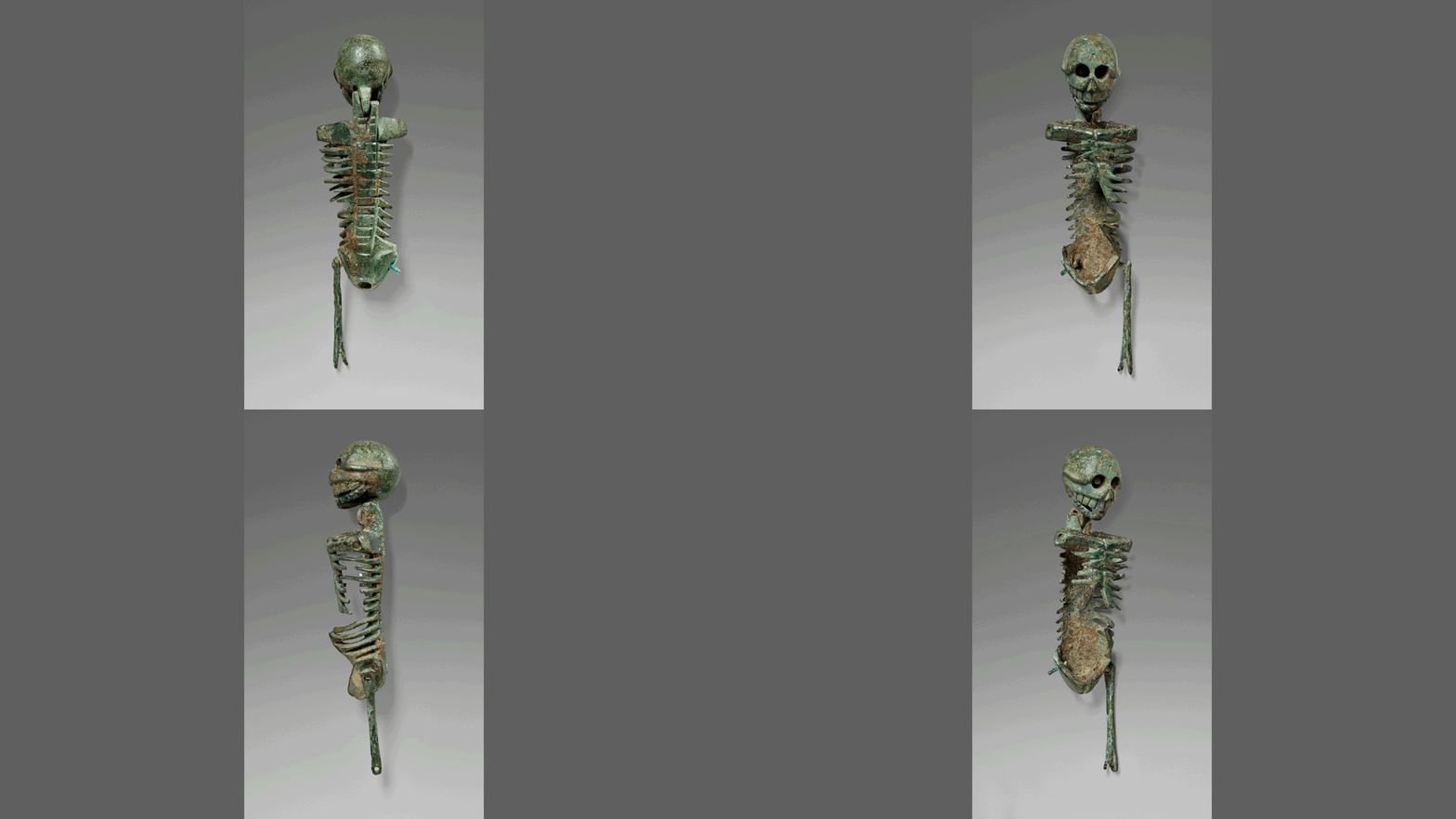
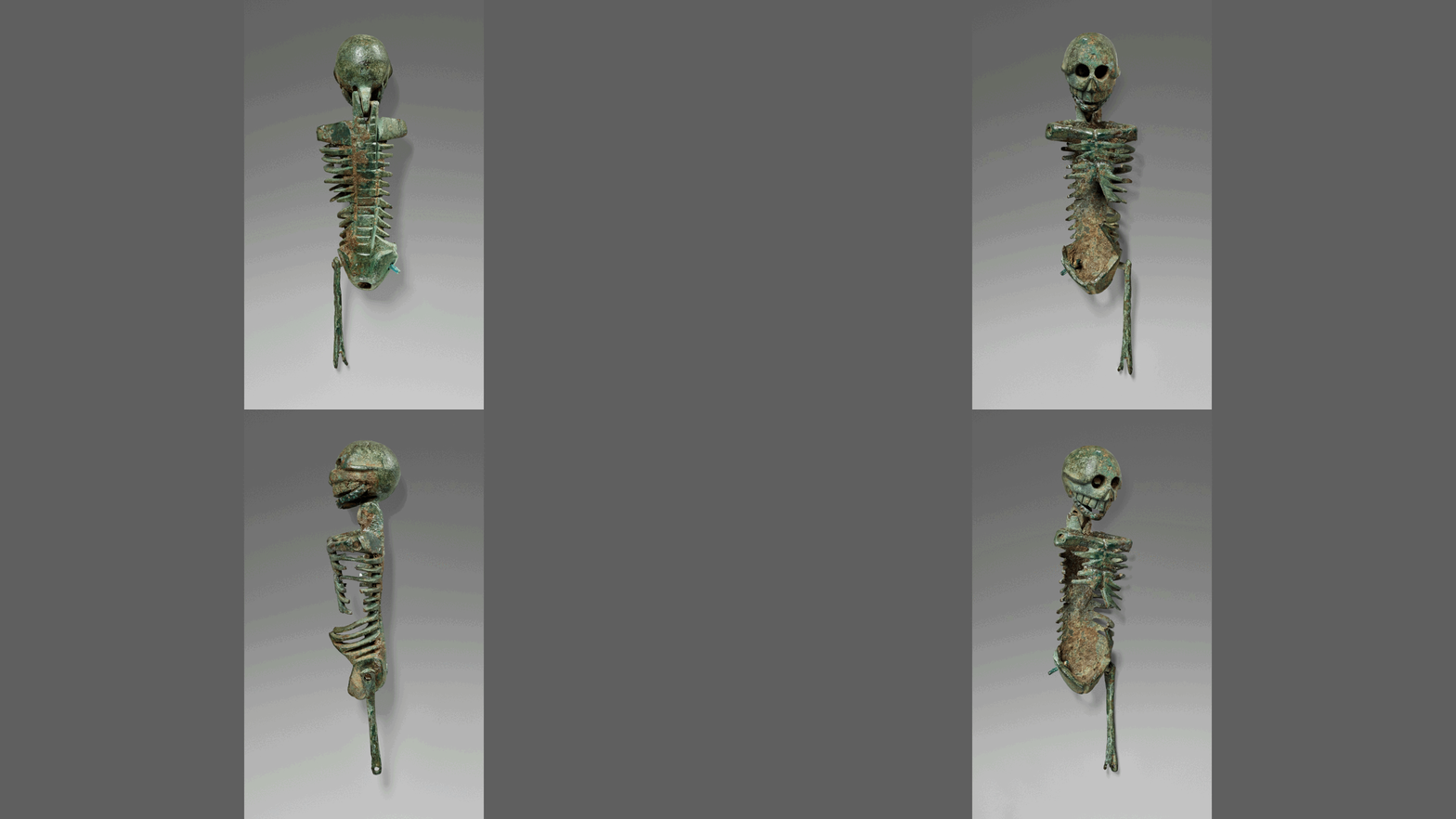
This small, bronze skeleton is one of only a dozen known examples of an ancient Roman “larva convivalis” — a “banquet ghost” figurine given out as a party favor 2,000 years ago.

The skeleton originally had jointed arms and legs, but only a portion of its left leg remains today. Its skull features large, round eye sockets and a toothy grin. The bronze figurine measures roughly 2.6 inches (6.6 centimeters) tall and is in the collection of the Getty Villa in Los Angeles, California.

According to a 1980 study by then-Getty curator Faya Causey Frel, the skeleton was a kind of “memento mori” — a symbol of the brevity of life and the inevitability of death. The spooky skeletons were probably handed out at dinner parties in a nod to Epicureanism, the philosophical system that considered that because death is humans’ main fear, we should take pleasure in what life has to offer.


You may like

Banqueting and death were often linked in Roman art and literature, according to the Getty.

MORE ASTONISHING ARTIFACTS

In the novel “The Satyricon,” written in the late first century A.D. by Petronius, a man named Trimalchio was hosting a dinner party. The narrator tells of “a slave brought in a silver skeleton, so contrived that the joints and movable vertebra could be turned in any direction. He threw it down upon the table a time or two, and its mobile articulation caused it to assume grotesque attitudes.”

Trimalchio, the host, then exclaims that “this skeleton before us here is as important as we ever were! Let’s live then while we may and life is dear.”

The Getty example of the banquet ghost lacks scientific accuracy. “It was perhaps more important that the bony specters were lively,” Causey Frel wrote.

For more stunning archaeological discoveries, check out our Astonishing Artifacts archives.

Source link

Share. Facebook Twitter Pinterest LinkedIn Tumblr Email
Previous ArticleItalian-American leader touts Columbus Day pride after years of statue battles
Next Article Palestinian prisoners released as part of ceasefire deal
Editor
  • Website

Related Posts

Lifestyle

Chinese medical practitioners used extremely toxic plant as a topical anesthetic 600 years ago, study finds

May 26, 2026
Lifestyle

Bead net funerary shroud: A 2,500-year-old beaded veil from Egypt depicting the deceased’s transformation into Osiris

May 25, 2026
Lifestyle

Rare genetic disease makes scientists reconsider what the ‘seat of fear’ in the brain really is

May 25, 2026
Add A Comment

Comments are closed.

Categories
  • Entertainment
  • Lifestyle
  • News
  • Sports
  • Tech
  • Travel
Recent Posts
  • Chinese medical practitioners used extremely toxic plant as a topical anesthetic 600 years ago, study finds
  • Bead net funerary shroud: A 2,500-year-old beaded veil from Egypt depicting the deceased’s transformation into Osiris
  • Rare genetic disease makes scientists reconsider what the ‘seat of fear’ in the brain really is
  • It’s illegal to repair most of our devices. There’s a surprising reason for that.
  • Jupiter’s Ganymede, the largest moon in the solar system, may be heating up
calendar
May 2026
M T W T F S S
 123
45678910
11121314151617
18192021222324
25262728293031
« Apr    
Recent Posts
  • Chinese medical practitioners used extremely toxic plant as a topical anesthetic 600 years ago, study finds
  • Bead net funerary shroud: A 2,500-year-old beaded veil from Egypt depicting the deceased’s transformation into Osiris
  • Rare genetic disease makes scientists reconsider what the ‘seat of fear’ in the brain really is
About

Welcome to Baynard Media, your trusted source for a diverse range of news and insights. We are committed to delivering timely, reliable, and thought-provoking content that keeps you informed
and inspired

Categories
  • Entertainment
  • Lifestyle
  • News
  • Sports
  • Tech
  • Travel
Facebook X (Twitter) Pinterest WhatsApp
  • Contact Us
  • About Us
  • Privacy Policy
  • Disclaimer
  • UNSUBSCRIBE
© 2026 copyrights reserved

Type above and press Enter to search. Press Esc to cancel.