Close Menu
  • Home
  • UNSUBSCRIBE
  • News
  • Lifestyle
  • Tech
  • Entertainment
  • Sports
  • Travel
Facebook X (Twitter) WhatsApp
Trending
  • ‘The system is likely to reach a breaking point’: Major Italian volcano is speeding toward a transition, and a major eruption could be on the way
  • China installs world’s largest floating wind turbine in deep water test — it generates enough energy to power 4,200 homes annually
  • Diagnostic dilemma: A biopsy of a woman’s cancerous tumor caused it to vanish
  • Physicists confirm ‘negative time’ is real in mind-bending quantum experiment
  • Complex animals evolved up to 10 million years earlier than previously thought, fossil discovery shows
  • Scurvy-plagued whalers’ remains discovered at ‘Corpse Point’ on Arctic island
  • Some cancer patients don’t respond to immunotherapy. An existing asthma drug could change that.
  • The Appalachian Mountains hold enough lithium to make 500 billion cellphones, researchers discover
Facebook X (Twitter) WhatsApp
Baynard Media
  • Home
  • UNSUBSCRIBE
  • News
  • Lifestyle
  • Tech
  • Entertainment
  • Sports
  • Travel
Baynard Media
Home»Lifestyle»Giraffe-size asteroid zooms past Earth closer than a satellite — and astronomers didn’t catch it until hours after
Lifestyle

Giraffe-size asteroid zooms past Earth closer than a satellite — and astronomers didn’t catch it until hours after

EditorBy EditorOctober 7, 2025No Comments3 Mins Read
Share Facebook Twitter Pinterest LinkedIn Tumblr Reddit Telegram Email
Share
Facebook Twitter LinkedIn Pinterest Email

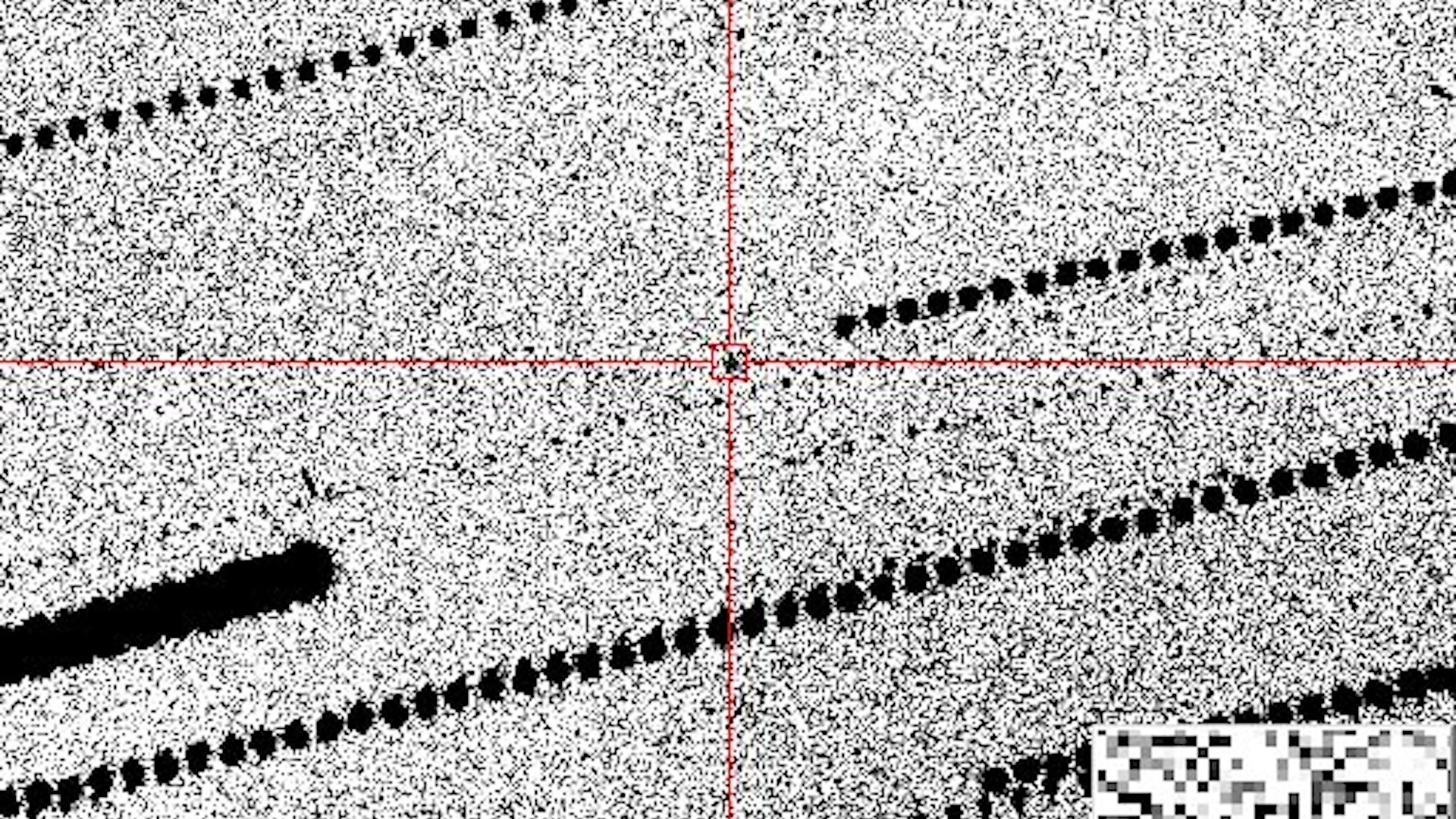
A grainy black-and-white image with a black dot in red crosshairs in the center

The near-Earth asteroid 2025 TF (red crosshairs) came about as close to Earth as the International Space Station on Wednesday (Oct. 1), evading detection until hours later. (Image credit: ESA / Las Cumbres Observatory)

A small asteroid zoomed past Earth closer than most satellites last week — and astronomers didn’t notice it until hours later.

The surprise asteroid encounter occurred at 8:47 p.m. EDT on Tuesday, Sept. 30 (Wednesday, Oct. 1 at 0047 GMT) when the roughly giraffe-size space rock flew over Antarctica at just 265 miles (428 kilometers) above Earth’s surface, according to newly released data from the European Space Agency (ESA). Astronomers first spotted the sneaky space rock — now officially named 2025 TF — a few hours later, using observations from the Catalina Sky Survey, a NASA-funded mission to track near-Earth objects.

Measuring an estimated 3.3 to 9.8 feet wide (1 to 3 meters), the asteroid posed no serious threat to Earth, ESA added, and likely would have burned up as a bright fireball had it reached Earth’s atmosphere. However, even small asteroids can cause big problems for spacecraft — and this one happened to whip by at around the same altitude where the International Space Station usually orbits. Fortunately, no spacecraft were in the space rock’s path.


You may like

Space agencies like NASA and ESA track thousands of known near-Earth objects, carefully monitoring which ones pose the greatest risk of colliding with Earth. (Currently, no known objects pose a significant threat to our planet for at least 100 years). For an asteroid to be considered “potentially hazardous,” it must measure at least 460 feet (140 m) in diameter, and follow an orbit that comes within 4.65 million miles (7.48 million km) of Earth — or roughly 20 times the average distance between Earth and the moon. Asteroid 2025 TF falls far short of that size threshold, which may also explain why it evaded detection until after it had passed.

Astronomers at ESA’s Planetary Defence Office observed the asteroid shortly after it was discovered, ESA officials reported. NASA, which has paused all public communications during the ongoing U.S. government shutdown, did not make any announcements about the asteroid — however, an entry for the asteroid has been updated on NASA’s Center for Near-Earth Object Studies website. The tiny space rock is not expected to fly by our planet again until April of 2087, according to NASA.

Earth may have dodged a “fireball” with this near-miss asteroid encounter, but skywatchers can expect more fiery lights this week. The Draconid meteor shower peaks on Wednesday (Oct. 8) — and while the display of shooting stars will be somewhat dampened by the light of the full Harvest Moon, the appearance of bright fireball meteors is possible. No asteroids play a part in this annual sky show; the Draconids come from icy debris left by the comet 21P/Giacobini-Zinner, which blazes through the inner solar system every 6.5 years.

Get the world’s most fascinating discoveries delivered straight to your inbox.

Source link

Share. Facebook Twitter Pinterest LinkedIn Tumblr Email
Previous ArticleChicago gang leader allegedly offered $10K bounty to kill immigration agent
Next Article FAA announces possible staffing issues potentially caused by government shutdown 
Editor
  • Website

Related Posts

Lifestyle

‘The system is likely to reach a breaking point’: Major Italian volcano is speeding toward a transition, and a major eruption could be on the way

May 21, 2026
Lifestyle

China installs world’s largest floating wind turbine in deep water test — it generates enough energy to power 4,200 homes annually

May 21, 2026
Lifestyle

Diagnostic dilemma: A biopsy of a woman’s cancerous tumor caused it to vanish

May 21, 2026
Add A Comment

Comments are closed.

Categories
  • Entertainment
  • Lifestyle
  • News
  • Sports
  • Tech
  • Travel
Recent Posts
  • ‘The system is likely to reach a breaking point’: Major Italian volcano is speeding toward a transition, and a major eruption could be on the way
  • China installs world’s largest floating wind turbine in deep water test — it generates enough energy to power 4,200 homes annually
  • Diagnostic dilemma: A biopsy of a woman’s cancerous tumor caused it to vanish
  • Physicists confirm ‘negative time’ is real in mind-bending quantum experiment
  • Complex animals evolved up to 10 million years earlier than previously thought, fossil discovery shows
calendar
May 2026
M T W T F S S
 123
45678910
11121314151617
18192021222324
25262728293031
« Apr    
Recent Posts
  • ‘The system is likely to reach a breaking point’: Major Italian volcano is speeding toward a transition, and a major eruption could be on the way
  • China installs world’s largest floating wind turbine in deep water test — it generates enough energy to power 4,200 homes annually
  • Diagnostic dilemma: A biopsy of a woman’s cancerous tumor caused it to vanish
About

Welcome to Baynard Media, your trusted source for a diverse range of news and insights. We are committed to delivering timely, reliable, and thought-provoking content that keeps you informed
and inspired

Categories
  • Entertainment
  • Lifestyle
  • News
  • Sports
  • Tech
  • Travel
Facebook X (Twitter) Pinterest WhatsApp
  • Contact Us
  • About Us
  • Privacy Policy
  • Disclaimer
  • UNSUBSCRIBE
© 2026 copyrights reserved

Type above and press Enter to search. Press Esc to cancel.