Close Menu
  • Home
  • UNSUBSCRIBE
  • News
  • Lifestyle
  • Tech
  • Entertainment
  • Sports
  • Travel
Facebook X (Twitter) WhatsApp
Trending
  • George Kittle’s wife shares live reaction to Achilles injury
  • ‘The scientific cost would be severe’: A Trump Greenland takeover would put climate research at risk
  • Headlines Across OC as Angel Stadium Sale Debate Intensifies
  • Anti-Islam activists clash with pro-Muslim counter-protesters in Dearborn, Michigan
  • Best monitor deal: Get the 45-inch LG Ultragear gaming monitor for its lowest price yet
  • Slovakia U21 0 – 4 England U21
  • 13 Top Sleep Products That Transform Your Bedtime Routine for Better Rest
  • Firefighters rescue puppies from burning house
Facebook X (Twitter) WhatsApp
Baynard Media
  • Home
  • UNSUBSCRIBE
  • News
  • Lifestyle
  • Tech
  • Entertainment
  • Sports
  • Travel
Baynard Media
Home»Lifestyle»Skyscraper-size asteroid previously predicted to hit us in 60 years will zoom past Earth on Thursday (Sept. 18) — and you can see it live
Lifestyle

Skyscraper-size asteroid previously predicted to hit us in 60 years will zoom past Earth on Thursday (Sept. 18) — and you can see it live

EditorBy EditorSeptember 16, 2025No Comments4 Mins Read
Share Facebook Twitter Pinterest LinkedIn Tumblr Reddit Telegram Email
Share
Facebook Twitter LinkedIn Pinterest Email

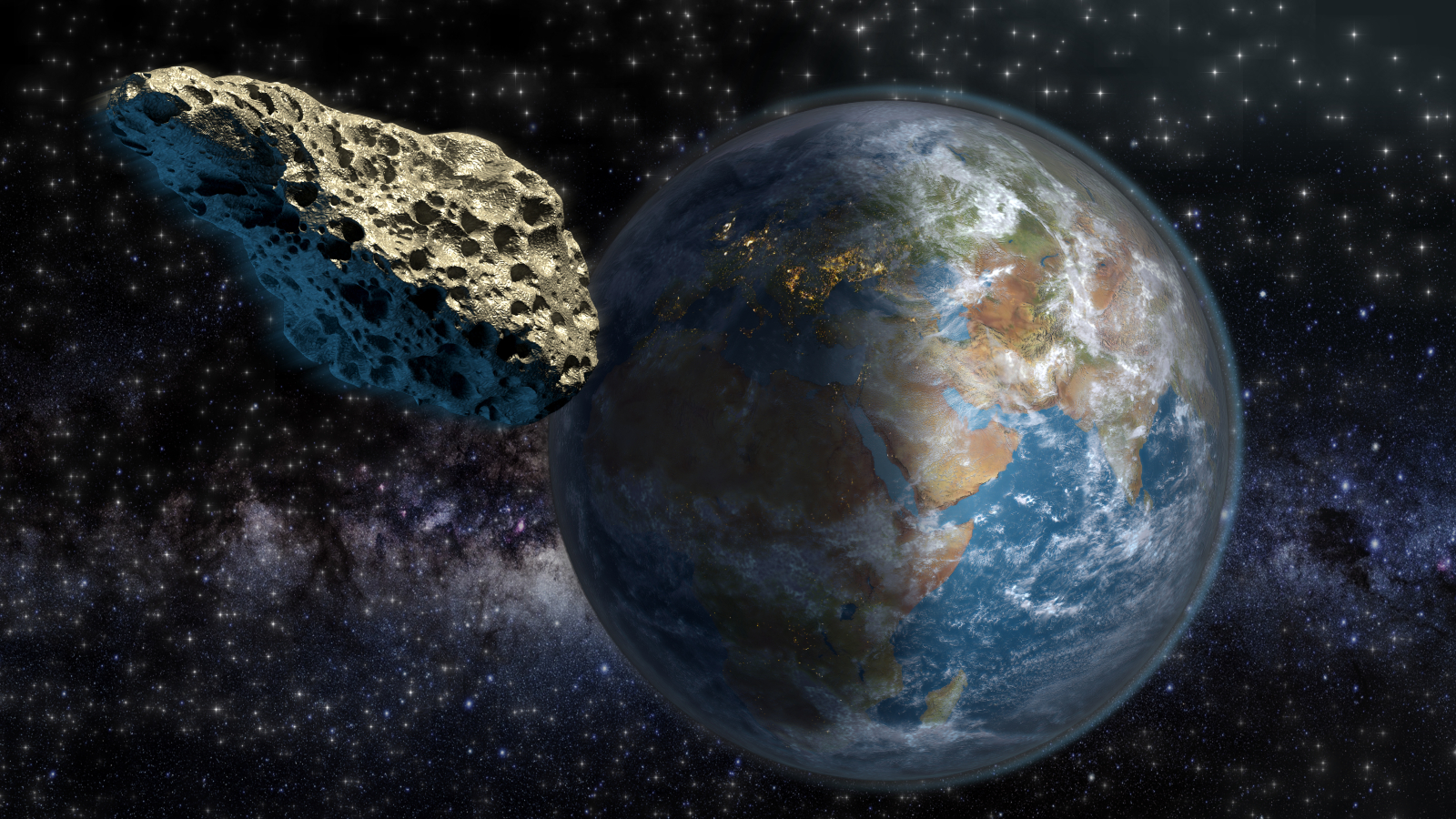
A skyscraper-size, “potentially hazardous” asteroid is set to make a close approach to Earth this week — and you can see it zoom past for yourself, either by using a backyard telescope or via a free online livestream.

The asteroid, which was discovered earlier this year, was initially predicted to have a slim chance of hitting our planet in 2089 — temporarily earning it a spot at the top of the European Space Agency’s (ESA’s) impact risk list. But, following new observations, it is no longer considered an imminent threat.

The space rock, dubbed 2025 FA22, is somewhere between 427 and 951 feet (130 and 290 meters) across, making it large enough to wipe out a major city were it to collide with Earth. It will reach its minimum distance to us in the early hours of Thursday (Sept. 18), coming within 520,000 miles (835,000 kilometers) of our planet — just over twice as far away from us as the moon — and will be traveling at around 24,000 mph (38,600 km/h).


You may like

2025 FA22 was initially discovered in March by the Pan-STARRS 2 telescope in Hawaii. The asteroid quickly made headlines when it was revealed that it has a 0.01% chance of hitting Earth when it returns for another close flyby on Sept. 23, 2089. (This story was somewhat overshadowed by fellow asteroid 2024 YR4, which was briefly predicted to have a much higher chance of impacting our planet in 2032 at around the same time 2025 FA22 was first spotted.)

Despite the low odds of a collision, space agencies took the threat of 2025 FA22 seriously, and the asteroid was briefly bumped to the top spot on ESA’s Risk List, which monitors all near-Earth objects predicted to have a non-zero chance of impacting our planet.

“However, high-priority follow-up observations soon allowed astronomers to refine the asteroid’s trajectory and rule out any impact risk,” according to a new ESA statement. Asteroid 2025 FA22 was removed from ESA’s Risk List entirely in May.

Related: NASA’s most wanted: The 5 most dangerous asteroids to Earth

Get the world’s most fascinating discoveries delivered straight to your inbox.

A diagram showing the orbits of the inner solar system relative to the asteroid 2025 FA22

Asteroid 2025 FA22 will return for similar close approaches in 2089 and 2173. (Image credit: NASA/JPL)

The now totally safe flyby of 2025 FA22 will be shared on a free livestream by the Virtual Telescope Project, which will track the object using a telescope in Manciano, Italy. The livestream will begin at around 23:00 p.m. EDT on Wednesday (Sept. 17).

During its close approach, the asteroid could reach an apparent magnitude of 13, which will make it just bright enough to spot with a decent backyard telescope or a pair of stargazing binoculars, according to IFLScience. You can find where it is in the night sky using TheSkyLive.com.

Researchers will be keeping a close eye on the asteroid from observatories across the globe, including NASA’s Goldstone radar telescope in Barstow, California, which has the capability to reveal more about the space rock’s true size and shape.


You may like

A graphic showing key information about the asteroid flyby

ESA released new information on 2025 FA22 in preparation for the upcoming flyby. (Image credit: ESA)

The International Asteroid Warning Network (IAWN) is also taking 2025 FA22’s flyby as an opportunity to practise its emergency protocols by running a practice scenario under the pretence that the asteroid will still impact us in 2089. This mock test, named the 2025 FA22 IAWN Campaign, will involve measuring as many of the asteroids’ characteristics as accurately as possible, in preparation for a hypothetical mission to deflect the space rock in the future.

“While 2025 FA22 poses no danger, practicing our ability to measure these properties is important, as they influence how an asteroid will react to any attempt to deflect it off of a collision course with Earth,” ESA representatives wrote about the campaign.

In reality, 2025 FA22 will not get very close to us in 2089. The latest calculations from NASA’s Jet Propulsion Laboratory suggest that it will only come within 3.7 million miles (6 million km) of Earth, more than seven times further away than its current flyby.

However, the asteroid will return for a super close approach in 2173, when it will reach a minimum distance of around 200,000 miles (320,000 km), bringing it closer to us than the moon.

Source link

Share. Facebook Twitter Pinterest LinkedIn Tumblr Email
Previous ArticleGeorgia Supreme Court upholds Fani Willis disqualification from Trump Georgia election case
Next Article The economy is chugging along, but consumers are uneasy
Editor
  • Website

Related Posts

Lifestyle

‘The scientific cost would be severe’: A Trump Greenland takeover would put climate research at risk

January 17, 2026
Lifestyle

New ‘Transformer’ humanoid robot can launch a shapeshifting drone off its back — watch it in action

November 19, 2025
Lifestyle

Medieval spear pulled from Polish lake may have belonged to prince or nobleman

November 19, 2025
Add A Comment

Comments are closed.

Categories
  • Entertainment
  • Lifestyle
  • News
  • Sports
  • Tech
  • Travel
Recent Posts
  • George Kittle’s wife shares live reaction to Achilles injury
  • ‘The scientific cost would be severe’: A Trump Greenland takeover would put climate research at risk
  • Headlines Across OC as Angel Stadium Sale Debate Intensifies
  • Anti-Islam activists clash with pro-Muslim counter-protesters in Dearborn, Michigan
  • Best monitor deal: Get the 45-inch LG Ultragear gaming monitor for its lowest price yet
calendar
February 2026
M T W T F S S
 1
2345678
9101112131415
16171819202122
232425262728  
« Jan    
Recent Posts
  • George Kittle’s wife shares live reaction to Achilles injury
  • ‘The scientific cost would be severe’: A Trump Greenland takeover would put climate research at risk
  • Headlines Across OC as Angel Stadium Sale Debate Intensifies
About

Welcome to Baynard Media, your trusted source for a diverse range of news and insights. We are committed to delivering timely, reliable, and thought-provoking content that keeps you informed
and inspired

Categories
  • Entertainment
  • Lifestyle
  • News
  • Sports
  • Tech
  • Travel
Facebook X (Twitter) Pinterest WhatsApp
  • Contact Us
  • About Us
  • Privacy Policy
  • Disclaimer
  • UNSUBSCRIBE
© 2026 copyrights reserved

Type above and press Enter to search. Press Esc to cancel.