Close Menu
  • Home
  • UNSUBSCRIBE
  • News
  • Lifestyle
  • Tech
  • Entertainment
  • Sports
  • Travel
Facebook X (Twitter) WhatsApp
Trending
  • George Kittle’s wife shares live reaction to Achilles injury
  • ‘The scientific cost would be severe’: A Trump Greenland takeover would put climate research at risk
  • Headlines Across OC as Angel Stadium Sale Debate Intensifies
  • Anti-Islam activists clash with pro-Muslim counter-protesters in Dearborn, Michigan
  • Best monitor deal: Get the 45-inch LG Ultragear gaming monitor for its lowest price yet
  • Slovakia U21 0 – 4 England U21
  • 13 Top Sleep Products That Transform Your Bedtime Routine for Better Rest
  • Firefighters rescue puppies from burning house
Facebook X (Twitter) WhatsApp
Baynard Media
  • Home
  • UNSUBSCRIBE
  • News
  • Lifestyle
  • Tech
  • Entertainment
  • Sports
  • Travel
Baynard Media
Home»Lifestyle»James Webb telescope finds a warped ‘Butterfly Star’ shedding its chrysalis — Space photo of the week
Lifestyle

James Webb telescope finds a warped ‘Butterfly Star’ shedding its chrysalis — Space photo of the week

EditorBy EditorSeptember 7, 2025No Comments3 Mins Read
Share Facebook Twitter Pinterest LinkedIn Tumblr Reddit Telegram Email
Share
Facebook Twitter LinkedIn Pinterest Email

QUICK FACTS

What it is: A planet-forming disk around a star

Where it is: 525 light-years away, in the constellation Taurus

When it was shared: Aug. 29, 2025

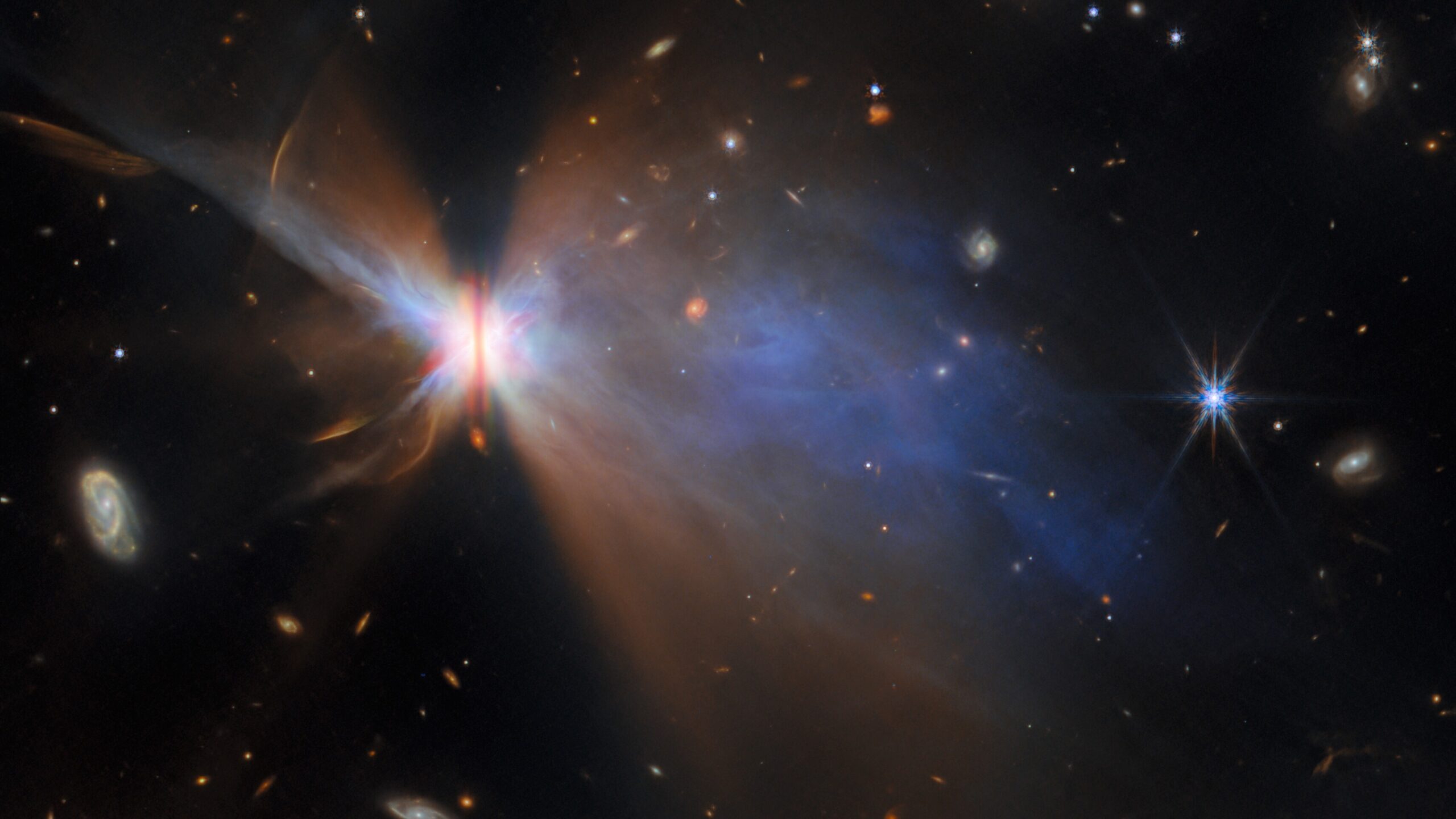
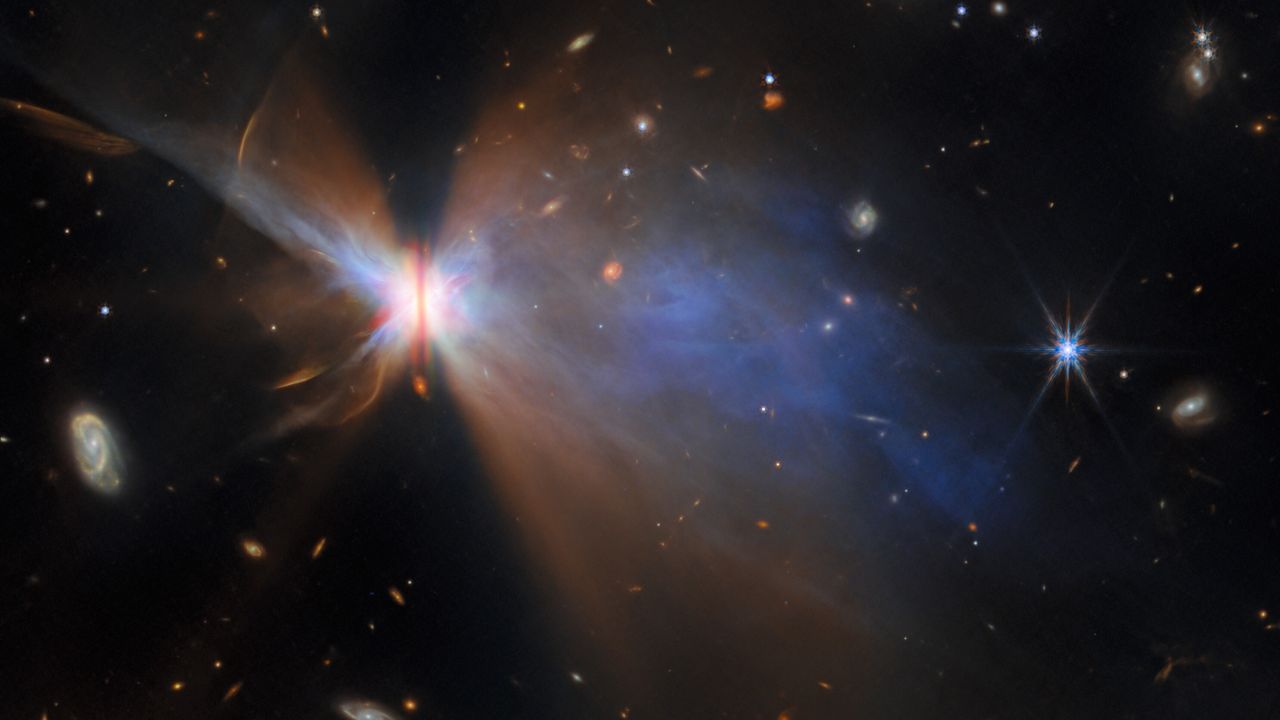
This spectacular new image from the James Webb Space Telescope (JWST) shows a star cocooned within a massive disk of gas and dust. It’s a protoplanetary disk — a ring of dense gas and dust surrounding a young star — where planets are likely forming.

The star is IRAS 04302+2247, better known as the “Butterfly Star” because of how our edge-on view separates the bright nebula into two lobes.

The star system is about 525 light-years away, in the Taurus star-forming region, or Taurus Molecular Cloud, which is within the constellation Taurus in the night sky. It’s the closest star-forming region to the solar system, and it’s rich in molecular hydrogen, dust and heavier elements from past supernovas. These are raw materials for new stars and planets.


You may like

Much of this region is invisible to optical telescopes but is revealed in infrared light. This image is a combination of mostly optical data from the archive of the Hubble Space Telescope and new infrared data from JWST’s Near Infrared Camera and Mid-Infrared Instrument (MIRI) , the European Space Agency (ESA) wrote in a description of the image.

Related: Will the James Webb telescope lead us to alien life? Scientists say we’re getting closer than ever.

MIRI revealed a dark, dusty lane — the protoplanetary disk — that divides the nebula. It blocks the star’s light, while surrounding gas and dust scatter the star’s light. It’s huge — about 40 billion miles (65 billion kilometers) across, or several times wider than the solar system, according to ESA.

The line of sight determines what astronomers can learn from images like this. In face-on images of protoplanetary disks, scientists can sometimes see rings, spirals or gaps where planets are forming. With an edge-on view like this, it’s possible to study the thickness of a protoplanetary disk and how dust is distributed around it, both of which are key to understanding how planets form and accumulate mass. Here, dust is expected to settle toward the midplane, creating conditions where grains can clump and grow into planetesimals.

Get the world’s most fascinating discoveries delivered straight to your inbox.

The image comes from a paper published last year in The Astrophysical Journal. The study found that the brightness of the nebula changes, which suggests the inner disk may be warped or misaligned. It’s a glimpse into processes that may have shaped our own solar system billions of years ago.

For more sublime space images, check out our Space Photo of the Week archives.

Source link

Share. Facebook Twitter Pinterest LinkedIn Tumblr Email
Previous ArticleTom Homan vows more workplace raids after Georgia plant arrests 475
Next Article Israeli forces bomb high-rise building in Gaza City
Editor
  • Website

Related Posts

Lifestyle

‘The scientific cost would be severe’: A Trump Greenland takeover would put climate research at risk

January 17, 2026
Lifestyle

New ‘Transformer’ humanoid robot can launch a shapeshifting drone off its back — watch it in action

November 19, 2025
Lifestyle

Medieval spear pulled from Polish lake may have belonged to prince or nobleman

November 19, 2025
Add A Comment

Comments are closed.

Categories
  • Entertainment
  • Lifestyle
  • News
  • Sports
  • Tech
  • Travel
Recent Posts
  • George Kittle’s wife shares live reaction to Achilles injury
  • ‘The scientific cost would be severe’: A Trump Greenland takeover would put climate research at risk
  • Headlines Across OC as Angel Stadium Sale Debate Intensifies
  • Anti-Islam activists clash with pro-Muslim counter-protesters in Dearborn, Michigan
  • Best monitor deal: Get the 45-inch LG Ultragear gaming monitor for its lowest price yet
calendar
February 2026
M T W T F S S
 1
2345678
9101112131415
16171819202122
232425262728  
« Jan    
Recent Posts
  • George Kittle’s wife shares live reaction to Achilles injury
  • ‘The scientific cost would be severe’: A Trump Greenland takeover would put climate research at risk
  • Headlines Across OC as Angel Stadium Sale Debate Intensifies
About

Welcome to Baynard Media, your trusted source for a diverse range of news and insights. We are committed to delivering timely, reliable, and thought-provoking content that keeps you informed
and inspired

Categories
  • Entertainment
  • Lifestyle
  • News
  • Sports
  • Tech
  • Travel
Facebook X (Twitter) Pinterest WhatsApp
  • Contact Us
  • About Us
  • Privacy Policy
  • Disclaimer
  • UNSUBSCRIBE
© 2026 copyrights reserved

Type above and press Enter to search. Press Esc to cancel.