Close Menu
  • Home
  • UNSUBSCRIBE
  • News
  • Lifestyle
  • Tech
  • Entertainment
  • Sports
  • Travel
Facebook X (Twitter) WhatsApp
Trending
  • Do you really have to wash rice before you cook it?
  • Neuroscientists are searching for the ‘cellular substrate of loneliness’
  • Bow-Wow, Ding-Dong, Pooh-Pooh: Expert explains early theories of how human language evolved — and their silly names
  • Famous child mummies in Andes may belong to kids who were sacrificed to ‘ritually anchor’ the Inca’s presence as their empire expanded
  • Artemis II crew captures rare double auroras on the dark side of Earth as they zoom toward the moon — Space photo of the week
  • Has all the water on Earth been peed before?
  • ‘This might be the point of no return’: Experts on the current measles outbreak and where we go from here
  • NASA’s experimental X-59 jet breaks sound barrier for 1st time in step toward ‘quiet supersonic’ technology
Facebook X (Twitter) WhatsApp
Baynard Media
  • Home
  • UNSUBSCRIBE
  • News
  • Lifestyle
  • Tech
  • Entertainment
  • Sports
  • Travel
Baynard Media
Home»News»Space travel may accelerate the aging of stem cells by as much as 10 fold, study says
News

Space travel may accelerate the aging of stem cells by as much as 10 fold, study says

EditorBy EditorSeptember 6, 2025No Comments3 Mins Read
Share Facebook Twitter Pinterest LinkedIn Tumblr Reddit Telegram Email
Share
Facebook Twitter LinkedIn Pinterest Email

Traveling to space is brutal on the body.

Spaceflight can cause astronauts’ bones to lose density, their brain and eye nerves to swell, and their genes to change expression. Research suggests spending time in space is akin to fast-tracked aging.

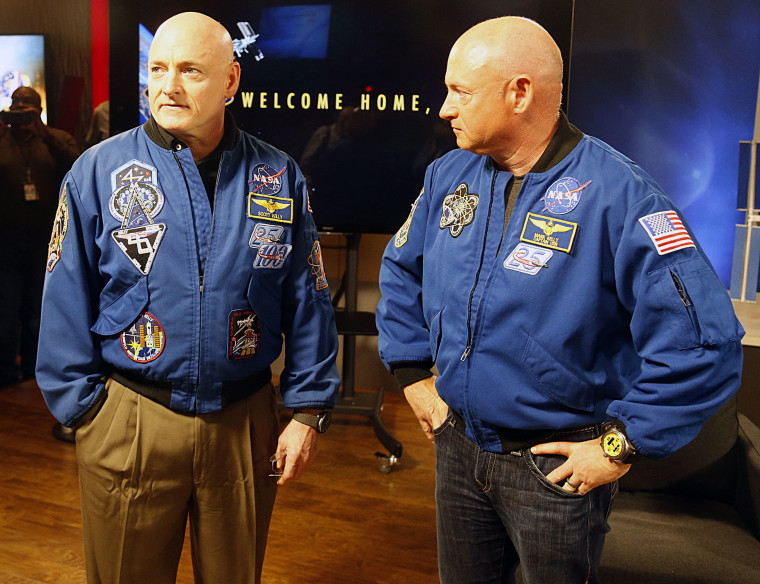
NASA’s pioneering study of the identical twin astronauts Mark and Scott Kelly tracked signals of aging in both men while Mark remained on Earth and Scott spent 340 days in space.

Some changes to Scott’s body — like DNA damage, reduced cognitive function and shortening of the telomeres that cap and protect chromosomes — persisted even after six months, according to a landmark 2019 “twins study” published in the journal Science.

Now, a study published Thursday in the journal Cell Stem Cell outlines a new discovery — that stem cells show signs of aging during the stress of spaceflight, too.

In fact, they age “ten times faster in space than on the ground,” said Dr. Catriona Jamieson, the director of the Sanford Stem Cell Institute at the University of California, San Diego, a lead author of the study.

Stem cells are special cells that can develop into various kinds of tissue. Stem cell aging is potentially worrisome because it diminishes the body’s natural ability to repair its tissues and organs, potentially leading to chronic, age-related conditions like cancer, neurodegenerative diseases and heart problems.

The new study comes at a time when interest in spaceflight is ramping up. Governments are planning long-duration missions to the moon, and private companies are launching consumers and celebrities into space. Understanding the health risks involved is important to making space travel safer. And the acceleration of aging in cells could also help researchers better understand how biological processes are playing out, more slowly, here on Earth.

Houston Chronicle
Astronauts and twin brothers Scott and Mark Kelly, at NASA’s Johnson Space Center in 2016.Houston Chronicle/Hearst Newspap / Houston Chronicle via Getty Imag

The researchers collected stem cells from bone marrow donated by people who underwent hip replacement surgery. The cells were housed inside “nanobioreactors,” which are essentially small, transparent blood bags no bigger than an iPhone where biological processes could take place. The nanobioreactors were placed inside a box built to monitor the cells called a CubeLab.

Each patient sample was divvied up into two CubeLabs, one that was destined for space, while the other stayed on Earth.

The space-bound packages were launched during four commercial resupply missions by SpaceX to the International Space Station. In total, the samples spent 32 to 45 days on SpaceX’s spacecrafts, giving the cells more than a month in microgravity, or weightlessness experienced in orbit. The researchers used the cells in the CubeLab setups on the ground for comparison.

The CubeLab monitored the cells during their travels and terrestrial stays, taking images of them each day through a microscope. Once the space-faring stem cells returned to Earth, the researchers compared those samples with their “ground controls” by sequencing their genomes and performing other tests.

Source link

Share. Facebook Twitter Pinterest LinkedIn Tumblr Email
Previous ArticleScientists find ‘something extraordinary’ in famous supernova’s troubled heart
Next Article How It Started at the 2009 MTV VMAs
Editor
  • Website

Related Posts

News

Omar files new financial form in response to Trump, GOP critics

April 21, 2026
News

Ex-CENTCOM commanderwarns against ‘risky’ US ground op to seize Iran uranium

April 21, 2026
News

Santa Ana’s Upcoming Report on Police Firing on ICE Protesters Lacks Details

April 21, 2026
Add A Comment

Comments are closed.

Categories
  • Entertainment
  • Lifestyle
  • News
  • Sports
  • Tech
  • Travel
Recent Posts
  • Do you really have to wash rice before you cook it?
  • Neuroscientists are searching for the ‘cellular substrate of loneliness’
  • Bow-Wow, Ding-Dong, Pooh-Pooh: Expert explains early theories of how human language evolved — and their silly names
  • Famous child mummies in Andes may belong to kids who were sacrificed to ‘ritually anchor’ the Inca’s presence as their empire expanded
  • Artemis II crew captures rare double auroras on the dark side of Earth as they zoom toward the moon — Space photo of the week
calendar
June 2026
M T W T F S S
1234567
891011121314
15161718192021
22232425262728
2930  
« May    
Recent Posts
  • Do you really have to wash rice before you cook it?
  • Neuroscientists are searching for the ‘cellular substrate of loneliness’
  • Bow-Wow, Ding-Dong, Pooh-Pooh: Expert explains early theories of how human language evolved — and their silly names
About

Welcome to Baynard Media, your trusted source for a diverse range of news and insights. We are committed to delivering timely, reliable, and thought-provoking content that keeps you informed
and inspired

Categories
  • Entertainment
  • Lifestyle
  • News
  • Sports
  • Tech
  • Travel
Facebook X (Twitter) Pinterest WhatsApp
  • Contact Us
  • About Us
  • Privacy Policy
  • Disclaimer
  • UNSUBSCRIBE
© 2026 copyrights reserved

Type above and press Enter to search. Press Esc to cancel.