
Mosquitoes bite people in almost every country across the globe. But are there any countries that don’t have this blood-sucking pest?
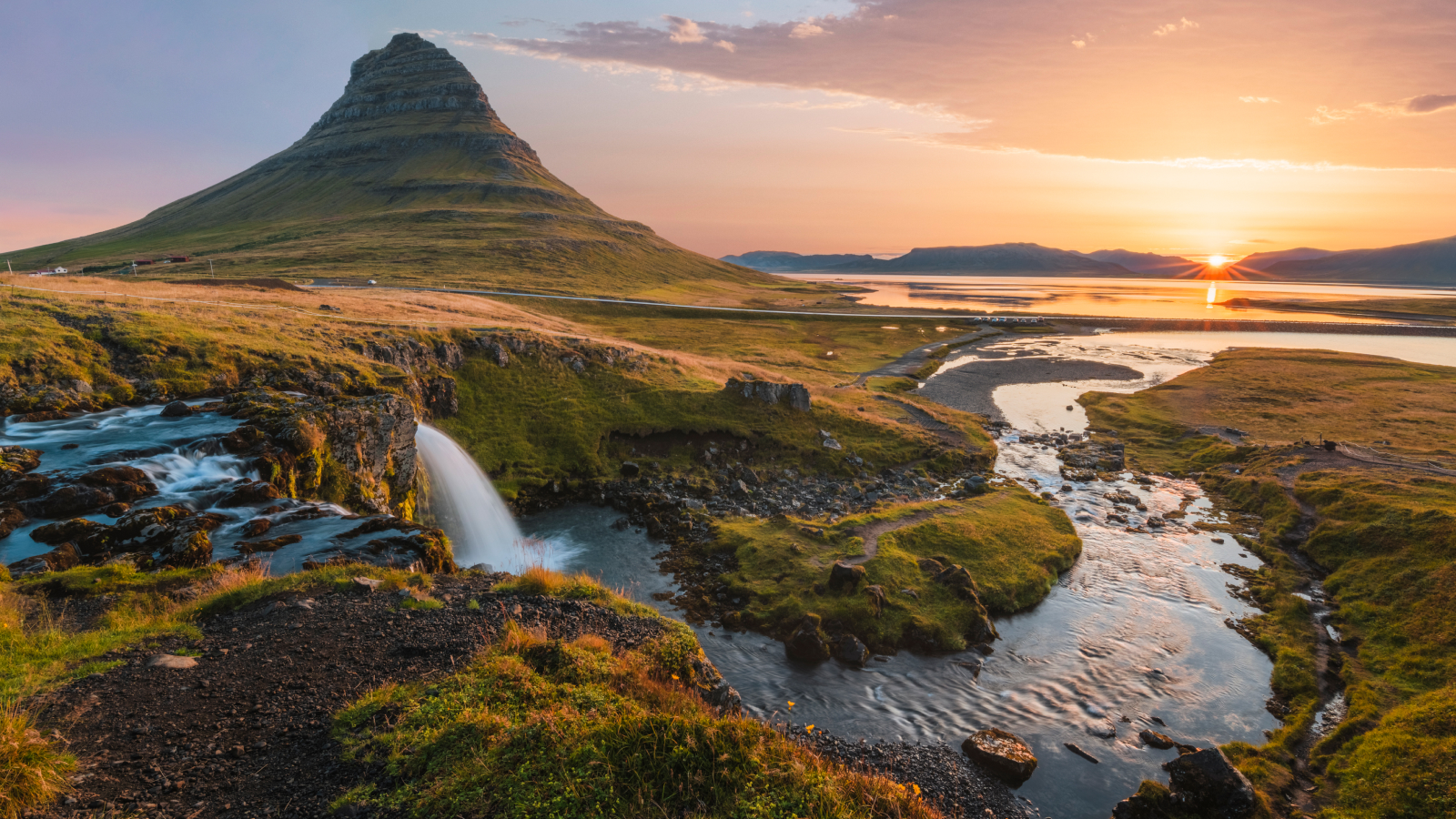
The answer is “yes,” there is one country without mosquitoes: Iceland. While its neighbors — including Norway, Scotland and Greenland — are home to multiple mosquito species, Iceland remains mosquito-free. (Of note, Antarctica is also mosquito-free, but the southern continent is not a country.)
So how is it possible for Iceland to have no mosquitoes?
Scientists have several theories. One idea is that mosquitoes simply haven’t made it to Iceland yet. The island nation is separated from its neighbors by hundreds of miles of ocean, creating a natural barrier that makes it difficult for mosquitoes to arrive by flight.
Yet mosquitoes do get transported aboard planes. Gísli Már Gíslason, a professor emeritus of limnology (the study of lakes and fresh water) at the University of Iceland, confirmed this after capturing a mosquito on a flight from Greenland to Iceland. Furthermore, mosquitoes can survive for hours on aircraft landing gear, even in freezing temperatures, he said in an interview with Reykavík Grapevine, an English-language publication in Iceland, in 2017.
So if mosquitoes have arrived, why haven’t they established populations?
Related: Should we kill every mosquito on Earth?
Gíslason explained that a lack of suitable breeding habitats is unlikely. Iceland has plenty of ponds and marshes near its airports — ideal places for mosquitoes to lay eggs. Instead, the most probable explanation is Iceland’s harsh climate.
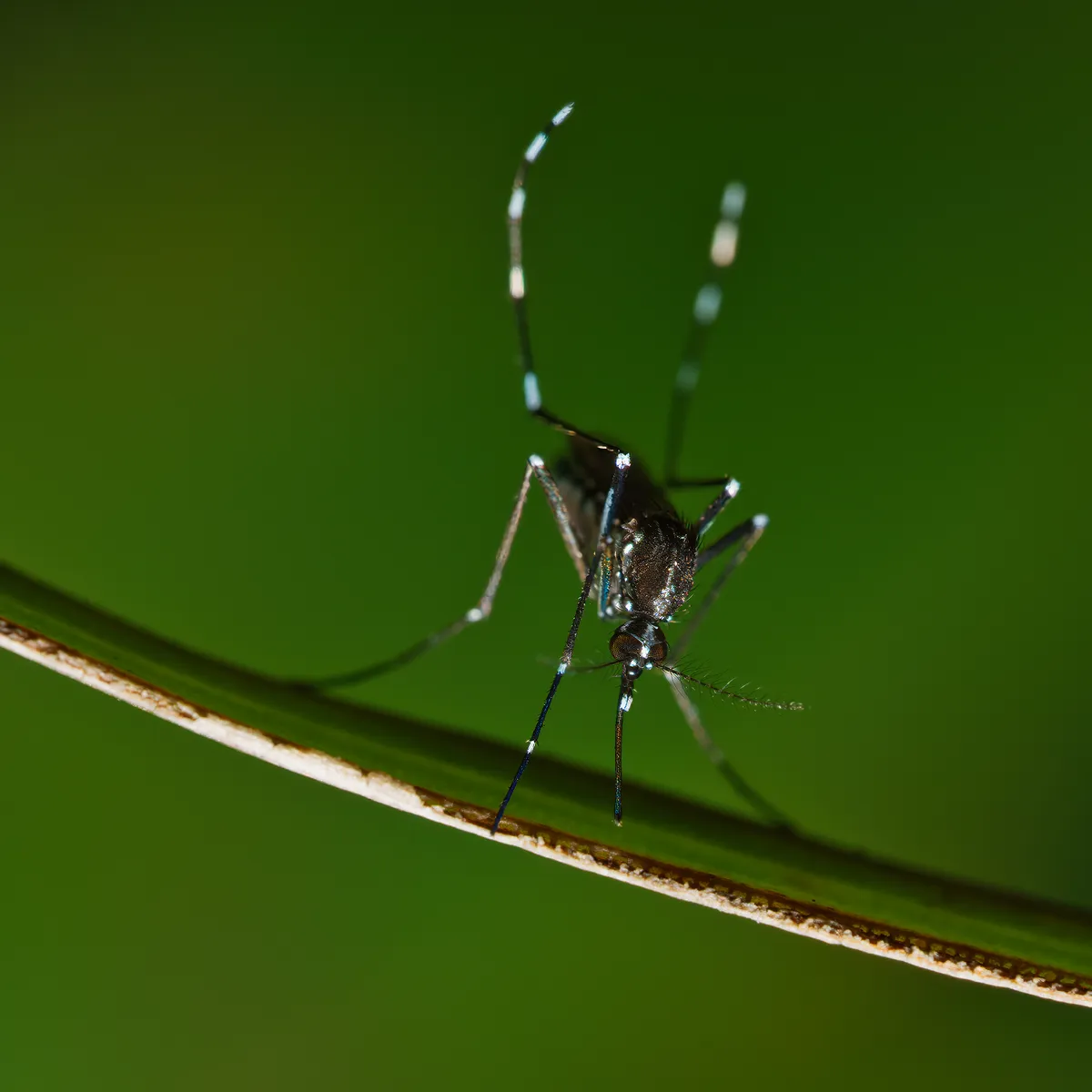
A mosquito’s life cycle consists of four stages: egg, larva, pupa (like a caterpillar chrysalis) and adult. Adult mosquitoes lay their eggs in water. These eggs hatch into larvae, which develop in pupae. An adult mosquito then emerges from the pupa.
Robert Jones, an insect biologist and assistant professor at the London School of Hygiene & Tropical Medicine, told Live Science that mosquito larvae require unfrozen liquid water to develop. In extremely cold regions like the Canadian Arctic, some mosquito species survive by entering dormancy in the egg stage, where they can endure months of frozen water.
“In warmer areas, such as parts of Central Europe, mosquitoes may survive the winter as eggs or larvae in relatively sheltered bodies of water that do not freeze, or as adults hidden in burrows and other protected sites,” he said.
Iceland’s climate falls in between: Long winters and frequent freeze-thaw cycles in autumn and spring cause water bodies to freeze, melt and refreeze repeatedly. “These cycles disrupt development and kill mosquito eggs and larvae before they can emerge as adults, making it much harder for populations to establish,” Jones said.
Although Iceland’s geothermal pools remain unfrozen in winter, their temperatures may be too warm for larvae of any mosquito species adapted to high latitudes. “In addition, the chemical composition of geothermal waters is unlikely to be suitable for mosquito development,” he said.
However, with climate change, Iceland’s mosquito-free status might not last forever. Jones noted that warmer springs and autumns could create longer periods of unfrozen standing water, allowing mosquitoes to establish permanent populations.
Immo Hansen, a professor of biology at New Mexico State University, agrees. “We’re currently seeing tropical mosquitoes expanding their range north in the United States,” he told Live Science, largely because that region’s winters are warming.
If mosquitoes do eventually spread to Iceland, it wouldn’t be the first time a mosquito-free zone disappeared. Hawaii, the most isolated archipelago in the world, was mosquito-free until 1826, when European and American ships inadvertently introduced them. Thanks to Hawaii’s favorable climate, mosquitoes thrived and spread rapidly across the islands. Since then, climate change has pushed mosquitoes into Hawaii’s higher-elevation forests that were once too cool for them to survive.
Despite the potential for mosquitoes to arrive in Iceland, the risk of disease-carrying species — like those in the Aedes genus, which are known to transmit diseases such as dengue and chikungunya — establishing there remains low because these insects need tropical and subtropical climates to survive, Jones said. While Southern Europe faces increased risks of such outbreaks due to climate change and modern transport, “modeling studies suggest that Northern Europe will remain largely unsuitable for dengue transmission even by 2080,” he said.
