Close Menu
  • Home
  • UNSUBSCRIBE
  • News
  • Lifestyle
  • Tech
  • Entertainment
  • Sports
  • Travel
Facebook X (Twitter) WhatsApp
Trending
  • New robotic heart mimics common, mysterious condition to help researchers study it
  • Canon EOS R6 III review: A wildlife wonder
  • Medieval babies and adults buried together in Sweden were not related, archaeologists discover — raising big questions about early Christian burial practices
  • NASA is creating a fifth state of matter on the ISS, thanks to an upgrade to a mini-fridge-sized quantum lab
  • New sodium metal battery design charges in just 4 minutes and retains its capacity for years
  • Quantum computing wielded to create extremely rare material critical to nuclear fusion
  • Scientists build tiny ‘diving suit’ for cockroaches, turning them into search-and-rescue cyborgs
  • Physicists develop the first working model of quantum mechanics using only ‘real’ numbers
Facebook X (Twitter) WhatsApp
Baynard Media
  • Home
  • UNSUBSCRIBE
  • News
  • Lifestyle
  • Tech
  • Entertainment
  • Sports
  • Travel
Baynard Media
Home»Lifestyle»70 million-year-old hypercarnivore that ate dinosaurs named after Egyptian god
Lifestyle

70 million-year-old hypercarnivore that ate dinosaurs named after Egyptian god

EditorBy EditorAugust 28, 2025No Comments2 Mins Read
Share Facebook Twitter Pinterest LinkedIn Tumblr Reddit Telegram Email
Share
Facebook Twitter LinkedIn Pinterest Email

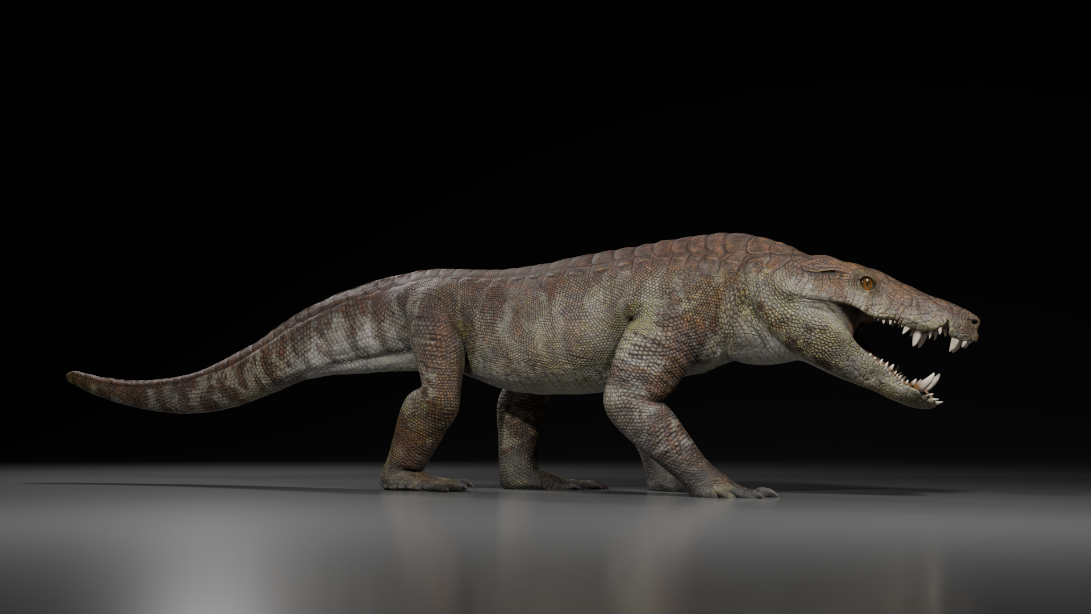
A gigantic crocodile-like hypercarnivore likely hunted dinosaurs 70 million years ago in what is now Argentina, a new study reveals.

Researchers discovered the fossilized skeleton from the extinct apex predator in southern Patagonia in 2020. It grew up to around 11.5 feet (3.5 meters) long and weighed about 550 pounds (250 kilograms).

The creature is named Kostensuchus atrox after the Patagonian wind called “the Kosten” and the Egyptian crocodile-headed god Sobek, also known as Suchus. K. atrox was hypercarnivorous, meaning more than 70% of its diet was meat. Equipped with a broad snout, big teeth and robust forelimbs, K. atrox‘s anatomy suggests it was capable of taking down large prey in South America’s Cretaceous (145 million to 66 million years ago) ecosystem, according to a new study published Wednesday (Aug. 27) in the journal PLOS One.


You may like

The discovery highlights the fact that dinosaurs lived in the company of a wide diversity of organisms, said study lead author Fernando Novas, a paleontologist at the National Scientific and Technical Research Council (CONICET) and the Félix de Azara Natural History Foundation in Argentina.

“In particular, terrestrial crocodylians were notably diverse and abundant during Cretaceous times in South America and Africa, including small and large, meat-eating and plant-eating forms, revealing that these continents were ‘land of crocs,'” Novas told Live Science in an email. “These extinct crocodyles competed and preyed upon dinosaurs, and played an important role in the structure of vanished ecosystems.”

Related: Bite marks reveal giant terror birds were potentially prey for another apex predator — humongous caiman

K. atrox was part of a group of reptiles called peirosaurid crocodyliforms, which are extinct relatives of living crocodiles. The newly discovered fossils were so well preserved that K. atrox is one of the best peirosaurid crocodyliform examples ever found, and is the most complete large and broad-snouted member on record, according to the study.

Get the world’s most fascinating discoveries delivered straight to your inbox.

Researchers discovered K. atrox in Patagonia’s Chorrillo rock formation. They also discovered a larger carnivorous dinosaur named Maip macrothorax around the same time, which was unveiled in 2022. M. macrothorax was a megaraptor that stood at around 30 to 33 feet (9 to 10 m) long, CBBC Newsround reported in 2022.

While K. atrox was smaller than M. macrothorax, Novas said it was capable of preying upon small to medium-size dinosaurs, meaning it rivaled the top dinosaur predators in the region.

Source link

Share. Facebook Twitter Pinterest LinkedIn Tumblr Email
Previous ArticleEquipment issues disrupt air traffic control at Newark Liberty Airport
Next Article Fewer sales, fewer buyers and fewer homes
Editor
  • Website

Related Posts

Lifestyle

New robotic heart mimics common, mysterious condition to help researchers study it

July 11, 2026
Lifestyle

Canon EOS R6 III review: A wildlife wonder

July 10, 2026
Lifestyle

Medieval babies and adults buried together in Sweden were not related, archaeologists discover — raising big questions about early Christian burial practices

July 10, 2026
Add A Comment

Comments are closed.

Categories
  • Entertainment
  • Lifestyle
  • News
  • Sports
  • Tech
  • Travel
Recent Posts
  • New robotic heart mimics common, mysterious condition to help researchers study it
  • Canon EOS R6 III review: A wildlife wonder
  • Medieval babies and adults buried together in Sweden were not related, archaeologists discover — raising big questions about early Christian burial practices
  • NASA is creating a fifth state of matter on the ISS, thanks to an upgrade to a mini-fridge-sized quantum lab
  • New sodium metal battery design charges in just 4 minutes and retains its capacity for years
calendar
July 2026
M T W T F S S
 12345
6789101112
13141516171819
20212223242526
2728293031  
« Jun    
Recent Posts
  • New robotic heart mimics common, mysterious condition to help researchers study it
  • Canon EOS R6 III review: A wildlife wonder
  • Medieval babies and adults buried together in Sweden were not related, archaeologists discover — raising big questions about early Christian burial practices
About

Welcome to Baynard Media, your trusted source for a diverse range of news and insights. We are committed to delivering timely, reliable, and thought-provoking content that keeps you informed
and inspired

Categories
  • Entertainment
  • Lifestyle
  • News
  • Sports
  • Tech
  • Travel
Facebook X (Twitter) Pinterest WhatsApp
  • Contact Us
  • About Us
  • Privacy Policy
  • Disclaimer
  • UNSUBSCRIBE
© 2026 copyrights reserved

Type above and press Enter to search. Press Esc to cancel.