Close Menu
  • Home
  • UNSUBSCRIBE
  • News
  • Lifestyle
  • Tech
  • Entertainment
  • Sports
  • Travel
Facebook X (Twitter) WhatsApp
Trending
  • George Kittle’s wife shares live reaction to Achilles injury
  • ‘The scientific cost would be severe’: A Trump Greenland takeover would put climate research at risk
  • Headlines Across OC as Angel Stadium Sale Debate Intensifies
  • Anti-Islam activists clash with pro-Muslim counter-protesters in Dearborn, Michigan
  • Best monitor deal: Get the 45-inch LG Ultragear gaming monitor for its lowest price yet
  • Slovakia U21 0 – 4 England U21
  • 13 Top Sleep Products That Transform Your Bedtime Routine for Better Rest
  • Firefighters rescue puppies from burning house
Facebook X (Twitter) WhatsApp
Baynard Media
  • Home
  • UNSUBSCRIBE
  • News
  • Lifestyle
  • Tech
  • Entertainment
  • Sports
  • Travel
Baynard Media
Home»Lifestyle»‘Most remarkable’ fossil of Jurassic sea monster from Germany is previously unknown species
Lifestyle

‘Most remarkable’ fossil of Jurassic sea monster from Germany is previously unknown species

EditorBy EditorAugust 6, 2025No Comments3 Mins Read
Share Facebook Twitter Pinterest LinkedIn Tumblr Reddit Telegram Email
Share
Facebook Twitter LinkedIn Pinterest Email

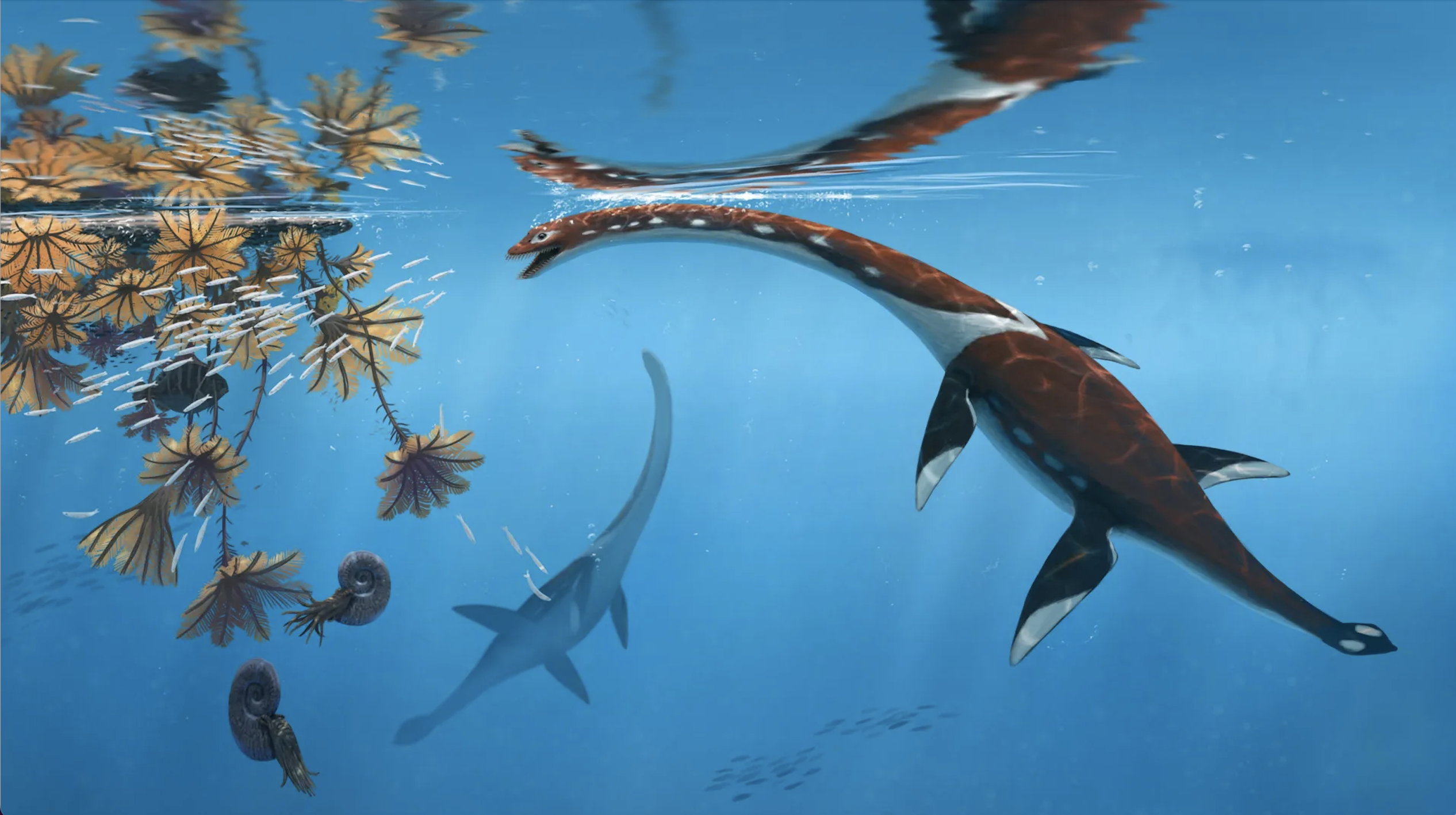
A “most remarkable” monster’s fossilized remains from Jurassic Germany is a never-before-seen species, a new study reports.

The marine reptile, which swam in prehistoric oceans about 183 million years ago, has been given the name Plesionectes longicollum, which translates to “long-necked near-swimmer.”

P. longicollum is a type of plesiosauroid, an extinct group of long-necked, carnivorous marine reptiles that swam in Earth’s oceans during the time when dinosaurs dominated terrestrial environments. This specimen lived during the early Toarcian age (183 million to 174 million years ago) during the Early Jurassic.


You may like

The fossilized specimen is about 10 feet (3 meters) long, similar to the length of an alligator, with its neck accounting for slightly less than half of its total span.

The nearly-complete skeleton of the animal contained remnants of fossilized soft tissue and bone, which enabled scientists to determine that P. longicollum is indeed a newly-discovered species — a conclusion past studies were hesitant to make.

The reptile’s bones were originally excavated in 1978 from a quarry in Germany, part of the Posidonia Shale formation, which is known for its “exquisitely preserved fossils,” according to the study. “This specimen has been in collections for decades, but previous studies never fully explored its distinctive anatomy,” study lead author Sven Sachs, a vertebrate paleontologist at the Natural History Museum of Bielefeld in Germany, said in a statement from the museum.

Related: Oldest tadpole on record was a Jurassic giant

Get the world’s most fascinating discoveries delivered straight to your inbox.

The findings were published in the journal PeerJ on Aug. 4.

A fossilized skeleton on a slab of stone

The fossilized skeleton of Plesionectes longicollum, the oldest known plesiosaur from the Posidonia Shale formation. (Image credit: Staatliches Museum für Naturkunde Stuttgart)

“Our detailed examination revealed an unusual combination of skeletal features that clearly distinguish it from all previously known plesiosaurs,” Sachs said. The work demonstrated that the Posidonia Shale beds contained a higher degree of reptile diversity than previously thought.

The new specimen is the oldest known plesiosaur from the town Holzmaden in southwest Germany, according to the statement. The animal was not yet an adult when it died, but based on its anatomy, researchers were able to classify it into a new genus and species.

Five other almost complete Plesionectes skeletons have been identified at the Posidonia Shale and include examples of all three major plesiosaur lineages.

“This discovery adds another piece to the puzzle of marine ecosystem evolution during a critical time in Earth’s history,” study co-author Daniel Madzia, a paleobiologist at the Polish Academy of Sciences, said in the statement. The period when P. longicollum lived “was marked by significant environmental changes, including a major oceanic anoxic event that affected marine life worldwide,” he said. The event, which depleted oxygen and spiked acidification in the water, led to a severe loss of marine biodiversity, including an extinction event killing around 5% of global families on land and in the sea.

This fossil is permanently housed at the Stuttgart State Museum of Natural History in Germany.

Source link

Share. Facebook Twitter Pinterest LinkedIn Tumblr Email
Previous ArticleAngels’ Yoan Moncada misses game to take US citizenship test
Next Article Immigration raid fears trigger Latino student absences as new school year begins
Editor
  • Website

Related Posts

Lifestyle

‘The scientific cost would be severe’: A Trump Greenland takeover would put climate research at risk

January 17, 2026
Lifestyle

New ‘Transformer’ humanoid robot can launch a shapeshifting drone off its back — watch it in action

November 19, 2025
Lifestyle

Medieval spear pulled from Polish lake may have belonged to prince or nobleman

November 19, 2025
Add A Comment

Comments are closed.

Categories
  • Entertainment
  • Lifestyle
  • News
  • Sports
  • Tech
  • Travel
Recent Posts
  • George Kittle’s wife shares live reaction to Achilles injury
  • ‘The scientific cost would be severe’: A Trump Greenland takeover would put climate research at risk
  • Headlines Across OC as Angel Stadium Sale Debate Intensifies
  • Anti-Islam activists clash with pro-Muslim counter-protesters in Dearborn, Michigan
  • Best monitor deal: Get the 45-inch LG Ultragear gaming monitor for its lowest price yet
calendar
February 2026
M T W T F S S
 1
2345678
9101112131415
16171819202122
232425262728  
« Jan    
Recent Posts
  • George Kittle’s wife shares live reaction to Achilles injury
  • ‘The scientific cost would be severe’: A Trump Greenland takeover would put climate research at risk
  • Headlines Across OC as Angel Stadium Sale Debate Intensifies
About

Welcome to Baynard Media, your trusted source for a diverse range of news and insights. We are committed to delivering timely, reliable, and thought-provoking content that keeps you informed
and inspired

Categories
  • Entertainment
  • Lifestyle
  • News
  • Sports
  • Tech
  • Travel
Facebook X (Twitter) Pinterest WhatsApp
  • Contact Us
  • About Us
  • Privacy Policy
  • Disclaimer
  • UNSUBSCRIBE
© 2026 copyrights reserved

Type above and press Enter to search. Press Esc to cancel.