Close Menu
  • Home
  • UNSUBSCRIBE
  • News
  • Lifestyle
  • Tech
  • Entertainment
  • Sports
  • Travel
Facebook X (Twitter) WhatsApp
Trending
  • Do you really have to wash rice before you cook it?
  • Neuroscientists are searching for the ‘cellular substrate of loneliness’
  • Bow-Wow, Ding-Dong, Pooh-Pooh: Expert explains early theories of how human language evolved — and their silly names
  • Famous child mummies in Andes may belong to kids who were sacrificed to ‘ritually anchor’ the Inca’s presence as their empire expanded
  • Artemis II crew captures rare double auroras on the dark side of Earth as they zoom toward the moon — Space photo of the week
  • Has all the water on Earth been peed before?
  • ‘This might be the point of no return’: Experts on the current measles outbreak and where we go from here
  • NASA’s experimental X-59 jet breaks sound barrier for 1st time in step toward ‘quiet supersonic’ technology
Facebook X (Twitter) WhatsApp
Baynard Media
  • Home
  • UNSUBSCRIBE
  • News
  • Lifestyle
  • Tech
  • Entertainment
  • Sports
  • Travel
Baynard Media
Home»Lifestyle»Archaeologist sailed a Viking replica boat for 3 years to discover unknown ancient harbors
Lifestyle

Archaeologist sailed a Viking replica boat for 3 years to discover unknown ancient harbors

EditorBy EditorMay 24, 2025No Comments3 Mins Read
Share Facebook Twitter Pinterest LinkedIn Tumblr Reddit Telegram Email
Share
Facebook Twitter LinkedIn Pinterest Email

A Swedish archaeologist has sailed a replica Viking boat for 3,100 miles (5,000 kilometers), which helped him to identify what he says are four previously unknown harbors along the coast of Norway that Vikings used more than 1,000 years ago.

The experimental voyage revealed that the boat sailed best on open water, suggesting the Vikings’ maritime trade routes took them further from land than previously assumed.

“A lot of the time, we only know about the starting and ending points of the trade that took place during the Viking Age,” Greer Jarrett, an archaeology doctoral student at Lund University in Sweden, said in a statement. But Jarrett believed a “network of ports located on small islands and peninsulas was central to making trade efficient during the Viking Age.”


You may like

For three years, Jarrett sailed a boat called a “faering” — a type of sailboat with oars similar to what Vikings used a millennium ago — to investigate Viking trade routes. With a small crew, Jarrett traveled from Trondheim in central Norway up the coast to the Arctic Circle, and then sailed back.

“This type of boat sails well on open water in tough conditions,” Jarrett said, “but navigating close to land and in the fjords sometimes presents challenges.”

He also interviewed Norwegian sailors and fishers to learn more about historical maritime routes, using that information and his own experience to reconstruct possible Viking sailing routes.

Related: Weapon-filled burials are shaking up what we know about women’s role in Viking society

Get the world’s most fascinating discoveries delivered straight to your inbox.

A small sailboat makes its away across turquoise waves towards the horizon, light blue with wispy white clouds

The sailboat, called a “faering,” that Jarrett sailed in his research. (Image credit: Lund University)

With this information and a map of what the Norwegian coast and sea level were like in the Viking Age, Jarrett identified four harbors or “havens” located on small islands and promontories. He published his findings May 8 in the Journal of Archaeological Method and Theory.

The four newly identified havens suggest that the Vikings relied on sheltered and easily accessible ports on islands and promontories, expanding experts’ knowledge of Viking Age seafaring previously provided only by large ports like Dublin and Ribe, Denmark, Jarrett wrote in his study.
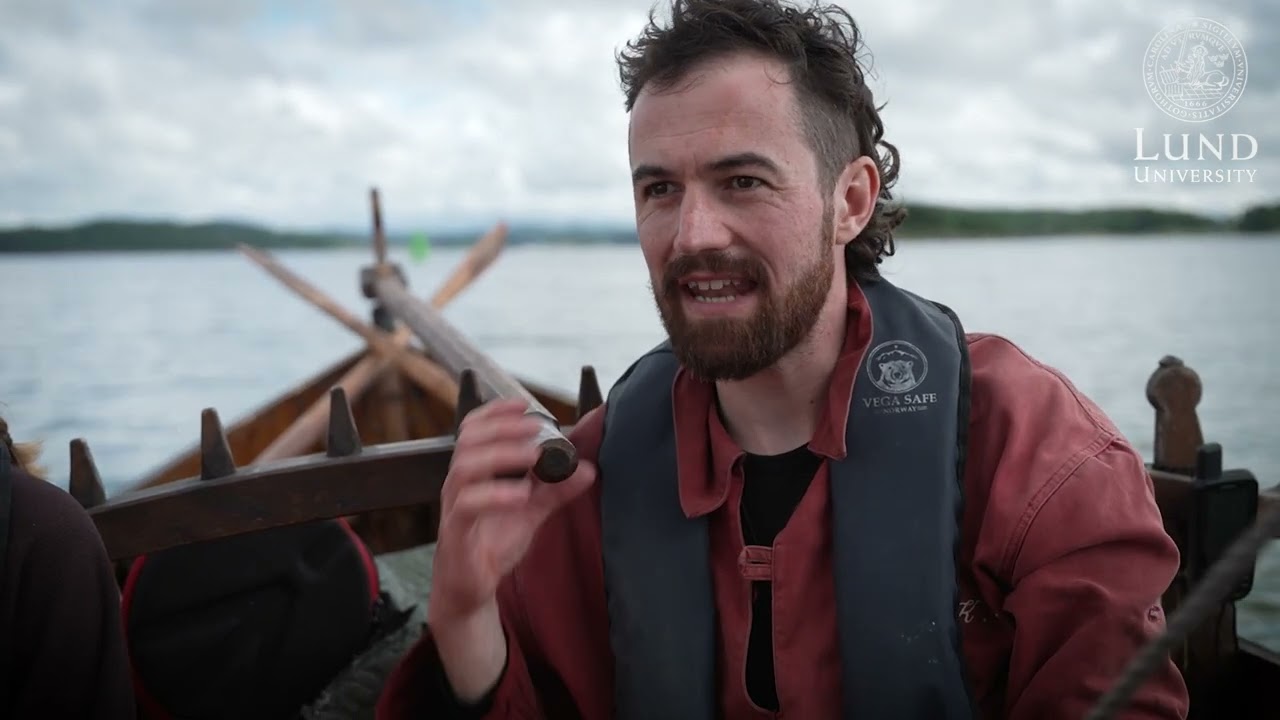
Traveling in the wake of the Vikings – YouTube
Traveling in the wake of the Vikings - YouTube


Watch On

And because the Vikings navigated using “mental maps” rather than a compass, having places to meet up and share information about the sea was important to the Vikings’ maritime success.

“You need a boat that can withstand all kinds of weather conditions,” Jarrett said. “But if you don’t have a crew that can cooperate and put up with each other for long periods, these journeys would probably be impossible.”

So far, Jarrett has not done any excavation at the harbors to confirm their use by Vikings. But evidence such as jetties, ballast stones, cooking pits and temporary shelter at the sites, if found, would demonstrate the Vikings used these “havens” in their trade routes, Jarrett noted in his study.


Viking quiz: How much do you know about these seaborne raiders, traders and explorers?

Source link

Share. Facebook Twitter Pinterest LinkedIn Tumblr Email
Previous ArticleScientists discover new dwarf planet far beyond the orbit of Neptune: Meet 2017 OF201
Next Article The moon: Facts about our planet’s lunar companion
Editor
  • Website

Related Posts

Lifestyle

Do you really have to wash rice before you cook it?

June 15, 2026
Lifestyle

Neuroscientists are searching for the ‘cellular substrate of loneliness’

June 14, 2026
Lifestyle

Bow-Wow, Ding-Dong, Pooh-Pooh: Expert explains early theories of how human language evolved — and their silly names

June 14, 2026
Add A Comment

Comments are closed.

Categories
  • Entertainment
  • Lifestyle
  • News
  • Sports
  • Tech
  • Travel
Recent Posts
  • Do you really have to wash rice before you cook it?
  • Neuroscientists are searching for the ‘cellular substrate of loneliness’
  • Bow-Wow, Ding-Dong, Pooh-Pooh: Expert explains early theories of how human language evolved — and their silly names
  • Famous child mummies in Andes may belong to kids who were sacrificed to ‘ritually anchor’ the Inca’s presence as their empire expanded
  • Artemis II crew captures rare double auroras on the dark side of Earth as they zoom toward the moon — Space photo of the week
calendar
June 2026
M T W T F S S
1234567
891011121314
15161718192021
22232425262728
2930  
« May    
Recent Posts
  • Do you really have to wash rice before you cook it?
  • Neuroscientists are searching for the ‘cellular substrate of loneliness’
  • Bow-Wow, Ding-Dong, Pooh-Pooh: Expert explains early theories of how human language evolved — and their silly names
About

Welcome to Baynard Media, your trusted source for a diverse range of news and insights. We are committed to delivering timely, reliable, and thought-provoking content that keeps you informed
and inspired

Categories
  • Entertainment
  • Lifestyle
  • News
  • Sports
  • Tech
  • Travel
Facebook X (Twitter) Pinterest WhatsApp
  • Contact Us
  • About Us
  • Privacy Policy
  • Disclaimer
  • UNSUBSCRIBE
© 2026 copyrights reserved

Type above and press Enter to search. Press Esc to cancel.