Close Menu
  • Home
  • UNSUBSCRIBE
  • News
  • Lifestyle
  • Tech
  • Entertainment
  • Sports
  • Travel
Facebook X (Twitter) WhatsApp
Trending
  • Kaleidoscopic meteorite could be a piece of a ‘lost world’ from the early solar system — Space photo of the week
  • Some ‘extinct’ volcanoes may just be going through a growth spurt, before they ‘wake up in this catastrophic stage,’ emerging research suggests
  • Jupiter and Venus conjunction 2026: See two bright planets at the same time this weekend
  • Flu drugs might fight cognitive decline seen in HIV, early study hints
  • NASA astronauts briefly shelter in ‘safe haven’ procedure following worsening leaks on International Space Station
  • Why can’t we figure out how strong gravity is?
  • Stupid hot: Heat waves cause cognitive changes in animals, making them more aggressive and unable to complete basic tasks
  • Tump administration to remove 900 deep sea monitoring instruments that would have studied the collapsing Atlantic current
Facebook X (Twitter) WhatsApp
Baynard Media
  • Home
  • UNSUBSCRIBE
  • News
  • Lifestyle
  • Tech
  • Entertainment
  • Sports
  • Travel
Baynard Media
Home»Lifestyle»Diagnostic dilemma: A man who couldn’t pee had been infected by one of the largest known human parasites
Lifestyle

Diagnostic dilemma: A man who couldn’t pee had been infected by one of the largest known human parasites

EditorBy EditorApril 16, 2025No Comments3 Mins Read
Share Facebook Twitter Pinterest LinkedIn Tumblr Reddit Telegram Email
Share
Facebook Twitter LinkedIn Pinterest Email

The patient: A 35-year-old man in India

The symptoms: The man was admitted to the emergency room of a hospital in India after not being able to pee and having a fever for two days. Doctors found that his vital signs were normal except for tachycardia, an increased heart rate typically defined as being over 100 beats per minute. He also had pale skin and swollen kidneys. Blood tests indicated the possibility of an infection.

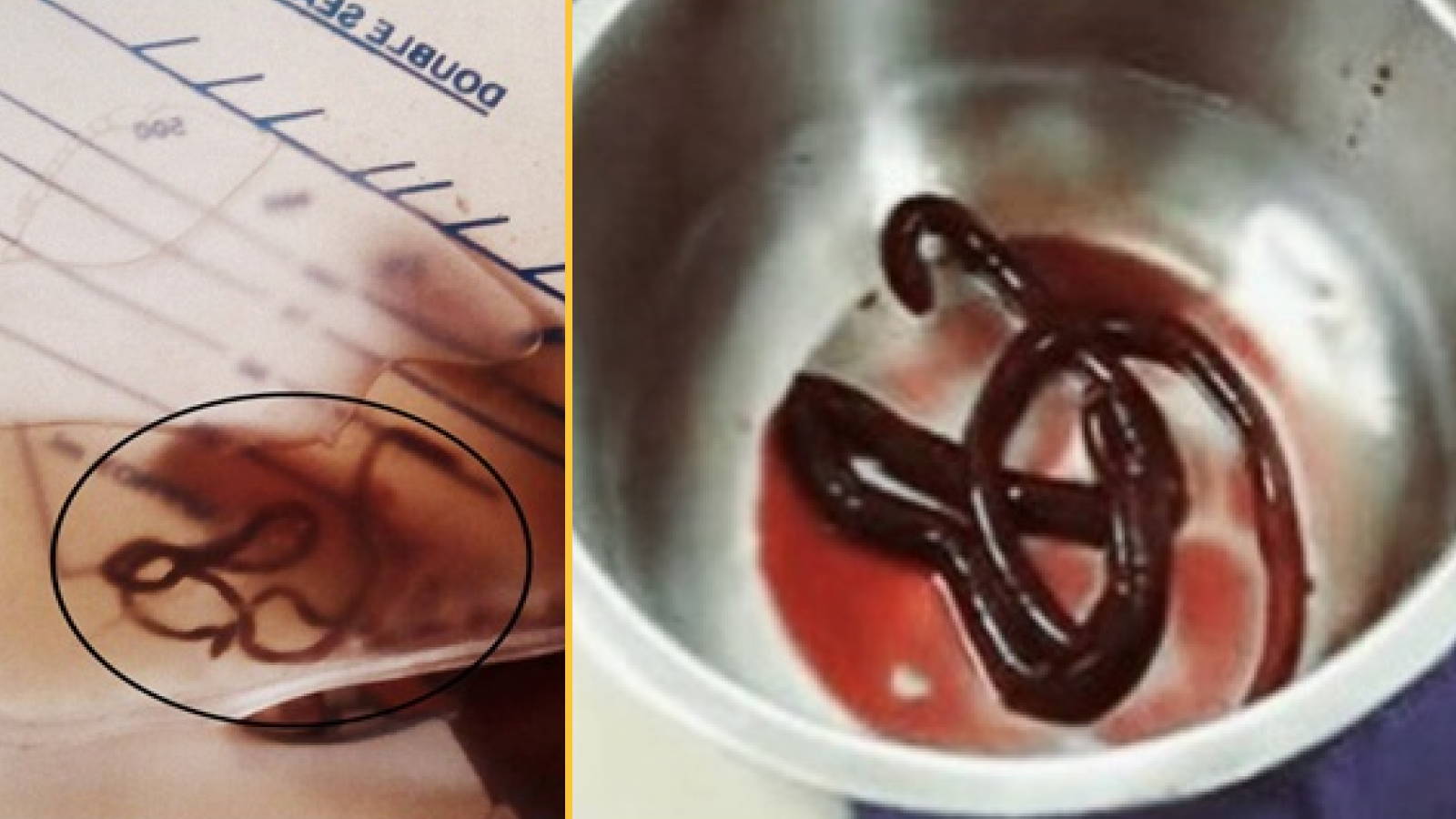
What happened next: Doctors inserted a catheter into the patient and gave him intravenous fluids and antibiotics for the potential infection. On the second day of his hospital stay, the patient looked at the bag collecting his urine and noticed blood — and a thin, wiggly worm.


You may like

Medical staff examined the patient’s urine over the next three days but did not find any additional invertebrates, or any worm eggs. However, they did send the man’s urine sample and worm to the hospital’s microbiology department for analysis.

The diagnosis: The microbiological examination confirmed that the species was a rare parasite called Dioctophyma renale, commonly known as the giant kidney worm. The patient’s symptoms also aligned with this diagnosis.

The blood-red parasite that had passed in the patient’s urine was 11.8 inches (30 centimeters) long with a diameter of around 0.13 inches (3 to 4 millimeters). According to the hospital staff, the worm was male.

Doctors suspect that the patient contracted the parasite after eating raw fish from a lake near his village, which he had reported doing regularly. The patient also noted that this was not the first time he had passed such a worm.

Get the world’s most fascinating discoveries delivered straight to your inbox.

The treatment: Doctors addressed the patient’s symptoms with the treatments described above, but the parasite ultimately passed out of his kidneys on its own. When no more worms were seen in the patient’s urine, he left the hospital against medical advice. A report of the case didn’t note the use or prescription of any antiparasitic drugs.

What makes the case unique: In the case report, the man’s doctors said that while D. renale worms are found all over the world, they rarely infect humans. It is the largest known parasitic nematode capable of infecting humans, they added. The female worm can reach over a meter in length and, in general, the parasites can survive up to five years in a person’s kidneys.

Until 2019, around 37 cases of infections in humans by this particular species had been reported worldwide. In such cases, the person’s kidney is usually damaged and may need to be surgically removed.

D. renale infections can be prevented by properly cooking fish that have ingested the worm’s larvae, the doctors noted. The infective larvae can be taken up by tadpoles, frogs or fish, and typically pass to humans when a person ingests raw or undercooked frogs or fish.

This article is for informational purposes only and is not meant to offer medical advice.

Source link

Share. Facebook Twitter Pinterest LinkedIn Tumblr Email
Previous ArticleColossal squid: Elusive sea creature caught on camera 100 years after it was 1st discovered
Next Article ‘Richly decorated’ antler from Stone Age Sweden was used as battle ax and fishing harpoon
Editor
  • Website

Related Posts

Lifestyle

Kaleidoscopic meteorite could be a piece of a ‘lost world’ from the early solar system — Space photo of the week

June 7, 2026
Lifestyle

Some ‘extinct’ volcanoes may just be going through a growth spurt, before they ‘wake up in this catastrophic stage,’ emerging research suggests

June 7, 2026
Lifestyle

Jupiter and Venus conjunction 2026: See two bright planets at the same time this weekend

June 7, 2026
Add A Comment

Comments are closed.

Categories
  • Entertainment
  • Lifestyle
  • News
  • Sports
  • Tech
  • Travel
Recent Posts
  • Kaleidoscopic meteorite could be a piece of a ‘lost world’ from the early solar system — Space photo of the week
  • Some ‘extinct’ volcanoes may just be going through a growth spurt, before they ‘wake up in this catastrophic stage,’ emerging research suggests
  • Jupiter and Venus conjunction 2026: See two bright planets at the same time this weekend
  • Flu drugs might fight cognitive decline seen in HIV, early study hints
  • NASA astronauts briefly shelter in ‘safe haven’ procedure following worsening leaks on International Space Station
calendar
June 2026
M T W T F S S
1234567
891011121314
15161718192021
22232425262728
2930  
« May    
Recent Posts
  • Kaleidoscopic meteorite could be a piece of a ‘lost world’ from the early solar system — Space photo of the week
  • Some ‘extinct’ volcanoes may just be going through a growth spurt, before they ‘wake up in this catastrophic stage,’ emerging research suggests
  • Jupiter and Venus conjunction 2026: See two bright planets at the same time this weekend
About

Welcome to Baynard Media, your trusted source for a diverse range of news and insights. We are committed to delivering timely, reliable, and thought-provoking content that keeps you informed
and inspired

Categories
  • Entertainment
  • Lifestyle
  • News
  • Sports
  • Tech
  • Travel
Facebook X (Twitter) Pinterest WhatsApp
  • Contact Us
  • About Us
  • Privacy Policy
  • Disclaimer
  • UNSUBSCRIBE
© 2026 copyrights reserved

Type above and press Enter to search. Press Esc to cancel.