Close Menu
  • Home
  • UNSUBSCRIBE
  • News
  • Lifestyle
  • Tech
  • Entertainment
  • Sports
  • Travel
Facebook X (Twitter) WhatsApp
Trending
  • AI could consume up 3% of world’s electricity the UN warns
  • Kaleidoscopic meteorite could be a piece of a ‘lost world’ from the early solar system — Space photo of the week
  • Some ‘extinct’ volcanoes may just be going through a growth spurt, before they ‘wake up in this catastrophic stage,’ emerging research suggests
  • Jupiter and Venus conjunction 2026: See two bright planets at the same time this weekend
  • Flu drugs might fight cognitive decline seen in HIV, early study hints
  • NASA astronauts briefly shelter in ‘safe haven’ procedure following worsening leaks on International Space Station
  • Why can’t we figure out how strong gravity is?
  • Stupid hot: Heat waves cause cognitive changes in animals, making them more aggressive and unable to complete basic tasks
Facebook X (Twitter) WhatsApp
Baynard Media
  • Home
  • UNSUBSCRIBE
  • News
  • Lifestyle
  • Tech
  • Entertainment
  • Sports
  • Travel
Baynard Media
Home»Lifestyle»‘Lost’ ancient capital where Alexander the Great’s grandmother was born may have just been uncovered
Lifestyle

‘Lost’ ancient capital where Alexander the Great’s grandmother was born may have just been uncovered

EditorBy EditorApril 11, 2025No Comments3 Mins Read
Share Facebook Twitter Pinterest LinkedIn Tumblr Reddit Telegram Email
Share
Facebook Twitter LinkedIn Pinterest Email

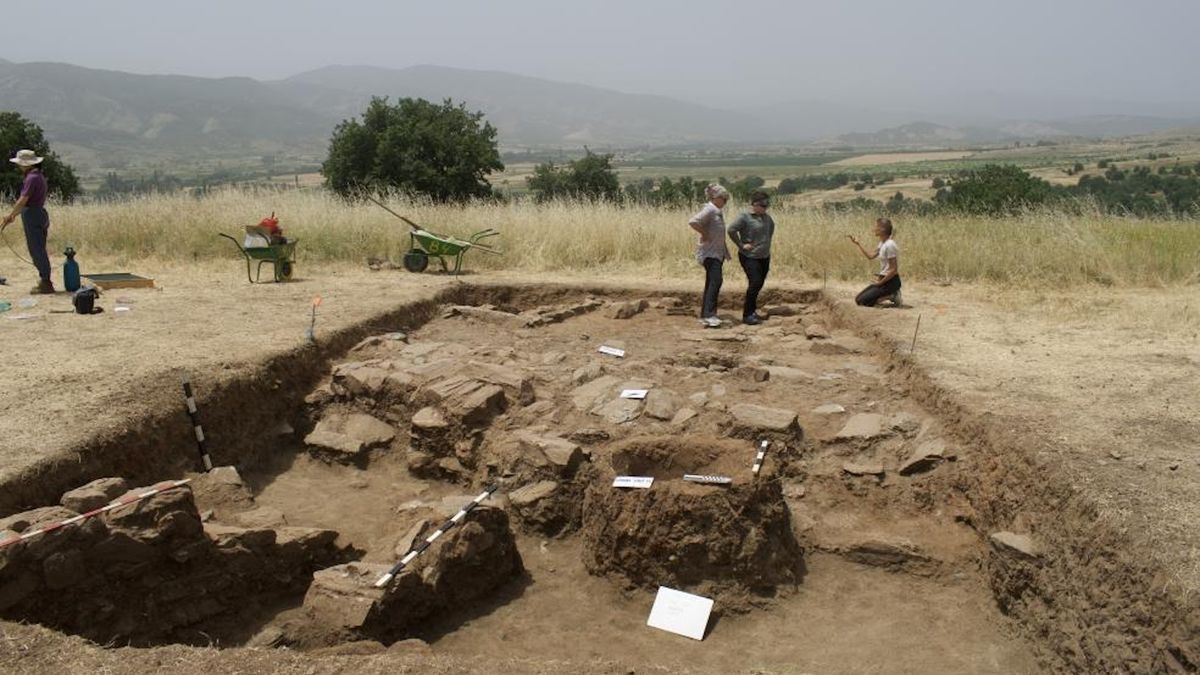
Archaeologists working in North Macedonia may have discovered the remains of Lyncus, an ancient city that was the capital of the Kingdom of Lyncestis.

More analysis is needed to support the finding but, if confirmed, the discovery could reveal the location of the place where Alexander the Great‘s paternal grandmother was born.

Lyncestis was a small kingdom that flourished in North Macedonia, which was incorporated into the Macedonian Empire during the reign of King Philip II (359 to 336 B.C.). Eurydice I of Macedon, the mother of Philip II and grandmother of Alexander (who reigned from 336 to 323 B.C.), was likely born in Lyncus, according to historical accounts.

Archaeologists have known about the site, located near the village of Crnobuki, since 1966, and it was initially believed to be a military outpost rather than a city, according to a statement from California State Polytechnic University, Humboldt (Cal Poly Humboldt).

It wasn’t until 2023 that a team of researchers conducted a lidar (light detection and ranging) survey, using aerial drones equipped with lasers to create a map of the site’s topography. This technique can penetrate foliage covering an archaeological site and has been widely used throughout the world.

The survey revealed that the city had an acropolis that’s at least 7 acres (2.8 hectares) in size. Besides the remains of a textile workshop and what appears to be a theater, the archaeologists also found a variety of artifacts, including pottery, coins, game pieces and even a theater ticket made of clay.

Image 1 of 2

a close-up of a ceramic token
(Image credit: Courtesy of Cal Poly Humboldt’s Cultural Resources Facility)

A ceramic token found in 2023 indicates that the site has a yet-to-be excavated theater.

a close-up of a silver coin with a face
(Image credit: Courtesy of Cal Poly Humboldt’s Cultural Resources Facility)

A coin found at the site that was minted while Alexander the Great was still alive.


Until now, researchers thought that the city was built long after Alexander the Great’s death, during the reign of Philip V (221 to 179 B.C.). But the discovery of a coin minted between 325 and 323 B.C. indicates that it was in use during Alexander’s lifetime, according to the statement.

Get the world’s most fascinating discoveries delivered straight to your inbox.

Moreover, the team of archaeologists unearthed axes and fragments of ceramic vessels at the site, which shows that this site has been occupied by humans as far back as the Bronze Age (3300 to 1200 B.C.). They plan to continue excavation.

The site’s discovery may shed more light on an influential kingdom. Engin Nasuh, a curator at Macedonia’s National Institute and Bitola Museum and one of the lead archaeologists, said in the statement that ancient Macedonia was “a civilization that played a major role in today’s understanding of the world and the desire to connect different civilizations and cultures.”


Alexander the Great quiz: How well do you know the famous king and conqueror from the ancient world?

Source link

Share. Facebook Twitter Pinterest LinkedIn Tumblr Email
Previous ArticleUS company to use giant spinning cannon to blast hundreds of pancake-like ‘microsatellites’ into space
Next Article Scientists built largest brain ‘connectome’ to date by having a lab mouse watch ‘The Matrix’ and ‘Star Wars’
Editor
  • Website

Related Posts

Lifestyle

AI could consume up 3% of world’s electricity the UN warns

June 7, 2026
Lifestyle

Kaleidoscopic meteorite could be a piece of a ‘lost world’ from the early solar system — Space photo of the week

June 7, 2026
Lifestyle

Some ‘extinct’ volcanoes may just be going through a growth spurt, before they ‘wake up in this catastrophic stage,’ emerging research suggests

June 7, 2026
Add A Comment

Comments are closed.

Categories
  • Entertainment
  • Lifestyle
  • News
  • Sports
  • Tech
  • Travel
Recent Posts
  • AI could consume up 3% of world’s electricity the UN warns
  • Kaleidoscopic meteorite could be a piece of a ‘lost world’ from the early solar system — Space photo of the week
  • Some ‘extinct’ volcanoes may just be going through a growth spurt, before they ‘wake up in this catastrophic stage,’ emerging research suggests
  • Jupiter and Venus conjunction 2026: See two bright planets at the same time this weekend
  • Flu drugs might fight cognitive decline seen in HIV, early study hints
calendar
June 2026
M T W T F S S
1234567
891011121314
15161718192021
22232425262728
2930  
« May    
Recent Posts
  • AI could consume up 3% of world’s electricity the UN warns
  • Kaleidoscopic meteorite could be a piece of a ‘lost world’ from the early solar system — Space photo of the week
  • Some ‘extinct’ volcanoes may just be going through a growth spurt, before they ‘wake up in this catastrophic stage,’ emerging research suggests
About

Welcome to Baynard Media, your trusted source for a diverse range of news and insights. We are committed to delivering timely, reliable, and thought-provoking content that keeps you informed
and inspired

Categories
  • Entertainment
  • Lifestyle
  • News
  • Sports
  • Tech
  • Travel
Facebook X (Twitter) Pinterest WhatsApp
  • Contact Us
  • About Us
  • Privacy Policy
  • Disclaimer
  • UNSUBSCRIBE
© 2026 copyrights reserved

Type above and press Enter to search. Press Esc to cancel.