Close Menu
  • Home
  • UNSUBSCRIBE
  • News
  • Lifestyle
  • Tech
  • Entertainment
  • Sports
  • Travel
Facebook X (Twitter) WhatsApp
Trending
  • Chinese medical practitioners used extremely toxic plant as a topical anesthetic 600 years ago, study finds
  • Bead net funerary shroud: A 2,500-year-old beaded veil from Egypt depicting the deceased’s transformation into Osiris
  • Rare genetic disease makes scientists reconsider what the ‘seat of fear’ in the brain really is
  • It’s illegal to repair most of our devices. There’s a surprising reason for that.
  • Jupiter’s Ganymede, the largest moon in the solar system, may be heating up
  • Bizarre patterns on Venus have scientists puzzled
  • Scientists trained an AI model using an IBM quantum computer — and it answered questions correctly that the base model couldn’t
  • How did animals survive the asteroid that killed the dinosaurs?
Facebook X (Twitter) WhatsApp
Baynard Media
  • Home
  • UNSUBSCRIBE
  • News
  • Lifestyle
  • Tech
  • Entertainment
  • Sports
  • Travel
Baynard Media
Home»Lifestyle»Tumaco-Tolita gold figurine: A 2,000-year-old statue with a ‘fancy nose ornament’ from a vanished South American culture
Lifestyle

Tumaco-Tolita gold figurine: A 2,000-year-old statue with a ‘fancy nose ornament’ from a vanished South American culture

EditorBy EditorMarch 24, 2025No Comments3 Mins Read
Share Facebook Twitter Pinterest LinkedIn Tumblr Reddit Telegram Email
Share
Facebook Twitter LinkedIn Pinterest Email

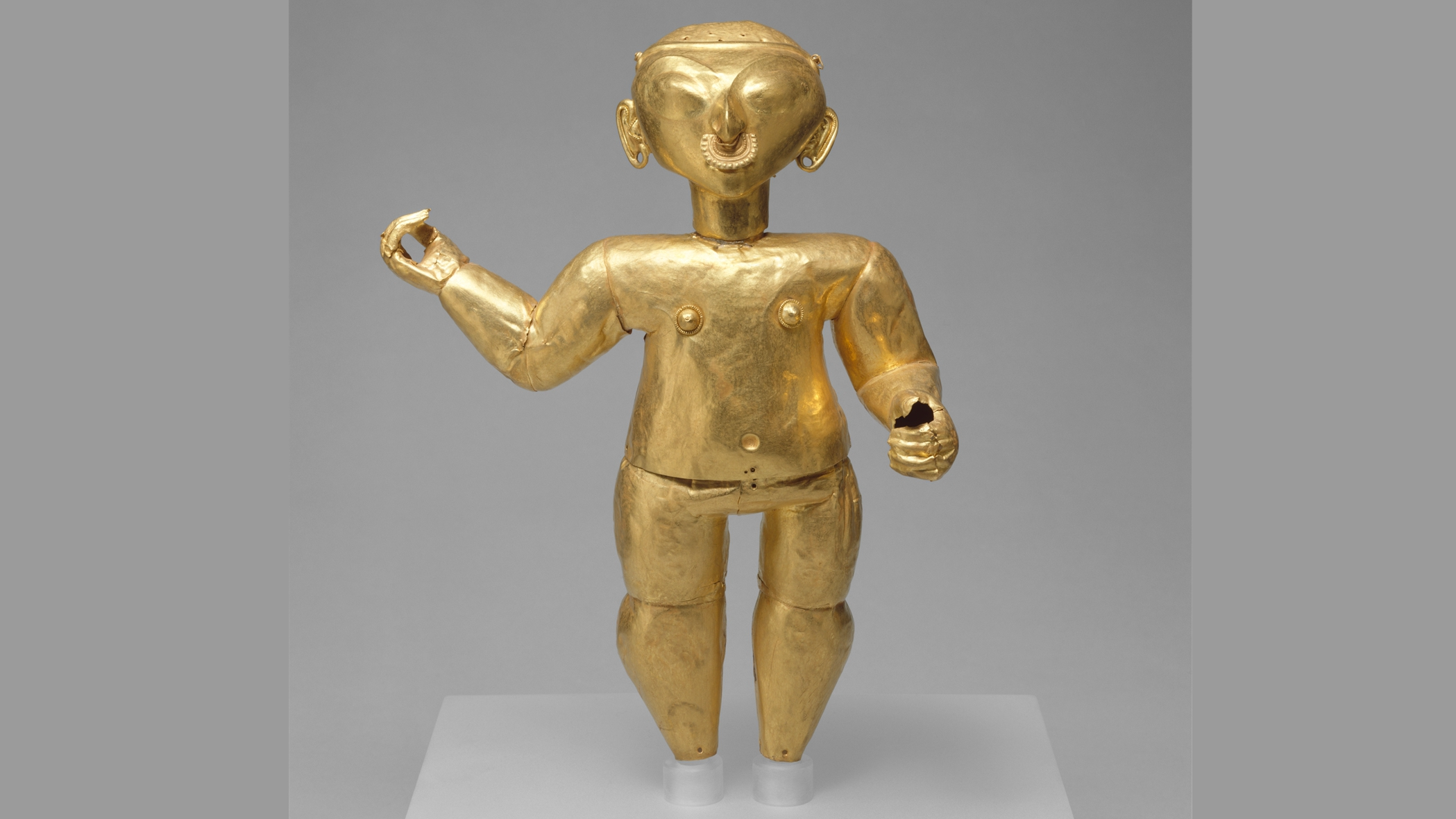
Name: Tumaco-Tolita standing figure

What it is: A gold sculpture of a person

Where it is from: Near the Colombia-Ecuador border

When it was made: A.D. 1 to 300

Related: Mechanical Dog: A ‘good boy’ from ancient Egypt that has a red tongue and ‘barks’

What it tells us about the past:

Two millennia ago, a group of people who were highly skilled in metallurgy flourished along the northern Pacific Coast of South America. Although they left no written records, the Tumaco-Tolita (also spelled Tumaco-La Tolita) people created this gold statue, a rare example of the art form in the ancient Americas.

Get the world’s most fascinating discoveries delivered straight to your inbox.

The standing figure is missing its feet, which were once attached by gold wire, as well as the accessories and objects it once held in its hands. Only a “fancy nose ornament” remains on the figure, a clue that the figurine once donned a headdress on ritual occasions, according to the Metropolitan Museum of Art in New York City, where the statue is located.

The gold figurine, which is roughly 9 inches (22.9 centimeters) tall, was made between the first and fourth centuries near what is now the border of Colombia and Ecuador in the Cayapas River delta area.

Known in Colombia as the Tumaco culture and in Ecuador as the Tolita culture, the Tumaco-Tolita civilization arose in an area full of rivers, swamps, forests, and natural gold and platinum deposits. They created large plazas ringed by villages and constructed earthen mounds that were both residences and burial mounds for the elite, according to Met researcher Hugo Ikehara-Tsukayama. Between 200 B.C. and A.D. 400, the Tumaco-Tolita produced one of the most refined metalwork traditions in the Americas and traded with other communities in the area.

This gold figure may represent a woman, since it was more common to mark a sculpture with nipples for female statues than for male statues, Ikehara-Tsukayama said. However, skirts were also common in female images, so the lack of one on this sculpture means the figure’s gender is ambiguous.

MORE ASTONISHING ARTIFACTS

The flattened head likely reflects the cultural practice of cranial vault modification, which involves binding a baby’s head so that the skull grows in a different shape. This skull shape may have signaled that the person was high in social rank or importance.

Remains of human and animal sculptures in metal and clay have been found throughout Tumaco-Tolita settlements and in their graves, but the exact function of the sculptures is unknown.

By A.D. 500, the river island of La Tolita and its surrounding areas were abandoned, and the Tumaco-Tolita people appear to have dispersed, gradually depopulating the coastal region. But there is historical evidence that Tumaco-Tolita objects survived as heirlooms well into the 16th century, when conquistadors arrived in the area and wrote about clay and gold figurines as well as the delicate gold and platinum-plated jewelry they saw the Indigenous people wearing.

Source link

Share. Facebook Twitter Pinterest LinkedIn Tumblr Email
Previous ArticleJuan Soto says signing with Mets over Yankees was a ‘family decision’
Next Article Trump delivers remarks with the governor of Louisiana
Editor
  • Website

Related Posts

Lifestyle

Chinese medical practitioners used extremely toxic plant as a topical anesthetic 600 years ago, study finds

May 26, 2026
Lifestyle

Bead net funerary shroud: A 2,500-year-old beaded veil from Egypt depicting the deceased’s transformation into Osiris

May 25, 2026
Lifestyle

Rare genetic disease makes scientists reconsider what the ‘seat of fear’ in the brain really is

May 25, 2026
Add A Comment

Comments are closed.

Categories
  • Entertainment
  • Lifestyle
  • News
  • Sports
  • Tech
  • Travel
Recent Posts
  • Chinese medical practitioners used extremely toxic plant as a topical anesthetic 600 years ago, study finds
  • Bead net funerary shroud: A 2,500-year-old beaded veil from Egypt depicting the deceased’s transformation into Osiris
  • Rare genetic disease makes scientists reconsider what the ‘seat of fear’ in the brain really is
  • It’s illegal to repair most of our devices. There’s a surprising reason for that.
  • Jupiter’s Ganymede, the largest moon in the solar system, may be heating up
calendar
May 2026
M T W T F S S
 123
45678910
11121314151617
18192021222324
25262728293031
« Apr    
Recent Posts
  • Chinese medical practitioners used extremely toxic plant as a topical anesthetic 600 years ago, study finds
  • Bead net funerary shroud: A 2,500-year-old beaded veil from Egypt depicting the deceased’s transformation into Osiris
  • Rare genetic disease makes scientists reconsider what the ‘seat of fear’ in the brain really is
About

Welcome to Baynard Media, your trusted source for a diverse range of news and insights. We are committed to delivering timely, reliable, and thought-provoking content that keeps you informed
and inspired

Categories
  • Entertainment
  • Lifestyle
  • News
  • Sports
  • Tech
  • Travel
Facebook X (Twitter) Pinterest WhatsApp
  • Contact Us
  • About Us
  • Privacy Policy
  • Disclaimer
  • UNSUBSCRIBE
© 2026 copyrights reserved

Type above and press Enter to search. Press Esc to cancel.