Close Menu
  • Home
  • UNSUBSCRIBE
  • News
  • Lifestyle
  • Tech
  • Entertainment
  • Sports
  • Travel
Facebook X (Twitter) WhatsApp
Trending
  • An ancient piece of the moon found in Africa hints at a long-ago collision that turned the lunar surface molten
  • Do you really have to wash rice before you cook it?
  • Neuroscientists are searching for the ‘cellular substrate of loneliness’
  • Bow-Wow, Ding-Dong, Pooh-Pooh: Expert explains early theories of how human language evolved — and their silly names
  • Famous child mummies in Andes may belong to kids who were sacrificed to ‘ritually anchor’ the Inca’s presence as their empire expanded
  • Artemis II crew captures rare double auroras on the dark side of Earth as they zoom toward the moon — Space photo of the week
  • Has all the water on Earth been peed before?
  • ‘This might be the point of no return’: Experts on the current measles outbreak and where we go from here
Facebook X (Twitter) WhatsApp
Baynard Media
  • Home
  • UNSUBSCRIBE
  • News
  • Lifestyle
  • Tech
  • Entertainment
  • Sports
  • Travel
Baynard Media
Home»Lifestyle»China’s new 2D transistor could soon be used to make the world’s fastest processors
Lifestyle

China’s new 2D transistor could soon be used to make the world’s fastest processors

EditorBy EditorMarch 24, 2025No Comments3 Mins Read
Share Facebook Twitter Pinterest LinkedIn Tumblr Reddit Telegram Email
Share
Facebook Twitter LinkedIn Pinterest Email

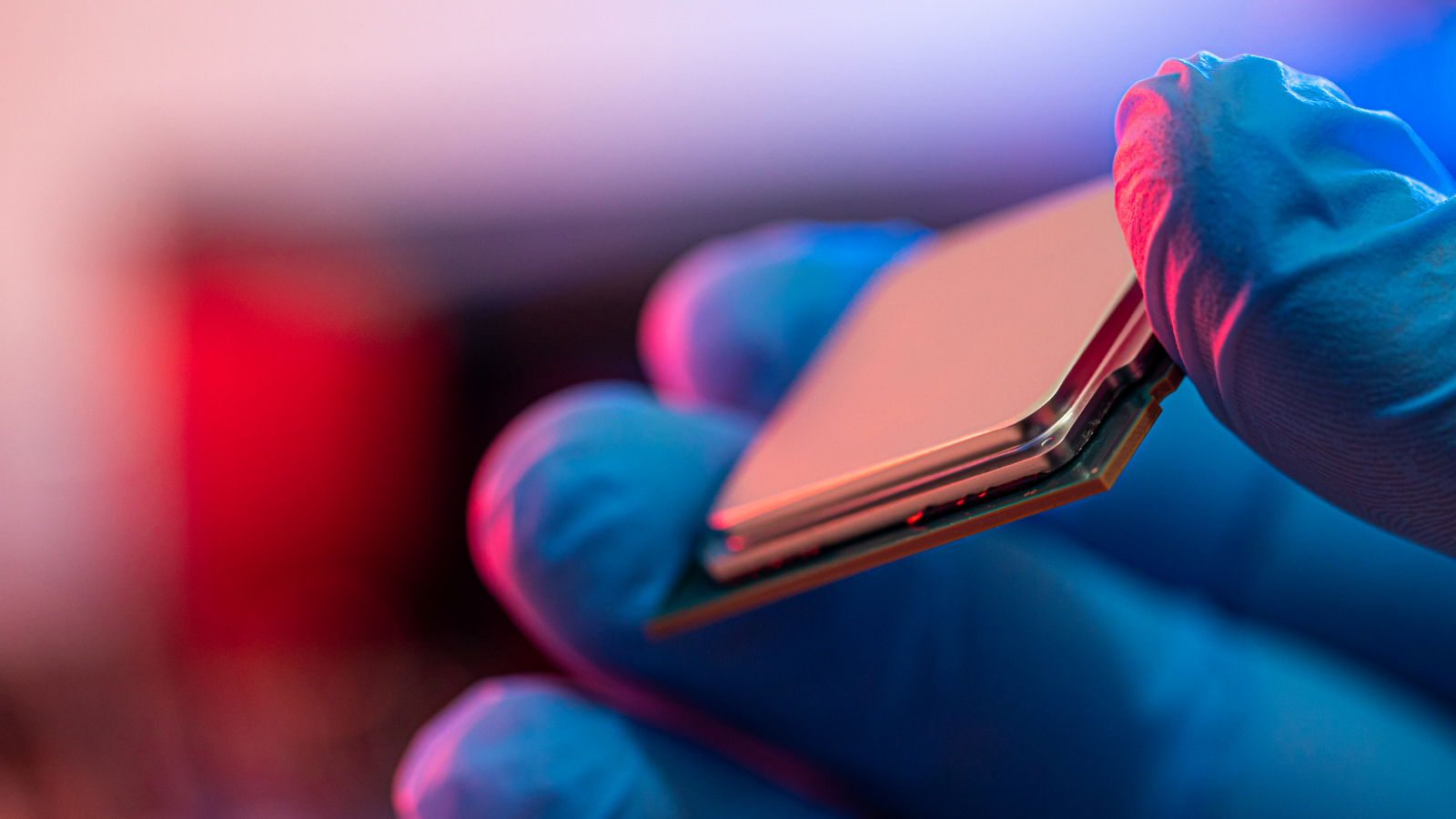
Researchers in China say they have created a new silicon-free transistor that could significantly boost performance while reducing energy consumption. The team says this development represents a new direction for transistor research.

The scientists said that the new transistor could be integrated into chips that could one day perform up to 40% faster than the best existing silicon processors made by U.S. companies like Intel. This is according to a report in the South China Morning Post (SCMP).

Despite that dramatic increase in power, the researchers claim that such chips would also draw 10% less power. The scientists outlined their findings in a new study published Feb. 13 in the journal Nature.

Lead author of the study Hailin Peng, professor of chemistry at Peking University (PKU) in China, told SCMP: “If chip innovations based on existing materials are considered a ‘short cut’, then our development of 2D material-based transistors is akin to ‘changing lanes’.”

A new kind of silicon-free transistor

The efficiency and performance gains are possible thanks to the chip’s unique architecture, the scientists said in the paper, specifically the new two-dimensional silicon-free transistor they created. This transistor is a gate-all-around field-effect transistor (GAAFET). Unlike previous leading transistor designs like the fin field-effect transistor (FinFET), a GAAFET transistor wraps sources with a gate on all four sides, instead of just three.

At its most basic level, a transistor is a semiconductor device found in every computer chip. Each transistor has a source, a gate and a drain, which allow the transistor to function as a switch.

The gate is how a transistor controls the flow of current between the source and drain terminals and can act as both a switch and amplifier. Wrapping this gate around all sides of a source (or sources, as some transistors contain multiple) — instead of just three as in conventional transistors — leads to potential improvements in both performance and efficiency.

Get the world’s most fascinating discoveries delivered straight to your inbox.

This is because a fully wrapped source provides better electrostatic control (as there is less energy loss to static electricity discharges) and the potential for higher drive currents and faster switching times.

While the GAAFET architecture isn’t itself new, the PKU team’s use of bismuth oxyselenide as the semiconductor was, as well as the fact they used it to create an “atomically-thin” two-dimensional transistor.

2D bismuth transistors are less brittle and more flexible than traditional silicon, the scientists added in the study. Bismuth provides better carrier mobility —the speed at which electrons can move through it when an electrical field is applied. It also has a high dielectric constant — a measure of a material’s ability to store electrical energy — which contributes to the transistor’s increased efficiency.

Should this transistor be fitted into a chip that does prove faster than US-made chips by Intel and other companies, it could also allow China to sidestep current restrictions on buying advanced chips and tap into US chip-making by shifting to a wholly different manufacturing process.

Source link

Share. Facebook Twitter Pinterest LinkedIn Tumblr Email
Previous ArticleWhich states will see the March 29 solar eclipse — and which will see a ‘double sunrise’?
Next Article Juan Soto says signing with Mets over Yankees was a ‘family decision’
Editor
  • Website

Related Posts

Lifestyle

An ancient piece of the moon found in Africa hints at a long-ago collision that turned the lunar surface molten

June 15, 2026
Lifestyle

Do you really have to wash rice before you cook it?

June 15, 2026
Lifestyle

Neuroscientists are searching for the ‘cellular substrate of loneliness’

June 14, 2026
Add A Comment

Comments are closed.

Categories
  • Entertainment
  • Lifestyle
  • News
  • Sports
  • Tech
  • Travel
Recent Posts
  • An ancient piece of the moon found in Africa hints at a long-ago collision that turned the lunar surface molten
  • Do you really have to wash rice before you cook it?
  • Neuroscientists are searching for the ‘cellular substrate of loneliness’
  • Bow-Wow, Ding-Dong, Pooh-Pooh: Expert explains early theories of how human language evolved — and their silly names
  • Famous child mummies in Andes may belong to kids who were sacrificed to ‘ritually anchor’ the Inca’s presence as their empire expanded
calendar
June 2026
M T W T F S S
1234567
891011121314
15161718192021
22232425262728
2930  
« May    
Recent Posts
  • An ancient piece of the moon found in Africa hints at a long-ago collision that turned the lunar surface molten
  • Do you really have to wash rice before you cook it?
  • Neuroscientists are searching for the ‘cellular substrate of loneliness’
About

Welcome to Baynard Media, your trusted source for a diverse range of news and insights. We are committed to delivering timely, reliable, and thought-provoking content that keeps you informed
and inspired

Categories
  • Entertainment
  • Lifestyle
  • News
  • Sports
  • Tech
  • Travel
Facebook X (Twitter) Pinterest WhatsApp
  • Contact Us
  • About Us
  • Privacy Policy
  • Disclaimer
  • UNSUBSCRIBE
© 2026 copyrights reserved

Type above and press Enter to search. Press Esc to cancel.