Close Menu
  • Home
  • UNSUBSCRIBE
  • News
  • Lifestyle
  • Tech
  • Entertainment
  • Sports
  • Travel
Facebook X (Twitter) WhatsApp
Trending
  • New robotic heart mimics common, mysterious condition to help researchers study it
  • Canon EOS R6 III review: A wildlife wonder
  • Medieval babies and adults buried together in Sweden were not related, archaeologists discover — raising big questions about early Christian burial practices
  • NASA is creating a fifth state of matter on the ISS, thanks to an upgrade to a mini-fridge-sized quantum lab
  • New sodium metal battery design charges in just 4 minutes and retains its capacity for years
  • Quantum computing wielded to create extremely rare material critical to nuclear fusion
  • Scientists build tiny ‘diving suit’ for cockroaches, turning them into search-and-rescue cyborgs
  • Physicists develop the first working model of quantum mechanics using only ‘real’ numbers
Facebook X (Twitter) WhatsApp
Baynard Media
  • Home
  • UNSUBSCRIBE
  • News
  • Lifestyle
  • Tech
  • Entertainment
  • Sports
  • Travel
Baynard Media
Home»Lifestyle»125 million-year-old fossil of giant venomous scorpion that lived alongside dinosaurs discovered in China
Lifestyle

125 million-year-old fossil of giant venomous scorpion that lived alongside dinosaurs discovered in China

EditorBy EditorMarch 4, 2025No Comments3 Mins Read
Share Facebook Twitter Pinterest LinkedIn Tumblr Reddit Telegram Email
Share
Facebook Twitter LinkedIn Pinterest Email

A known treasure trove of Early Cretaceous fossils has turned up a never-before-seen species of scorpion that lived around 125 million years ago.

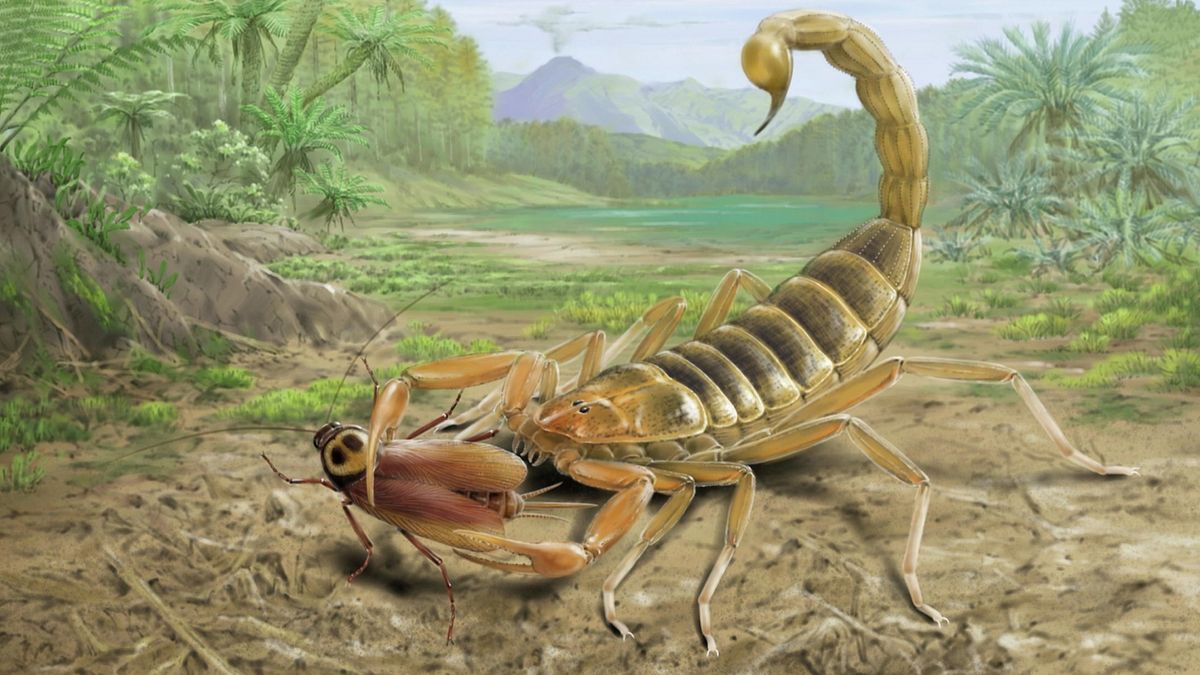
The venomous scorpion was larger than many ancient — and modern — scorpion species. Researchers believe it would’ve been a key species in the food chain, gobbling up spiders, lizards and even small mammals that lived in its ancient ecosystem.

It is just the fourth terrestrial scorpion fossil to be found in China and the first Mesozoic-era scorpion fossil found in the country, researchers reported Jan. 24 in the journal Science Bulletin.

Most scorpions from the Mesozoic era (252 million to 66 million years ago) are preserved in amber. Fossilized scorpions are much rarer because these arachnids live under rocks and branches, where they’re less likely to be trapped in sediment and fossilize, said study co-author Diying Huang, a researcher at the Nanjing Institute of Geology and Palaeontology in China.

The scientists found the fossil in the Yixian Formation, a hotbed of Early Cretaceous fossils in northeastern China. The team named the new species Jeholia longchengi. “Jeholia” refers to the Jehol Biota, the ecosystem of northeast China in the Early Cretaceous about 133 million to 120 million years ago, and “longchengi” refers to the Longcheng district of Chaoyang, China, where the fossil currently resides.
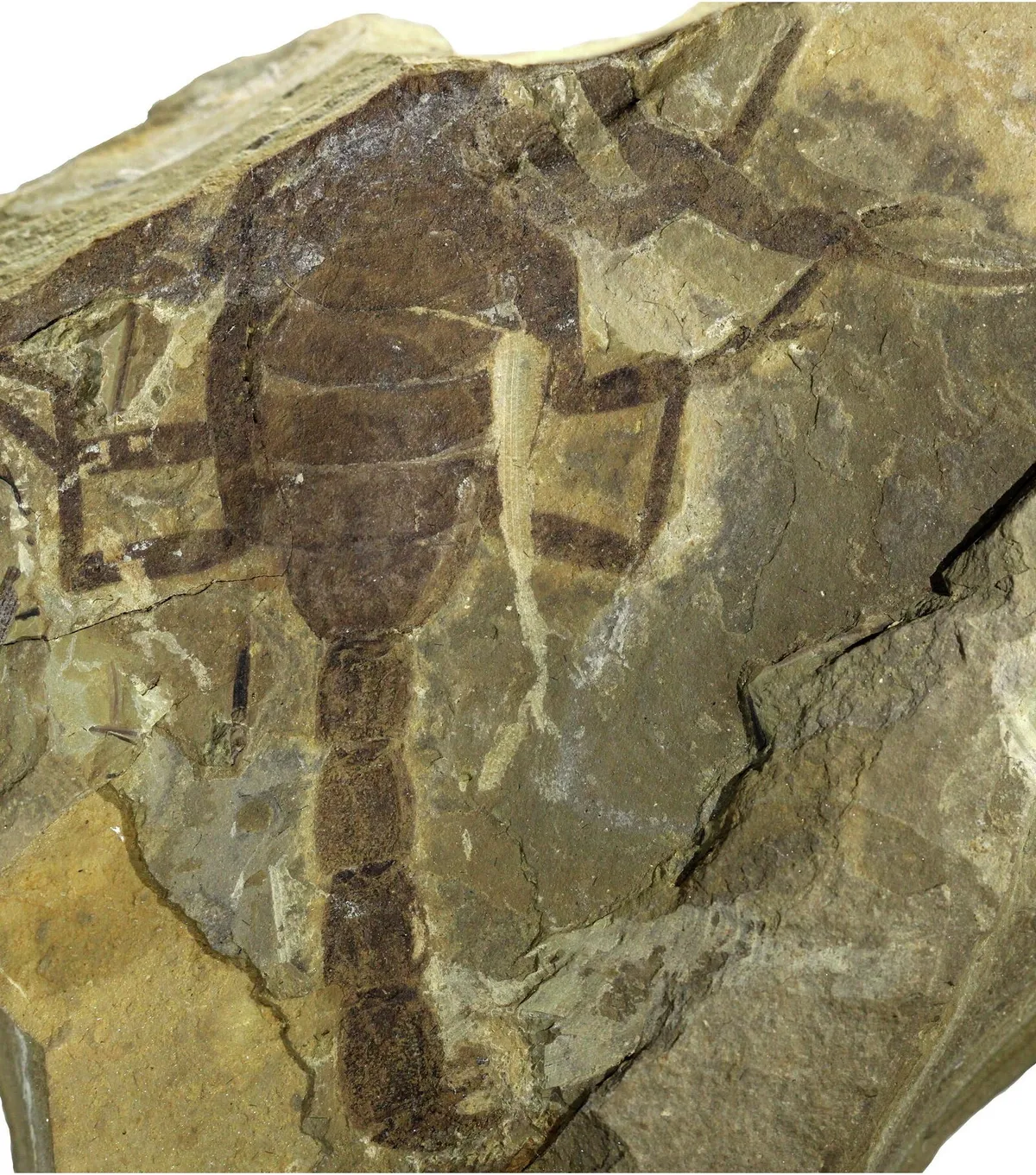
Scorpion fossil.

Fossilized scorpions are extremely rare. J. longchengi is only the fourth terrestrial species found in China. (Image credit: NIGPAS)

J. longchengi was roughly 4 inches (10 centimeters) long, making it something of a giant of its time. “Other Mesozoic scorpions are much smaller, most of them less than half [the size] of the new species,” Huang told Live Science in an email.

Related: What if a giant asteroid had not wiped out the dinosaurs?

Get the world’s most fascinating discoveries delivered straight to your inbox.

J. longchengi has a pentagonal body and rounded spiracles, which are the openings in its body that allowed it to breathe. These characteristics are similar to those found in some families of modern-day scorpions that inhabit other parts of Asia. But unlike those families, J. longchengi has fairly long legs and slim pedipalps, or pincers, that lack spurs along a segment called the patella.

Fossils of many other animals — including dinosaurs, birds, mammals and insects — have been found in the Jehol Biota, suggesting a complex food web. Larger mammals and dinosaurs may have preyed upon J. longchengi, while the scorpion’s diet may have included insects, spiders, frogs and even small lizards or mammals, the researchers wrote in the study.

The scorpion’s mouthparts aren’t preserved in the fossil, though, so it’s hard to know for sure what they ate. Discoveries of additional fossil specimens could clear up the species’ role in the ecosystem and its place in the food web, the researchers wrote.

“If placed in today’s environment, it might become a natural predator of many small animals, and could even hunt the young of small vertebrates,” Huang told China’s state run Xinhua news agency.

The fossil is being stored at the Fossil Valley Museum in Chaoyang, China.

Source link

Share. Facebook Twitter Pinterest LinkedIn Tumblr Email
Previous ArticleBiden and Trump pardons come under scrutiny, renewing calls for reform
Next Article How Trump’s Canada and Mexico tariffs risk higher prices on cars
Editor
  • Website

Related Posts

Lifestyle

New robotic heart mimics common, mysterious condition to help researchers study it

July 11, 2026
Lifestyle

Canon EOS R6 III review: A wildlife wonder

July 10, 2026
Lifestyle

Medieval babies and adults buried together in Sweden were not related, archaeologists discover — raising big questions about early Christian burial practices

July 10, 2026
Add A Comment

Comments are closed.

Categories
  • Entertainment
  • Lifestyle
  • News
  • Sports
  • Tech
  • Travel
Recent Posts
  • New robotic heart mimics common, mysterious condition to help researchers study it
  • Canon EOS R6 III review: A wildlife wonder
  • Medieval babies and adults buried together in Sweden were not related, archaeologists discover — raising big questions about early Christian burial practices
  • NASA is creating a fifth state of matter on the ISS, thanks to an upgrade to a mini-fridge-sized quantum lab
  • New sodium metal battery design charges in just 4 minutes and retains its capacity for years
calendar
July 2026
M T W T F S S
 12345
6789101112
13141516171819
20212223242526
2728293031  
« Jun    
Recent Posts
  • New robotic heart mimics common, mysterious condition to help researchers study it
  • Canon EOS R6 III review: A wildlife wonder
  • Medieval babies and adults buried together in Sweden were not related, archaeologists discover — raising big questions about early Christian burial practices
About

Welcome to Baynard Media, your trusted source for a diverse range of news and insights. We are committed to delivering timely, reliable, and thought-provoking content that keeps you informed
and inspired

Categories
  • Entertainment
  • Lifestyle
  • News
  • Sports
  • Tech
  • Travel
Facebook X (Twitter) Pinterest WhatsApp
  • Contact Us
  • About Us
  • Privacy Policy
  • Disclaimer
  • UNSUBSCRIBE
© 2026 copyrights reserved

Type above and press Enter to search. Press Esc to cancel.