Close Menu
  • Home
  • UNSUBSCRIBE
  • News
  • Lifestyle
  • Tech
  • Entertainment
  • Sports
  • Travel
Facebook X (Twitter) WhatsApp
Trending
  • ‘A disease anywhere can be a disease everywhere tomorrow morning’: Public health expert on Ebola and the threat of future outbreaks
  • Thanks to natural selection, Indigenous Andeans may digest potatoes better than anyone else in the world, study finds
  • Doctors need to understand patients' lived experiences to treat them well — but medical schools may stop requiring that training
  • This yeast-based 3D printed biomaterial could one day replace your wallpaper and drapes
  • Flesh-eating screwworm found in Texas cow. Are humans at risk?
  • New Velociraptor cousin was a ‘4-winged’ dragon that hunted prey from the trees of ancient China, fossil find hints
  • AI models are teaching each other ‘violent and antisocial’ traits through hidden data signals, study finds — and scientists can’t figure out why
  • Scientists race to collect the last seeds from a critically endangered tree before it goes extinct
Facebook X (Twitter) WhatsApp
Baynard Media
  • Home
  • UNSUBSCRIBE
  • News
  • Lifestyle
  • Tech
  • Entertainment
  • Sports
  • Travel
Baynard Media
Home»Lifestyle»Dogs may have domesticated themselves because they really liked snacks, model suggests
Lifestyle

Dogs may have domesticated themselves because they really liked snacks, model suggests

EditorBy EditorFebruary 24, 2025No Comments4 Mins Read
Share Facebook Twitter Pinterest LinkedIn Tumblr Reddit Telegram Email
Share
Facebook Twitter LinkedIn Pinterest Email

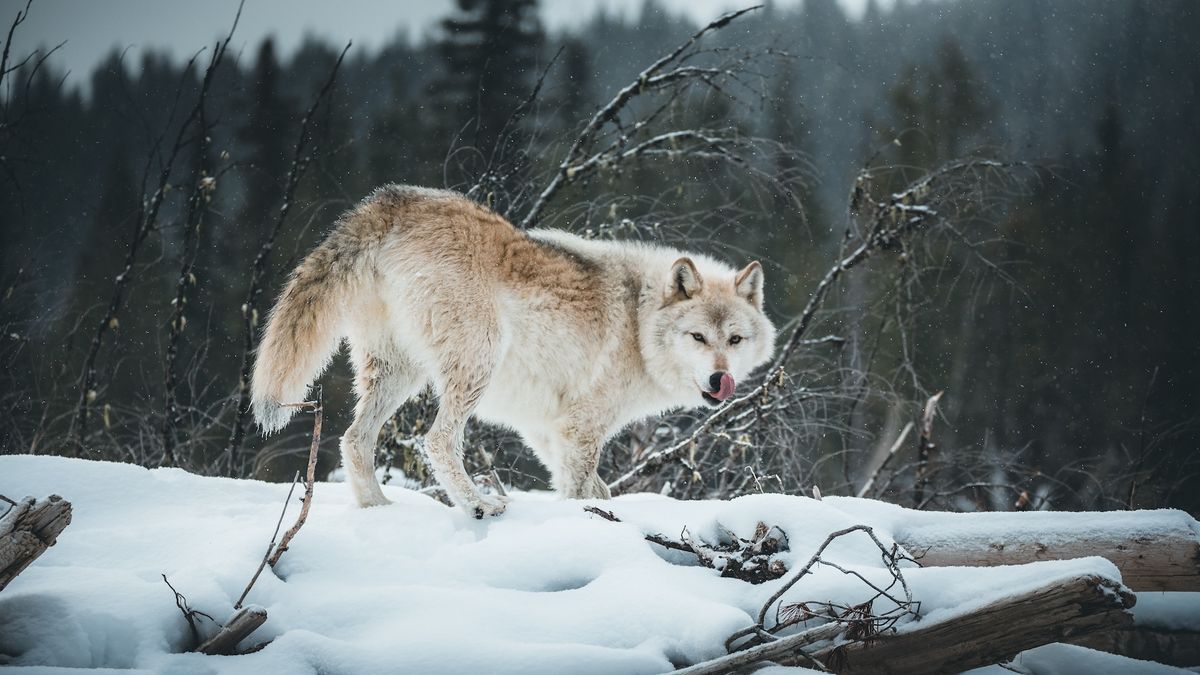
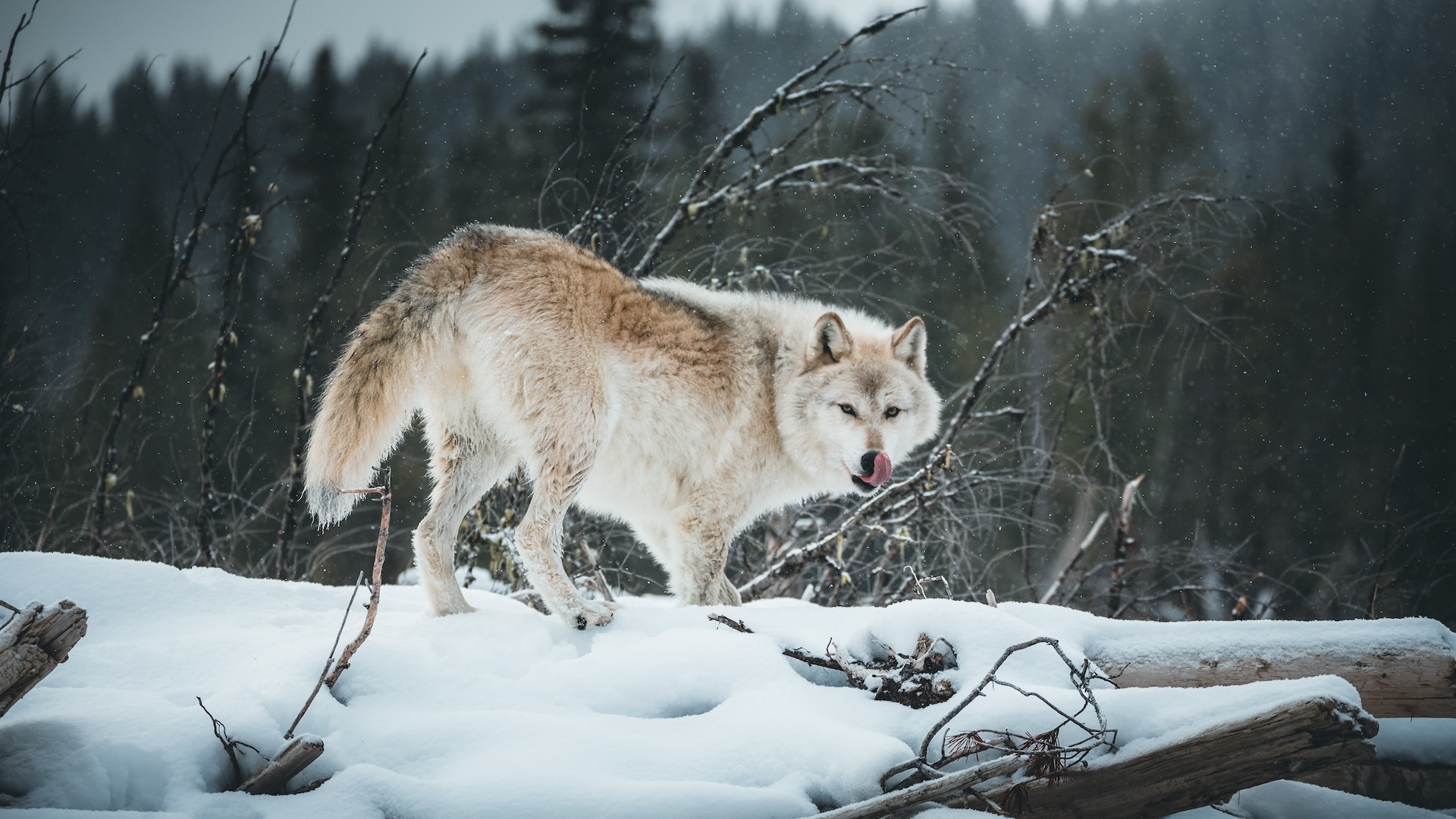
Scientists don’t know exactly how wolves were domesticated into early dogs, but it’s possible that they domesticated themselves by choosing to coexist with humans so that, a new study finds, they could be fed consistently. Then, these snackish canines likely selected mates that did the same.

While the theory is nothing new, the new research shows it’s statistically possible for the wolves to have driven their own domestication into dogs through natural selection.

Archaeological and genetic evidence suggests that dogs (Canis familiaris) are descended from gray wolves (Canis lupus) and became domesticated over two historical periods: between about 30,000 and 15,000 years ago when wild wolves were domesticated into early dogs, then from around 15,000 years ago to the modern era when these dogs became differentiated into breeds. These periods of domestication were driven by different evolutionary forces, according to a new study published Feb. 12 in the journal Proceedings of the Royal Society B.

The second domestication period is thought to have been mostly driven by artificial selection: humans chose more tame wolves to accompany them for hunting and companionship, and purposely bred the least-wild animals together, which ultimately produced the tame species we know as the domestic dog.

But the selective forces that drove the first domestication period are less clear. According to one hypothesis, wolves underwent “self-domestication”: after prehistoric animals started coming to human settlements to scavenge for food scraps, they grew more accustomed to living near people. These more-tolerant wolves preferred a steady food supply over inconsistent sources in the wild, and their descendants gave rise to the first domestic dogs.

Related: Smarter dogs have smaller brains, surprising study reveals

A similar process is believed to have occurred with cat domestication, as research found that the ancestors of house cats spent time near farming communities around 10,000 years ago, before settling into a mutually-beneficial relationship in which they hunted and ate rodents in exchange for food.

Get the world’s most fascinating discoveries delivered straight to your inbox.

Dog domestication debate

Scientists have long debated the dog self-domestication hypothesis. One criticism is that natural selection may not be able to work quickly enough to turn wild wolves into domestic dogs over thousands of years — without selective breeding by humans to speed the process up.

In the new study, researchers addressed this question of time constraint by using a statistical model that considered potential timelines of dog domestication and gave its computerized canines some agency over choosing their lifestyle and mates.

The model showed that over 15,000 years, natural selection could potentially drive dog self-domestication. But for this to happen, two conditions had to be met: Wolves had to choose to stay near humans to eat food scraps, and they had to select mates with a similar temperament.

“When females were selecting mates, they also had to select males that had a similar tameness to themselves,” study co-author Alex Capaldi, a mathematician and statistician at James Madison University in Virginia, told Live Science. “So if both of those processes are in play, then it is possible for the self-domestication hypothesis to beat the time constraint critique.”

The scientists pointed out that while the model doesn’t show exactly how wolves became domesticated, the model’s results do mean self-domestication is a possibility.

Dogs are the earliest animal to be domesticated, so studying their evolution can help scientists better understand how domestication may work in other species. And since the process of dog domestication was so closely linked to the development of early human societies — dogs herded cattle in early human settlements, and migrated with early humans to the Americas — understanding its timeline can illuminate our history, and how we ourselves evolved to communicate and bond with dogs.

Source link

Share. Facebook Twitter Pinterest LinkedIn Tumblr Email
Previous ArticleSteve Martin Reacts to Only Murders’ Cast Win After Missing SAG Awards
Next Article Justin Bieber Shares Milestone He Wants Baby Jack to Reach “Soon”
Editor
  • Website

Related Posts

Lifestyle

‘A disease anywhere can be a disease everywhere tomorrow morning’: Public health expert on Ebola and the threat of future outbreaks

June 8, 2026
Lifestyle

Thanks to natural selection, Indigenous Andeans may digest potatoes better than anyone else in the world, study finds

June 8, 2026
Lifestyle

Doctors need to understand patients' lived experiences to treat them well — but medical schools may stop requiring that training

June 8, 2026
Add A Comment

Comments are closed.

Categories
  • Entertainment
  • Lifestyle
  • News
  • Sports
  • Tech
  • Travel
Recent Posts
  • ‘A disease anywhere can be a disease everywhere tomorrow morning’: Public health expert on Ebola and the threat of future outbreaks
  • Thanks to natural selection, Indigenous Andeans may digest potatoes better than anyone else in the world, study finds
  • Doctors need to understand patients' lived experiences to treat them well — but medical schools may stop requiring that training
  • This yeast-based 3D printed biomaterial could one day replace your wallpaper and drapes
  • Flesh-eating screwworm found in Texas cow. Are humans at risk?
calendar
June 2026
M T W T F S S
1234567
891011121314
15161718192021
22232425262728
2930  
« May    
Recent Posts
  • ‘A disease anywhere can be a disease everywhere tomorrow morning’: Public health expert on Ebola and the threat of future outbreaks
  • Thanks to natural selection, Indigenous Andeans may digest potatoes better than anyone else in the world, study finds
  • Doctors need to understand patients' lived experiences to treat them well — but medical schools may stop requiring that training
About

Welcome to Baynard Media, your trusted source for a diverse range of news and insights. We are committed to delivering timely, reliable, and thought-provoking content that keeps you informed
and inspired

Categories
  • Entertainment
  • Lifestyle
  • News
  • Sports
  • Tech
  • Travel
Facebook X (Twitter) Pinterest WhatsApp
  • Contact Us
  • About Us
  • Privacy Policy
  • Disclaimer
  • UNSUBSCRIBE
© 2026 copyrights reserved

Type above and press Enter to search. Press Esc to cancel.