Close Menu
  • Home
  • UNSUBSCRIBE
  • News
  • Lifestyle
  • Tech
  • Entertainment
  • Sports
  • Travel
Facebook X (Twitter) WhatsApp
Trending
  • NASA astronauts briefly shelter in ‘safe haven’ procedure following worsening leaks on International Space Station
  • Why can’t we figure out how strong gravity is?
  • Stupid hot: Heat waves cause cognitive changes in animals, making them more aggressive and unable to complete basic tasks
  • Tump administration to remove 900 deep sea monitoring instruments that would have studied the collapsing Atlantic current
  • Science news this week: Ötzi the Iceman used to make sourdough, Italian teenagers discover Roman villa under school, Google plans to release 64 million mosquitos, and RIP to NASA’s Maven probe
  • Coming El Niño will be the strongest ever recorded, new forecast predicts
  • World’s largest scorpion had 6-inch pincers, and prowled UK land and waters 415 million years ago
  • Arthritis drug shows antiviral effects against RSV, the leading cause of infant hospitalization
Facebook X (Twitter) WhatsApp
Baynard Media
  • Home
  • UNSUBSCRIBE
  • News
  • Lifestyle
  • Tech
  • Entertainment
  • Sports
  • Travel
Baynard Media
Home»Lifestyle»‘Wandering’ contraceptive implant travels to woman’s lung in rare case
Lifestyle

‘Wandering’ contraceptive implant travels to woman’s lung in rare case

EditorBy EditorFebruary 7, 2025No Comments4 Mins Read
Share Facebook Twitter Pinterest LinkedIn Tumblr Reddit Telegram Email
Share
Facebook Twitter LinkedIn Pinterest Email

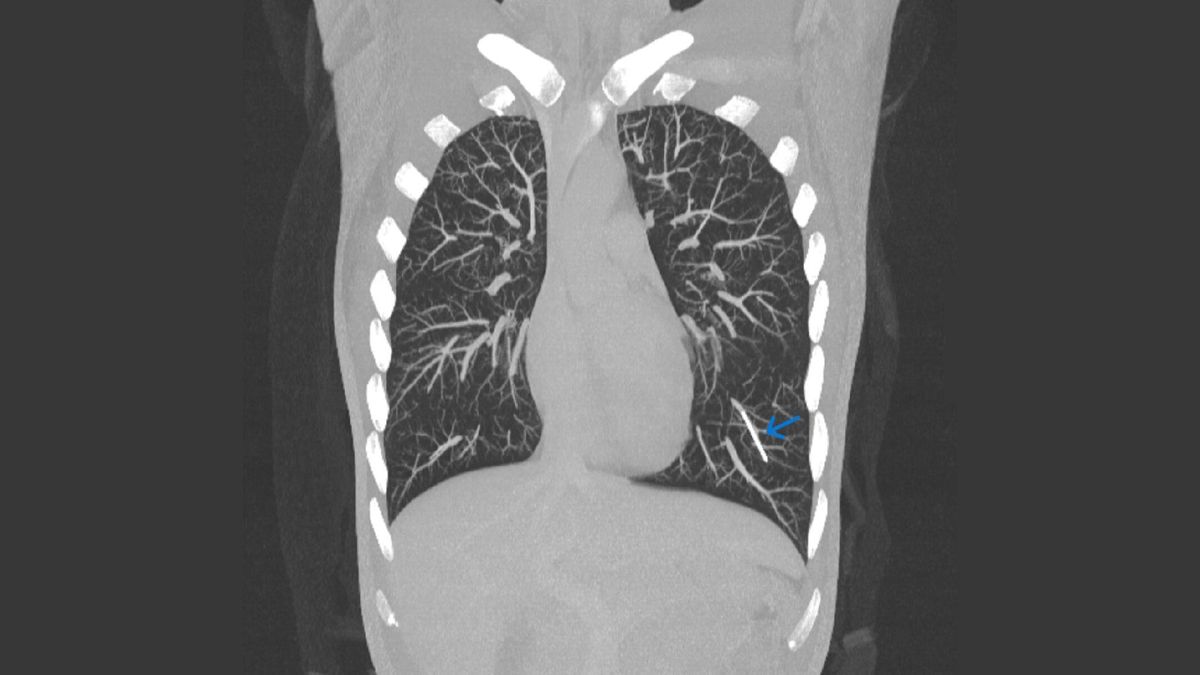
In an extremely rare case, a woman’s contraceptive implant migrated from her upper arm to her left lung.

The woman, who’s based in the U.K. and in her 30s, consulted doctors after noticing that she couldn’t feel the implant underneath the skin of her left arm where it had been inserted six years prior. (These implants typically work for three years before needing to be swapped out.)

After discussing the patients’ medical history with her and conducting a series of imaging tests, doctors discovered that she couldn’t feel the implant because her original procedure wasn’t performed correctly. As such, the implant became dislodged around a week after its insertion and then moved from the tissue beneath the skin into a vein in the woman’s upper arm. From there, it made its way to her heart, before being carried via an artery to her lower left lung — where it was eventually revealed in medical scans.

The doctors described the case in a report published Jan. 30 in the journal BMJ Case Reports.

Related: A woman would faint whenever she tried to stand. New implant lets her walk.

Contraceptive implants are among the most effective types of reversible contraception. Users have a 0.05% chance of unplanned pregnancy during the first year of having the implant, if it’s implanted correctly. The implants themselves are small plastic rods, normally around 1.6 inches (4 centimeters) long, that are placed underneath the skin of the upper arm.

(Contraceptive implants are different from intrauterine devices (IUDs), although these are both forms of long-acting reversible contraception that are put inside the body.)

Get the world’s most fascinating discoveries delivered straight to your inbox.

The only contraceptive implant currently available in the U.K. and the U.S. is called Nexplanon.

A gloved hand holds up a small rod-shaped implant

On exceptionally rare occasions, contraceptive implants designed to be in the upper arm (like the one pictured above) can migrate to other parts of the body. (Image credit: Celso Pupo via Shutterstock)

This implant releases a slow, steady dose of progestin — a synthetic version of the hormone progesterone — which prevents pregnancy in numerous ways. For instance, progestin blocks ovulation, meaning the regular release of an egg from the ovaries into the fallopian tubes during the menstrual cycle.

Nexplanon provides effective contraception for up to three years before the hormones within it run out and the device has to be removed. Users can then get a new implant put in.

In very rare cases, Nexplanon implants can migrate from the upper arm to other parts of the body, such as the shoulder, chest wall or arteries in the lungs. A study published in 2017 found that 38 cases of implant migration had been reported to the U.S. Food and Drug Administration between 2006 and 2015. For context, a Centers for Disease Control and Prevention report in 2023 found that approximately 1 in 4 women aged between 15 and 49 in the U.S. have reported ever using either contraceptive implants or intrauterine devices.

An implant may be more likely to migrate for several reasons, such not being inserted in the correct place. This is what likely happened to the woman in the U.K., her doctors wrote.

Other risk factors for implant migration include inserting the implant too deeply into the tissue in the arm or into a patient with very thin arms. If an implant makes it to the lungs, it can cause various symptoms, such as a cough — which can be bloody — shortness of breath or chest pain. If the wandering implant is still active, then patients may need surgery to avoid potential side effects such as infertility and menstruation issues, the case report authors noted.

In this case, the woman hadn’t experienced any of these symptoms. Doctors also noted that the wandering implant had not budged after a follow-up consultation six months later. As the implant was no longer releasing progestin, the woman therefore opted not to have surgery to remove it.

This article is for informational purposes only and is not meant to offer medical advice.

Source link

Share. Facebook Twitter Pinterest LinkedIn Tumblr Email
Previous ArticleBest OLED TV deal: Save $770 on Samsung 55-inch S85D 4K Smart TV
Next Article Why Erin Foster Thought Adam Brody, Kristen Bell Had an Affair
Editor
  • Website

Related Posts

Lifestyle

NASA astronauts briefly shelter in ‘safe haven’ procedure following worsening leaks on International Space Station

June 7, 2026
Lifestyle

Why can’t we figure out how strong gravity is?

June 6, 2026
Lifestyle

Stupid hot: Heat waves cause cognitive changes in animals, making them more aggressive and unable to complete basic tasks

June 6, 2026
Add A Comment

Comments are closed.

Categories
  • Entertainment
  • Lifestyle
  • News
  • Sports
  • Tech
  • Travel
Recent Posts
  • NASA astronauts briefly shelter in ‘safe haven’ procedure following worsening leaks on International Space Station
  • Why can’t we figure out how strong gravity is?
  • Stupid hot: Heat waves cause cognitive changes in animals, making them more aggressive and unable to complete basic tasks
  • Tump administration to remove 900 deep sea monitoring instruments that would have studied the collapsing Atlantic current
  • Science news this week: Ötzi the Iceman used to make sourdough, Italian teenagers discover Roman villa under school, Google plans to release 64 million mosquitos, and RIP to NASA’s Maven probe
calendar
June 2026
M T W T F S S
1234567
891011121314
15161718192021
22232425262728
2930  
« May    
Recent Posts
  • NASA astronauts briefly shelter in ‘safe haven’ procedure following worsening leaks on International Space Station
  • Why can’t we figure out how strong gravity is?
  • Stupid hot: Heat waves cause cognitive changes in animals, making them more aggressive and unable to complete basic tasks
About

Welcome to Baynard Media, your trusted source for a diverse range of news and insights. We are committed to delivering timely, reliable, and thought-provoking content that keeps you informed
and inspired

Categories
  • Entertainment
  • Lifestyle
  • News
  • Sports
  • Tech
  • Travel
Facebook X (Twitter) Pinterest WhatsApp
  • Contact Us
  • About Us
  • Privacy Policy
  • Disclaimer
  • UNSUBSCRIBE
© 2026 copyrights reserved

Type above and press Enter to search. Press Esc to cancel.