Close Menu
  • Home
  • UNSUBSCRIBE
  • News
  • Lifestyle
  • Tech
  • Entertainment
  • Sports
  • Travel
Facebook X (Twitter) WhatsApp
Trending
  • Moving to Portugal on D7 Visa: Rental Contract
  • Iran to execute first female protester from 2026 uprising
  • Irvine Officials Deadlock on How to Close Multimillion Dollar Budget Deficits
  • ‘Human evolution didn’t slow down; we were just missing the signal’: Large DNA study reveals natural selection led to more redheads and less male-pattern baldness
  • Trump to be honored by Paramount CEO David Ellison at DC dinner: report
  • CDC warns rotavirus at high levels in the U.S., with life-threatening symptoms for kids
  • Best Countries to Live in: Updated October 2024
  • Swiss hockey coach Patrick Fischer fired over fake COVID vaccine card
Facebook X (Twitter) WhatsApp
Baynard Media
  • Home
  • UNSUBSCRIBE
  • News
  • Lifestyle
  • Tech
  • Entertainment
  • Sports
  • Travel
Baynard Media
Home»Lifestyle»Doban-kun: A ‘cute’ human-shaped counting tool from prehistoric Japan
Lifestyle

Doban-kun: A ‘cute’ human-shaped counting tool from prehistoric Japan

EditorBy EditorJanuary 13, 2025No Comments2 Mins Read
Share Facebook Twitter Pinterest LinkedIn Tumblr Reddit Telegram Email
Share
Facebook Twitter LinkedIn Pinterest Email

Name: Doban-kun

What it is: A clay tablet

Where it is from: Northern Honshu, Japan

When it was made: Around 1500 B.C.

Related: Dancing dwarf: A 2,300-year-old ancient Egyptian statue of a godlike man with a muscular 6-pack

What it tells us about the past:

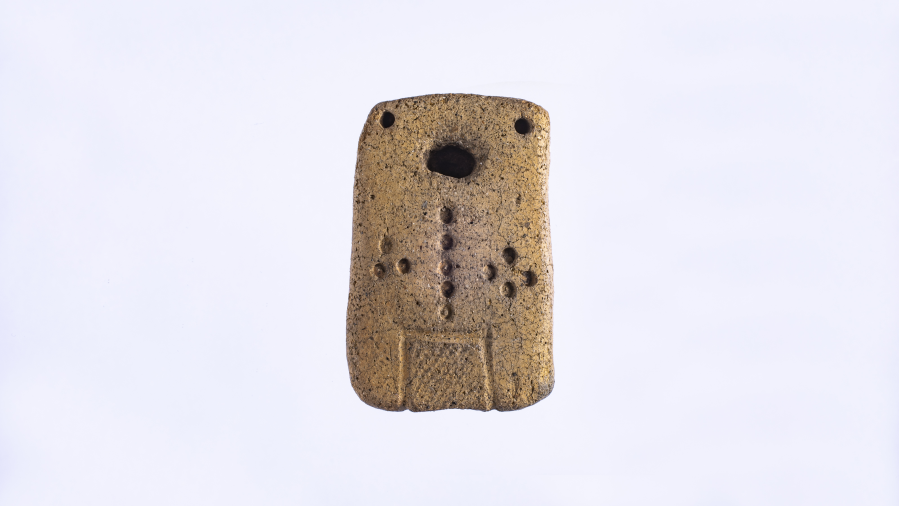
This small, clay tablet was likely a tool used to perform rituals at two prehistoric stone rings in northern Japan over three millennia ago. The holes were used for counting and were arranged in the shape of a person.

Get the world’s most fascinating discoveries delivered straight to your inbox.

Doban-kun, which means “flat clay man” in Japanese, is 2.3 inches (5.8 centimeters) tall and 1.5 inches (3.7 cm) wide and weighs about 1.7 ounces (48.4 grams). It was found near the Ōyu Stone Circles, which were built by the Jōmon culture.

The Jōmon period spanned roughly 14000 to 300 B.C. Although there was no large-scale agriculture in this period, the Jōmon culture was largely sedentary and very complex, creating pottery, jewelry, statues and tools from a variety of natural materials, such as stones, bones and antlers.

According to the Ōyu Stone Circle Center, the site was created from dozens of river rocks around 2000 B.C., in the late Jōmon period. The two larger circles were likely used in rituals that helped strengthen social ties among the surrounding settlements, while the smaller circles were made to mark graves. The sundial-like arrangement of the stones suggests that the Jōmon people understood the movement of the sun.

MORE ASTONISHING ARTIFACTS

Numerous small clay tablets were found during excavations at the stone circles over the past several decades, but Doban-kun is unique. Researchers think it was created as a tool for counting. The largest hole, representing the person’s mouth, is 1; the eyes are 2; the right side of the chest is 3; the left side is 4; and the vertical line of circles in the center of the chest is 5. Circles on the back of the head represent 6.

There is also a hole in the bottom center that connects to the mouth hole via a channel through the clay body. This could mean that Doban-kun is a female figure, Doban-chan (“flat clay woman”).

Either way, the tablet has a cute appearance, according to the Ōyu Stone Circle Center, which may have been a popular style at the time. But whether Doban-kun represents a 3,500-year-old example of kawaii, or “cute culture,” is still up for debate.

Source link

Share. Facebook Twitter Pinterest LinkedIn Tumblr Email
Previous ArticleInside Katy Perry’s Dramatic Path to Forever With Orlando Bloom
Next Article Best Apple iPad Mini deal: Save $100 at Best Buy
Editor
  • Website

Related Posts

Lifestyle

Moving to Portugal on D7 Visa: Rental Contract

April 16, 2026
Lifestyle

‘Human evolution didn’t slow down; we were just missing the signal’: Large DNA study reveals natural selection led to more redheads and less male-pattern baldness

April 16, 2026
Lifestyle

Best Countries to Live in: Updated October 2024

April 15, 2026
Add A Comment

Comments are closed.

Categories
  • Entertainment
  • Lifestyle
  • News
  • Sports
  • Tech
  • Travel
Recent Posts
  • Moving to Portugal on D7 Visa: Rental Contract
  • Iran to execute first female protester from 2026 uprising
  • Irvine Officials Deadlock on How to Close Multimillion Dollar Budget Deficits
  • ‘Human evolution didn’t slow down; we were just missing the signal’: Large DNA study reveals natural selection led to more redheads and less male-pattern baldness
  • Trump to be honored by Paramount CEO David Ellison at DC dinner: report
calendar
April 2026
M T W T F S S
 12345
6789101112
13141516171819
20212223242526
27282930  
« Mar    
Recent Posts
  • Moving to Portugal on D7 Visa: Rental Contract
  • Iran to execute first female protester from 2026 uprising
  • Irvine Officials Deadlock on How to Close Multimillion Dollar Budget Deficits
About

Welcome to Baynard Media, your trusted source for a diverse range of news and insights. We are committed to delivering timely, reliable, and thought-provoking content that keeps you informed
and inspired

Categories
  • Entertainment
  • Lifestyle
  • News
  • Sports
  • Tech
  • Travel
Facebook X (Twitter) Pinterest WhatsApp
  • Contact Us
  • About Us
  • Privacy Policy
  • Disclaimer
  • UNSUBSCRIBE
© 2026 copyrights reserved

Type above and press Enter to search. Press Esc to cancel.