Close Menu
  • Home
  • UNSUBSCRIBE
  • News
  • Lifestyle
  • Tech
  • Entertainment
  • Sports
  • Travel
Facebook X (Twitter) WhatsApp
Trending
  • So CLOSE! Littler just misses out on nine-darter in Cardiff!
  • Jack Osbourne on Ozzy Osbourne Final Hours, Surprise Death
  • Trump criticizes MLB during Inter Miami White House celebration
  • Amazon outage: Here’s what we know so far
  • Mixed day for McIlroy as Berger leads at Bay Hill
  • Gypsy Rose Blanchard Weight Loss, Body Transformation
  • Strikes and explosions across the Middle East
  • James Webb Telescope updates odds that ‘city killer’ asteroid 2024 YR4 will hit the moon
Facebook X (Twitter) WhatsApp
Baynard Media
  • Home
  • UNSUBSCRIBE
  • News
  • Lifestyle
  • Tech
  • Entertainment
  • Sports
  • Travel
Baynard Media
Home»Lifestyle»Massive Antarctic icebergs’ split from glaciers may be unrelated to climate change
Lifestyle

Massive Antarctic icebergs’ split from glaciers may be unrelated to climate change

EditorBy EditorDecember 31, 2024No Comments2 Mins Read
Share Facebook Twitter Pinterest LinkedIn Tumblr Reddit Telegram Email
Share
Facebook Twitter LinkedIn Pinterest Email

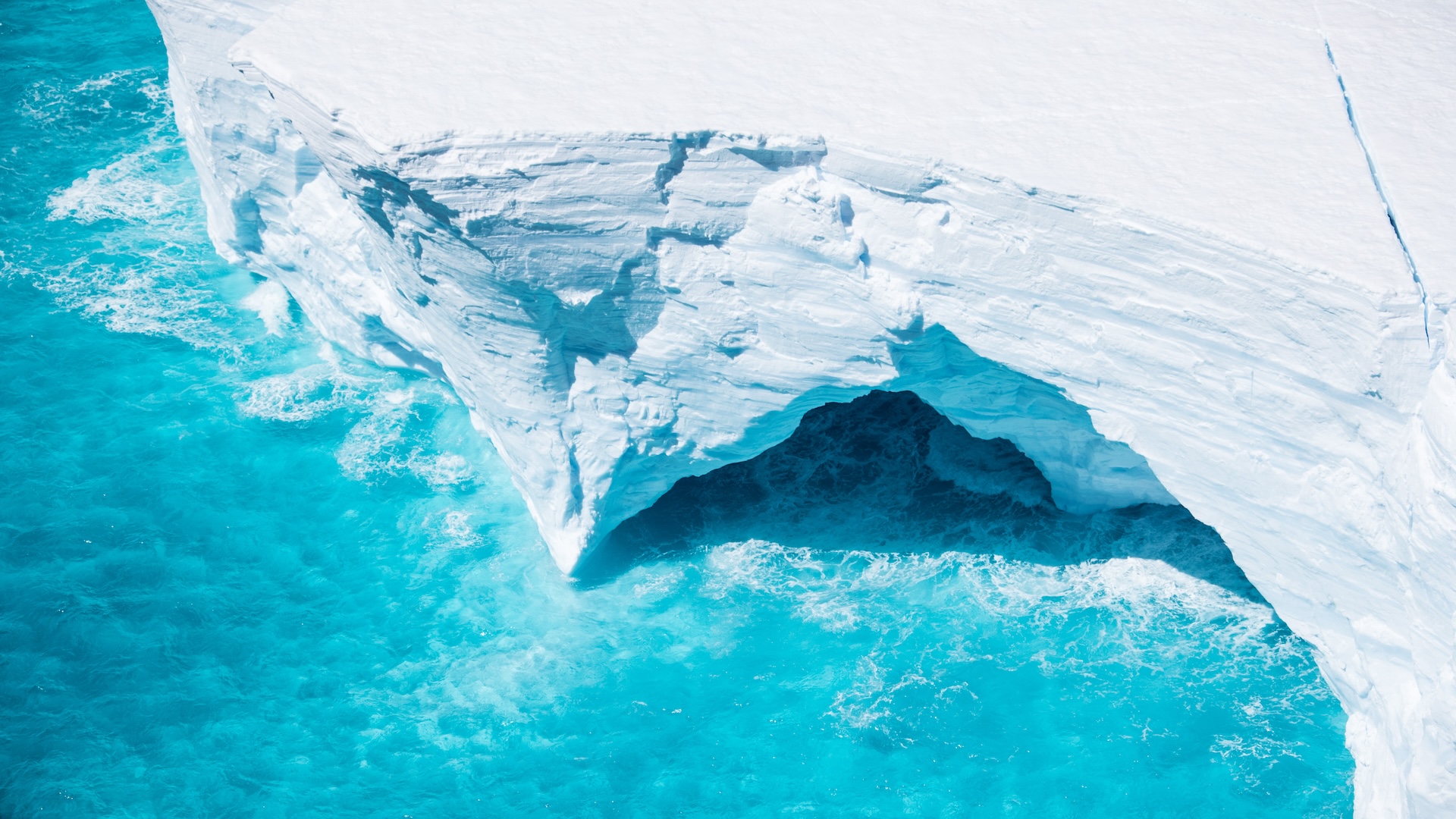
Antarctica is losing ice quickly, in part because of climate change. Massive calving events, such as the one that formed the Delaware-sized (5,800 square kilometers, or 2,239 square miles) A-68 iceberg in 2017, can destabilize ice shelves and capture the public’s attention. But the infrequency of extreme calving events makes it difficult for scientists to predict them and understand whether they are connected to climate change.

To explore potential connections between climate change and large iceberg formation in Antarctica, MacKie et al. carried out the first long-term analysis of the continent’s biggest annual icebergs. Because such large calving events are rare and unevenly distributed, the researchers used statistical approaches specifically geared toward small datasets with long tails to look for changes in calving event frequency over time. They focused on the single largest iceberg to form each year from 1976 to 2023. These icebergs had surface areas up to 11,000 square kilometers (4,247 square miles).

The study revealed that the surface area of the largest annual iceberg decreased slightly over time and that despite the growing influence of climate change, the risk of an extreme calving event did not increase. Because climate warmed over the study period but the largest iceberg area did not increase, the findings suggest that extreme calving events are not necessarily a direct consequence of climate change, the authors write.

Related: When was the last time Antarctica was ice-free?

However, the number of smaller calving events has increased over time, other work has found. This study highlights the role of these events in chipping away at Antarctic ice in a “death by a thousand cuts,” the authors write. Though extreme calving events make dramatic headlines, more common, smaller iceberg formations are the main source of climate change–driven mass loss in Antarctica, they conclude.

The researchers also found that the biggest Antarctic iceberg may be yet to come. Although they do not predict an increase in the frequency of extreme calving events, their modeling suggests that a “once in a century” iceberg could be roughly the size of Switzerland (38,827 square kilometers, or 14,991 square kilometers).

This article was originally published on Eos.org. Read the original article.

Get the world’s most fascinating discoveries delivered straight to your inbox.

Source link

Share. Facebook Twitter Pinterest LinkedIn Tumblr Email
Previous ArticleAriana Grande Subtly Nods to Boyfriend Ethan Slater in 2024 Photo Dump
Next Article Brentford latest: 'Good luck!' – Frank's hilarious reaction to Mbeumo interest
Editor
  • Website

Related Posts

Lifestyle

James Webb Telescope updates odds that ‘city killer’ asteroid 2024 YR4 will hit the moon

March 6, 2026
Lifestyle

Groundbreaking new drug shows promise for treating children with a devastating form of epilepsy

March 5, 2026
Lifestyle

Microscopic swimming robots navigate ‘artificial space-time’ mazes using Einstein’s relativity

March 5, 2026
Add A Comment

Comments are closed.

Categories
  • Entertainment
  • Lifestyle
  • News
  • Sports
  • Tech
  • Travel
Recent Posts
  • So CLOSE! Littler just misses out on nine-darter in Cardiff!
  • Jack Osbourne on Ozzy Osbourne Final Hours, Surprise Death
  • Trump criticizes MLB during Inter Miami White House celebration
  • Amazon outage: Here’s what we know so far
  • Mixed day for McIlroy as Berger leads at Bay Hill
calendar
March 2026
M T W T F S S
 1
2345678
9101112131415
16171819202122
23242526272829
3031  
« Feb    
Recent Posts
  • So CLOSE! Littler just misses out on nine-darter in Cardiff!
  • Jack Osbourne on Ozzy Osbourne Final Hours, Surprise Death
  • Trump criticizes MLB during Inter Miami White House celebration
About

Welcome to Baynard Media, your trusted source for a diverse range of news and insights. We are committed to delivering timely, reliable, and thought-provoking content that keeps you informed
and inspired

Categories
  • Entertainment
  • Lifestyle
  • News
  • Sports
  • Tech
  • Travel
Facebook X (Twitter) Pinterest WhatsApp
  • Contact Us
  • About Us
  • Privacy Policy
  • Disclaimer
  • UNSUBSCRIBE
© 2026 copyrights reserved

Type above and press Enter to search. Press Esc to cancel.