Close Menu
  • Home
  • UNSUBSCRIBE
  • News
  • Lifestyle
  • Tech
  • Entertainment
  • Sports
  • Travel
Facebook X (Twitter) WhatsApp
Trending
  • Pope Leo fires back at Trump, says peace message is rooted in the Gospel
  • Resnick: RSCCD – A Crisis of Leadership, Accountability and Trust
  • Human ancestors butchered and ate elephants 1.8 million years ago, helping to fuel their large brains
  • AI is persuasive and leans left, AFPI analyst says in a new report
  • Trump assails Pope Leo as ‘weak’ and ‘terrible’ after pontiff’s Iran war criticism
  • Living in Brazil: A Guide for Beginners
  • Brian and Lynette Hooker investigation ‘mystery’ stumps local boat captain
  • Tracking Air Wisconsin’s sale to CSI Aviation, an ICE contractor
Facebook X (Twitter) WhatsApp
Baynard Media
  • Home
  • UNSUBSCRIBE
  • News
  • Lifestyle
  • Tech
  • Entertainment
  • Sports
  • Travel
Baynard Media
Home»Lifestyle»6 million-year-old ice discovered in Antarctica shatters records — and there’s ancient air trapped inside
Lifestyle

6 million-year-old ice discovered in Antarctica shatters records — and there’s ancient air trapped inside

EditorBy EditorNovember 4, 2025No Comments3 Mins Read
Share Facebook Twitter Pinterest LinkedIn Tumblr Reddit Telegram Email
Share
Facebook Twitter LinkedIn Pinterest Email

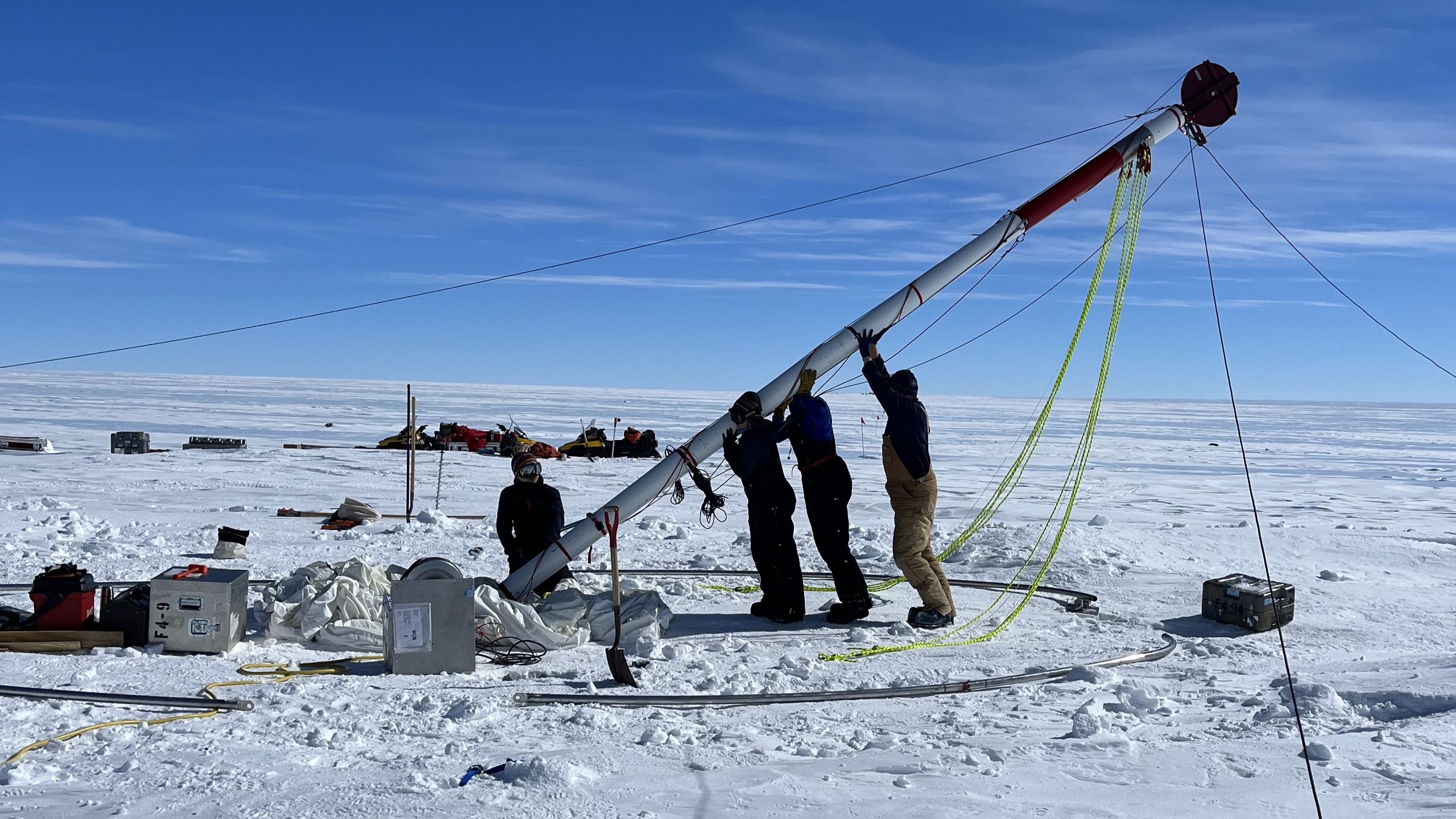
A photograph of researchers setting up a drill in the Allan Hills region of Antarctica between 2022 and 2023.

Researchers setting up a drill in the Allan Hills region of Antarctica. This work was supported by the NSF Center for Oldest Ice Exploration, or COLDEX. (Image credit: Photo by Julia Marks Peterson, COLDEX)

Scientists have pulled a 6 million-year-old chunk of ice out of Antarctica — the oldest directly dated ice ever found — and it’s helping them to reconstruct Earth’s ancient climate.

The record-breaking ice, along with air bubbles trapped inside, is more than double the age of the previously oldest-known ice samples, which are around 2.7 million years old, according to a new study published Oct. 28 in the journal PNAS.

“Ice cores are like time machines that let scientists take a look at what our planet was like in the past,” study lead author Sarah Shackleton, a researcher at Princeton University and an assistant scientist at the Woods Hole Oceanographic Institution in Massachusetts, said in a statement. “The Allan Hills cores help us travel much further back than we imagined possible.”


You may like

The ice and air dates to the Miocene age (23 million to 5.3 million years ago), when Earth was much warmer, sea levels were higher and the planet was filled with now-extinct creatures, including saber-toothed cats, okapi-like giraffes, Arctic rhinos and the first mammoths.

Shackleton and her colleagues discovered the record-breaking ice in the remote Allan Hills blue ice area of East Antarctica between 2019 and 2023. The Allan Hills ice field is around 6,500 feet (2,000 meters) above sea level, according to the study.

To obtain samples, the researchers drilled 330 to 660 feet (100 to 200 meters) down into an ice sheet. They then dated the excavated ice cores by measuring radioactive decay in argon isotopes present in the air pockets. Tracing oxygen isotopes in the cores also enabled the scientists to determine that the Allan Hills region has undergone a steady cooling of about 22 degrees Fahrenheit (12 degrees Celsius) over the past 6 million years, according to the statement — released by Oregon State University, which was also involved in the research.

A photograph of the 6 million-year-old-ice core on a table.

The Antarctic ice core contains the oldest directly dated ice and air. (Image credit: COLDEX)

While Antarctica — and Earth as a whole — has steadily cooled over recent millennia, humans are now rapidly increasing global temperatures by releasing copious amounts of heat-trapping greenhouse gases into the atmosphere. The authors of the new study said that by investigating the ice cores, they could decipher ancient levels of greenhouse gases and ocean warming, and thus better understand natural drivers of climate change across Earth’s history.

Get the world’s most fascinating discoveries delivered straight to your inbox.

The Allan Hills region preserved the ice thanks to a variety of factors, both known and unknown, including near-static surface ice movement and rugged mountain features that locked the ice in place.

“We’re still working out the exact conditions that allow such ancient ice to survive so close to the surface,” Shackleton said. “Along with the topography, it’s likely a mix of strong winds and bitter cold. The wind blows away fresh snow, and the cold slows the ice to almost a standstill. That makes Allan Hills one of the best places in the world to find shallow old ice, and one of the toughest places to spend a field season.”

Source link

Share. Facebook Twitter Pinterest LinkedIn Tumblr Email
Previous ArticleTrump links SNAP program restart to Democrat government shutdown decision
Next Article Marjorie Taylor Greene criticizes leaders on ‘The View’
Editor
  • Website

Related Posts

Lifestyle

Human ancestors butchered and ate elephants 1.8 million years ago, helping to fuel their large brains

April 13, 2026
Lifestyle

Living in Brazil: A Guide for Beginners

April 13, 2026
Lifestyle

Average Height by Country: Updated in 2024

April 3, 2026
Add A Comment

Comments are closed.

Categories
  • Entertainment
  • Lifestyle
  • News
  • Sports
  • Tech
  • Travel
Recent Posts
  • Pope Leo fires back at Trump, says peace message is rooted in the Gospel
  • Resnick: RSCCD – A Crisis of Leadership, Accountability and Trust
  • Human ancestors butchered and ate elephants 1.8 million years ago, helping to fuel their large brains
  • AI is persuasive and leans left, AFPI analyst says in a new report
  • Trump assails Pope Leo as ‘weak’ and ‘terrible’ after pontiff’s Iran war criticism
calendar
April 2026
M T W T F S S
 12345
6789101112
13141516171819
20212223242526
27282930  
« Mar    
Recent Posts
  • Pope Leo fires back at Trump, says peace message is rooted in the Gospel
  • Resnick: RSCCD – A Crisis of Leadership, Accountability and Trust
  • Human ancestors butchered and ate elephants 1.8 million years ago, helping to fuel their large brains
About

Welcome to Baynard Media, your trusted source for a diverse range of news and insights. We are committed to delivering timely, reliable, and thought-provoking content that keeps you informed
and inspired

Categories
  • Entertainment
  • Lifestyle
  • News
  • Sports
  • Tech
  • Travel
Facebook X (Twitter) Pinterest WhatsApp
  • Contact Us
  • About Us
  • Privacy Policy
  • Disclaimer
  • UNSUBSCRIBE
© 2026 copyrights reserved

Type above and press Enter to search. Press Esc to cancel.