Close Menu
  • Home
  • UNSUBSCRIBE
  • News
  • Lifestyle
  • Tech
  • Entertainment
  • Sports
  • Travel
Facebook X (Twitter) WhatsApp
Trending
  • Mimi Rhodes stays in Women’s World Championship hunt as English golfer remains two shots off lead in Singapore | Golf News
  • Paris Jackson, Mom Debbie Rowe: Photos
  • FAA restricts Texas airspace after Pentagon reportedly shot down CBP drone
  • Best streaming deal: Save $15 on Roku Streaming Stick 4K
  • Premier League Darts: Stephen Bunting responds to doubters “writing me off” after Night Four Premier League win in Belfast | Darts News
  • Where John F. Kennedy Ex-Girlfriend Daryl Hannah Is Now
  • What are Republican legislators up to in St. Paul?
  • Science history: Carbon-14 is discovered, opening a window into past civilizations — Feb. 27, 1940
Facebook X (Twitter) WhatsApp
Baynard Media
  • Home
  • UNSUBSCRIBE
  • News
  • Lifestyle
  • Tech
  • Entertainment
  • Sports
  • Travel
Baynard Media
Home»Lifestyle»1,300-year-old poop reveals pathogens plagued prehistoric people in Mexico’s ‘Cave of the Dead Children’
Lifestyle

1,300-year-old poop reveals pathogens plagued prehistoric people in Mexico’s ‘Cave of the Dead Children’

EditorBy EditorOctober 22, 2025No Comments3 Mins Read
Share Facebook Twitter Pinterest LinkedIn Tumblr Reddit Telegram Email
Share
Facebook Twitter LinkedIn Pinterest Email

Scientists analyzing 1,300-year-old human feces from the Cave of the Dead Children in Mexico have discovered that people often dealt with nasty intestinal infections more than a millennium ago.

“Working with these ancient samples was like opening a biological time capsule, with each one revealing insight into human health and daily life,” study lead author Drew Capone, an assistant professor of environmental health at Indiana University, said in a statement.

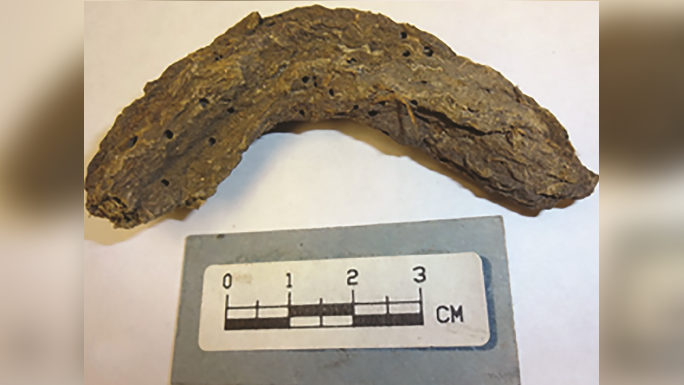
Capone and colleagues used molecular analysis techniques to study 10 ancient desiccated feces samples — also called paleofeces — found in a cave in Mexico’s Rio Zape Valley just north of the city of Durango in northwestern Mexico, that dated from A.D. 725 to 920. The researchers published their findings Wednesday (Oct. 22) in the journal PLOS One.


You may like

In the late 1950s, archaeologists excavated the Cave of the Dead Children and recovered human and non-human paleofeces, plant remains and animal and human bones from a large trash heap. The cave was used by people from the prehistoric Loma San Gabriel culture, who practiced small-scale agriculture, produced unique ceramics, lived in small villages and occasionally practiced child sacrifice. Archaeologists named the cave after the skeletons of children found there.

Previous studies of paleofeces from the cave revealed the presence of hookworm, whipworm and pinworm eggs, suggesting the people who deposited their feces in the cave were infected by a variety of parasites.

In the new study, the scientists used cutting-edge molecular techniques to detect additional microbes in paleofeces from 10 “distinct defecation events” with the aim of expanding their understanding of the burden of disease among the Loma people. “There is a lot of potential in the application of modern molecular methods to inform studies of the past,” study co-author Joe Brown, a professor of environmental sciences at the University of North Carolina at Chapel Hill, said in the statement.

four dried feces on a table with scale bars

Researchers sampled 10 different paleofeces for evidence of disease. (Image credit: Johnica Winter; CC-BY 4.0)

The researchers extracted DNA from the 10 paleofeces samples and then used polymerase chain reaction (PCR) to amplify the DNA of the microbes in the feces. Every sample had at least one pathogen or gut microbe in it, and the two most common were the intestinal parasite Blastocystis, which can cause gastrointestinal issues, and multiple strains of the bacterium E. coli, which were found in 70% of the samples. Also identified were pinworms as well as Shigella and Giardia, which cause intestinal illnesses.

Get the world’s most fascinating discoveries delivered straight to your inbox.

The high number of microbes discovered in the paleofeces “suggests poor sanitation among the Loma San Gabriel culture from 600-800 CE resulted in exposures to fecal wastes in the environment,” the researchers wrote in the study. People likely ingested the microbes via feces-contaminated drinking water, soil or food, the team added.

While these pathogen-associated genes persisted in the paleofeces for up to 1,300 years, there may have been even more pathogens in the samples that have since decayed and are no longer detectable, the researchers noted in the study.

Still, the new analysis revealed the DNA of pathogens that were not previously found in paleofeces, including Blastocystis and Shigella.

“The application of these methods to other ancient samples offers the potential to expand our understanding of how ancient peoples lived and the pathogens that may have impacted their health,” the researchers wrote.

Source link

Share. Facebook Twitter Pinterest LinkedIn Tumblr Email
Previous ArticleLegal experts warn ICJ UNRWA ruling poses danger to US interests
Next Article Some new ICE recruits have showed up to training without full vetting
Editor
  • Website

Related Posts

Lifestyle

Science history: Carbon-14 is discovered, opening a window into past civilizations — Feb. 27, 1940

February 27, 2026
Lifestyle

Scientists may have seen a star collapse directly into a black hole without exploding first

February 27, 2026
Lifestyle

Giant ‘spiderwebs’ on Mars contain tiny egg-like structures that scientists ‘can’t quite explain,’ NASA rover reveals

February 27, 2026
Add A Comment

Comments are closed.

Categories
  • Entertainment
  • Lifestyle
  • News
  • Sports
  • Tech
  • Travel
Recent Posts
  • Mimi Rhodes stays in Women’s World Championship hunt as English golfer remains two shots off lead in Singapore | Golf News
  • Paris Jackson, Mom Debbie Rowe: Photos
  • FAA restricts Texas airspace after Pentagon reportedly shot down CBP drone
  • Best streaming deal: Save $15 on Roku Streaming Stick 4K
  • Premier League Darts: Stephen Bunting responds to doubters “writing me off” after Night Four Premier League win in Belfast | Darts News
calendar
February 2026
M T W T F S S
 1
2345678
9101112131415
16171819202122
232425262728  
« Jan    
Recent Posts
  • Mimi Rhodes stays in Women’s World Championship hunt as English golfer remains two shots off lead in Singapore | Golf News
  • Paris Jackson, Mom Debbie Rowe: Photos
  • FAA restricts Texas airspace after Pentagon reportedly shot down CBP drone
About

Welcome to Baynard Media, your trusted source for a diverse range of news and insights. We are committed to delivering timely, reliable, and thought-provoking content that keeps you informed
and inspired

Categories
  • Entertainment
  • Lifestyle
  • News
  • Sports
  • Tech
  • Travel
Facebook X (Twitter) Pinterest WhatsApp
  • Contact Us
  • About Us
  • Privacy Policy
  • Disclaimer
  • UNSUBSCRIBE
© 2026 copyrights reserved

Type above and press Enter to search. Press Esc to cancel.